How to Choose a Camera Bag You'll Never Regret | The Complete Guide to Types, Materials, and Buying Criteria
There are so many types of camera bags—slings, messenger bags, backpacks—and so many materials to choose from, such as leather and nylon. It can be hard to know where to start. In this guide, we’ll show you how to choose the right camera bag based on type and material. By the end, you’ll have a clear idea of exactly which bag suits your photography style.
Clarify these 3 points before you start your search
Before you dive into the different types of bags, take a moment to figure out your own photography style. This will help you avoid buying the wrong bag.
1. Where do you usually take photos?
Your photography environment determines what your bag needs to be able to do. For street photography and quick snapshots, a sling bag that opens with a single motion is ideal. For longer photography trips, a backpack with plenty of space is the better choice.
2. How much gear do you carry with you?
If you're shooting with just a camera body and a lens, a compact sling bag is more than enough. If you're bringing along several interchangeable lenses, a larger messenger bag or backpack will provide the space and protection you need.
3. What else do you carry with you besides your camera gear?
If you need to carry your wallet, smartphone, and laptop in addition to your gear, look for a bag with separate compartments for camera equipment and everyday items. Many modern camera bags are designed to double as business bags—that’s worth considering. The München was developed precisely for this purpose: Its padded main compartment securely holds camera bodies and lenses, while documents, a tablet, and travel essentials have their own separate space. A bag that transitions from client meetings to street photography without changing hands.
Choose a type of camera bag that suits your photography style
There are four basic types of camera bags. Here's what each one is best for.
Sling Bag | The Top Choice for Street Photography
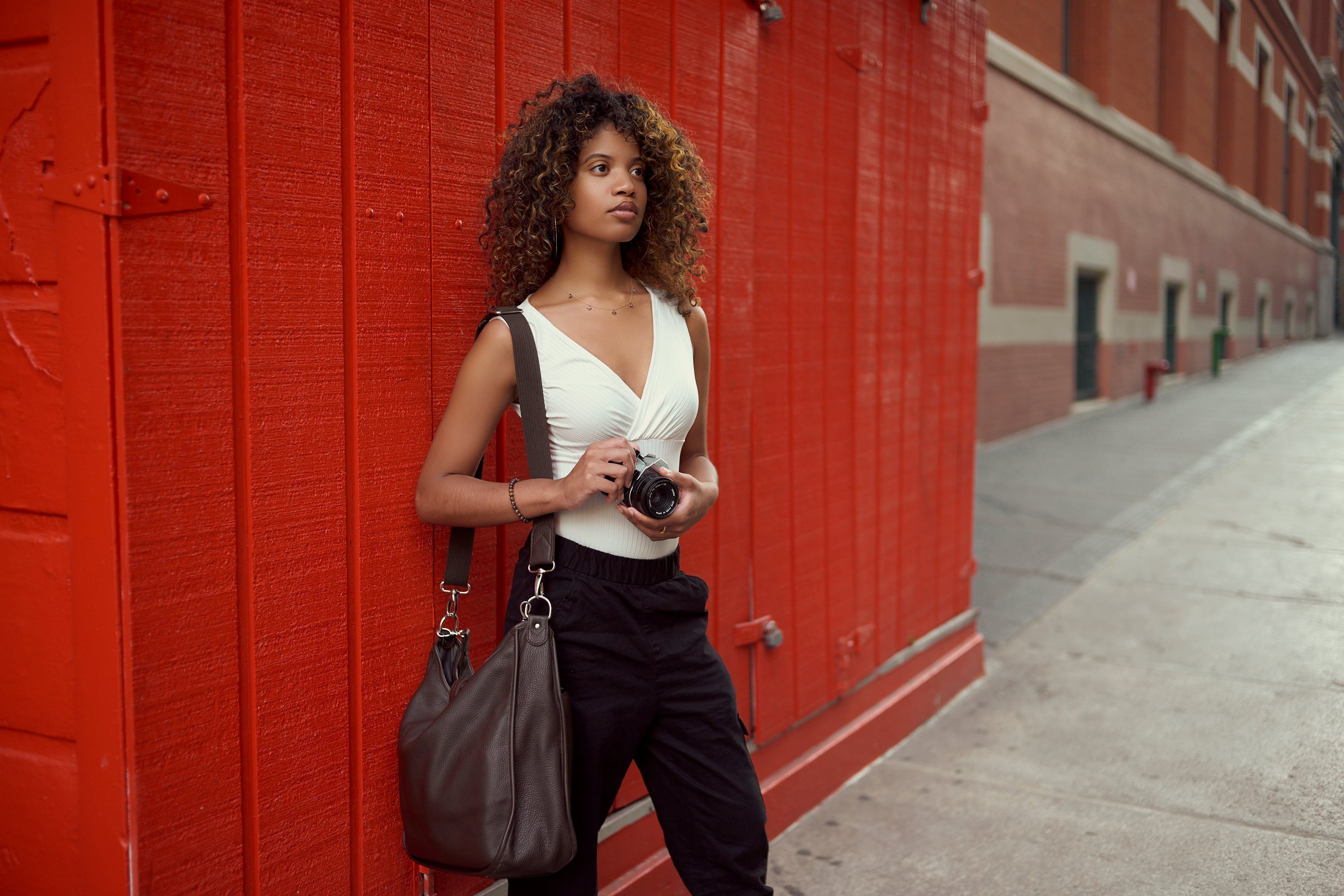
Sling bags can be swung forward so you can open them in a single motion—making them perfect for street photography and documentary work. They’re typically compact and lightweight; a standard-sized sling bag can comfortably hold a mirrorless camera body and a few lenses. Anyone who performs this motion daily quickly realizes what matters most: The Oberwerth sling bag is crafted from grained cowhide leather; its padded interior with adjustable dividers protects even large mirrorless cameras from bumps, and a red lining makes small accessories visible at a glance. A hidden interior pocket can hold an AirTag® if needed.

Messenger Bag | Quick Access Meets Ample Storage Capacity
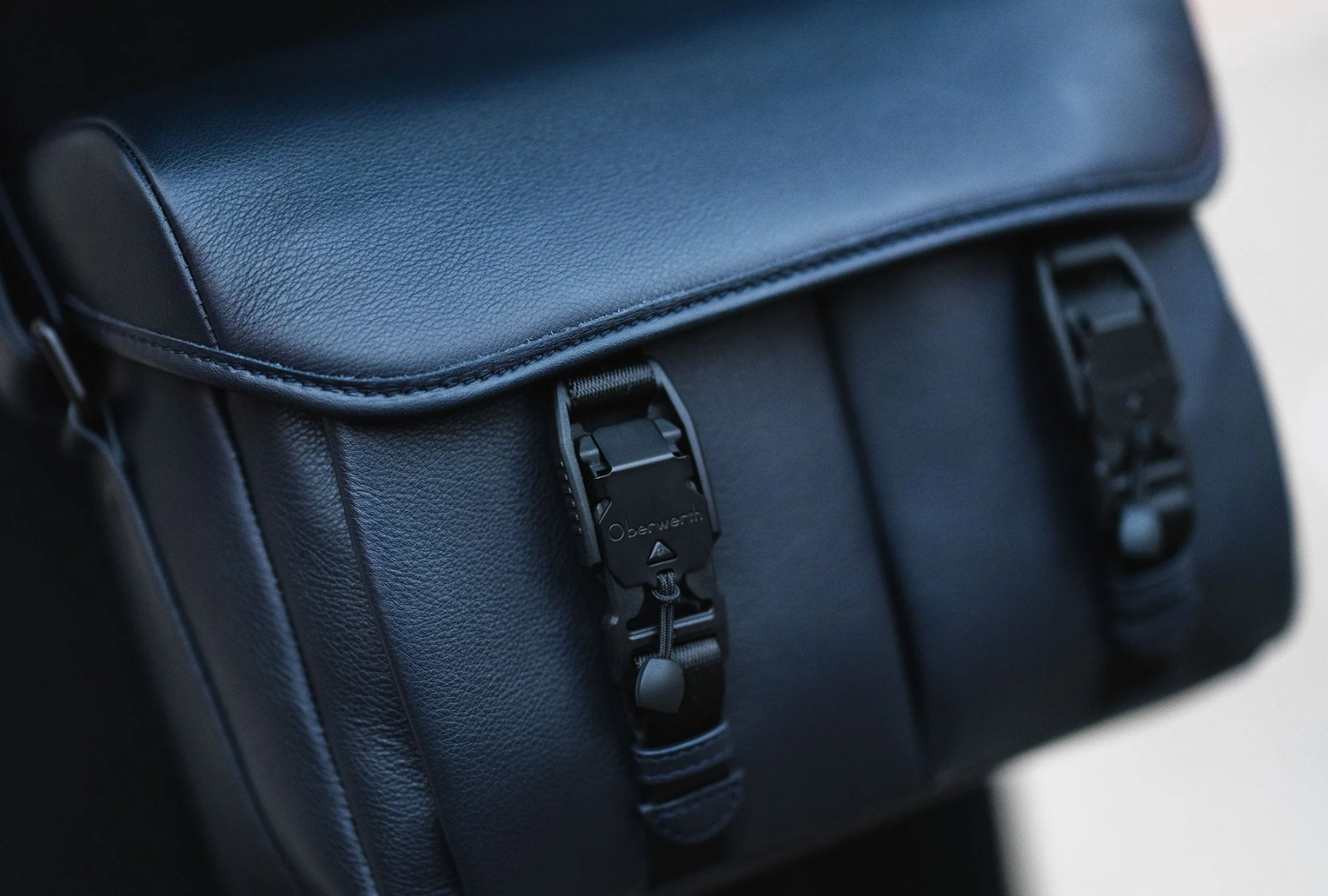
Messenger bags open with a simple flap, so you can access your camera without having to stop. Larger models can hold multiple lenses and work well alongside a laptop and work essentials. Leather messenger bags also develop a beautiful patina over time—making them a long-term investment. At Oberwerth, every messenger bag design starts with the photographer’s needs, not the other way around. The Louis, for example, is tailored for rangefinder and mirrorless systems: padded, adjustable dividers for the camera body plus two to three lenses, a flap that opens quietly, and LOXX® closures that can be operated with one hand.
Camera Backpack | Designed for Travel and Longer Shoots
A backpack distributes the weight across both shoulders, making it the right choice for travel photography and outdoor locations where you’ll be carrying heavy equipment. Models with a dedicated camera compartment allow you to safely stow your gear alongside your clothes and laptop. The Matterhorn 14" is Oberwerth’s solution for exactly this scenario: a modular CORDURA® interior with adjustable padded dividers that can be tailored precisely to your lens setup, a separate laptop compartment, and ergonomically padded shoulder straps for days when your subject awaits you only after the climb.
Weekender / Tote Bag | For the Weekend Photographer
Weekender bags offer enough space to carry both camera gear and a change of clothes—perfect for photo trips lasting one or two nights when you want to travel light.
Choose Your Material | Leather vs. Nylon and Synthetic Fabrics
The material affects more than just the look—it determines durability, ease of care, and how long your bag will last.
Genuine Leather | A long-term investment that gets better with age
Bags made of full-grain, vegetable-tanned leather develop a unique character the more you use them. It feels like a living material—one that, over the years, will unmistakably become your own. Regular care is necessary, but a well-maintained leather bag can last a decade or longer. Each piece combines functional design with enduring craftsmanship.
Nylon / Synthetic Fabric | Lightweight, weather-resistant, easy to care for
High-performance materials like Cordura® and ReLon® are lightweight, water-repellent, and built for demanding conditions. They’re easy to clean and maintain and are an excellent choice for anyone who prioritizes practicality. If you’re looking for these features without compromising on design, the Momentum Bag M made of ReLon® is the perfect solution: lightweight, water-repellent, with a clearly organized interior and a Fidlock® closure that can be opened in a single motion—even while wearing gloves.
Recommended Pouch Types by Camera Brand and Model
The best bag style also depends on the size and weight of your camera system.
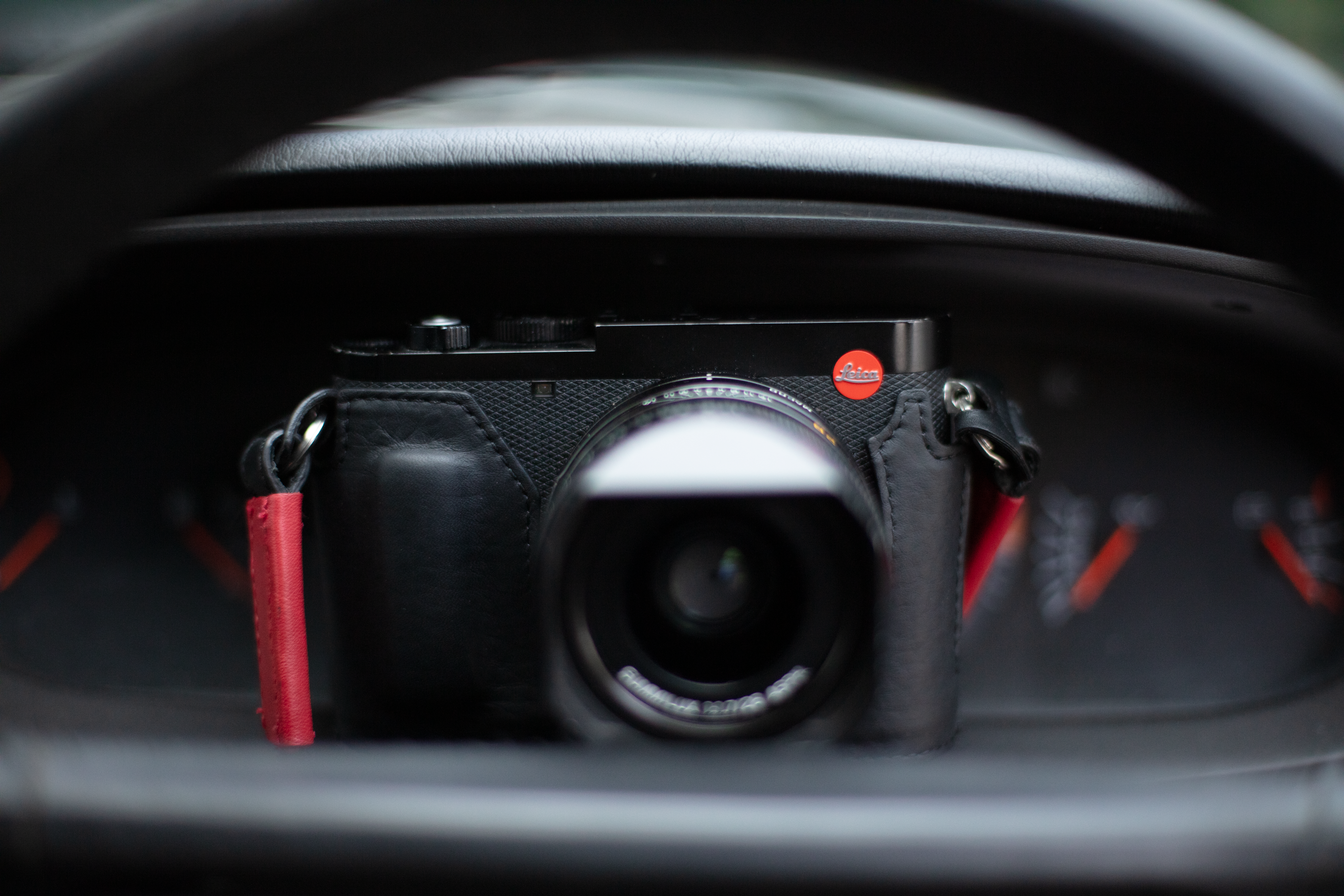
Leica M Series / Q Series: A compact half-shell case paired with a small sling bag is the classic combination
Fujifilm X-T / X100 Series: Lightweight and compact—works well with sling and messenger bags
Sony Alpha 7 Series / mirrorless systems in general: The lenses tend to be large, so a messenger bag or a high-capacity sling bag works best
Nikon / Canon full-frame DSLRs: Heavier systems benefit from a backpack that distributes the load
For the Leica Q3, there’s a bag that wasn’t simply adapted but was designed from the ground up specifically for it: The Q Bag®. Its interior dimensions match the camera’s exact measurements—making it quick to take out, securely stored, and with no empty space where anything could shift around.

Common Mistakes When Buying a Camera Bag—and How to Avoid Them
"It was smaller than expected" → Always check the interior dimensions
Before purchasing, check the internal dimensions against your camera body and your most frequently used lens while it is attached. Most product pages list "compatible cameras" and internal dimensions—don't skip this step.
"It was too heavy" → Be sure to check the bag's own weight as well
It's easy to focus on what goes inside and forget to check how much the bag itself weighs. If light weight is a priority for you, go for synthetic materials. If you want a bag that will last a lifetime, leather is worth the extra weight.
"The partitions were too rigid" → Look for adjustable shelving systems
Fixed dividers become a problem as soon as your gear changes. Look for bags with Velcro or removable internal dividers—that way, the bag adapts to your setup, not the other way around. If you’re carrying one lens today and three tomorrow, don’t underestimate the importance of this. That’s why the Little William features fully adjustable padded dividers: you tailor the interior to your setup, not the other way around—and if your gear changes in five years, the bag changes with it.
Conclusion: Find the camera bag that suits your photography style
Here’s a quick overview of the most important points: Choose the type of bag (sling, messenger, backpack) that best suits your photography environment; select a size and capacity that match the gear you actually carry; opt for leather if durability is a priority; choose synthetic fabric for lightweight, weather-resistant use; always check whether the dividers are adjustable; the right camera bag changes the way you take photos. Find the right one, and you’ll want to take it with you every time. And if you’re still not sure which model suits your gear: The Oberwerth Bagfinder guides you in just a few steps from your camera system to the right bag—with a lifetime warranty on every piece.