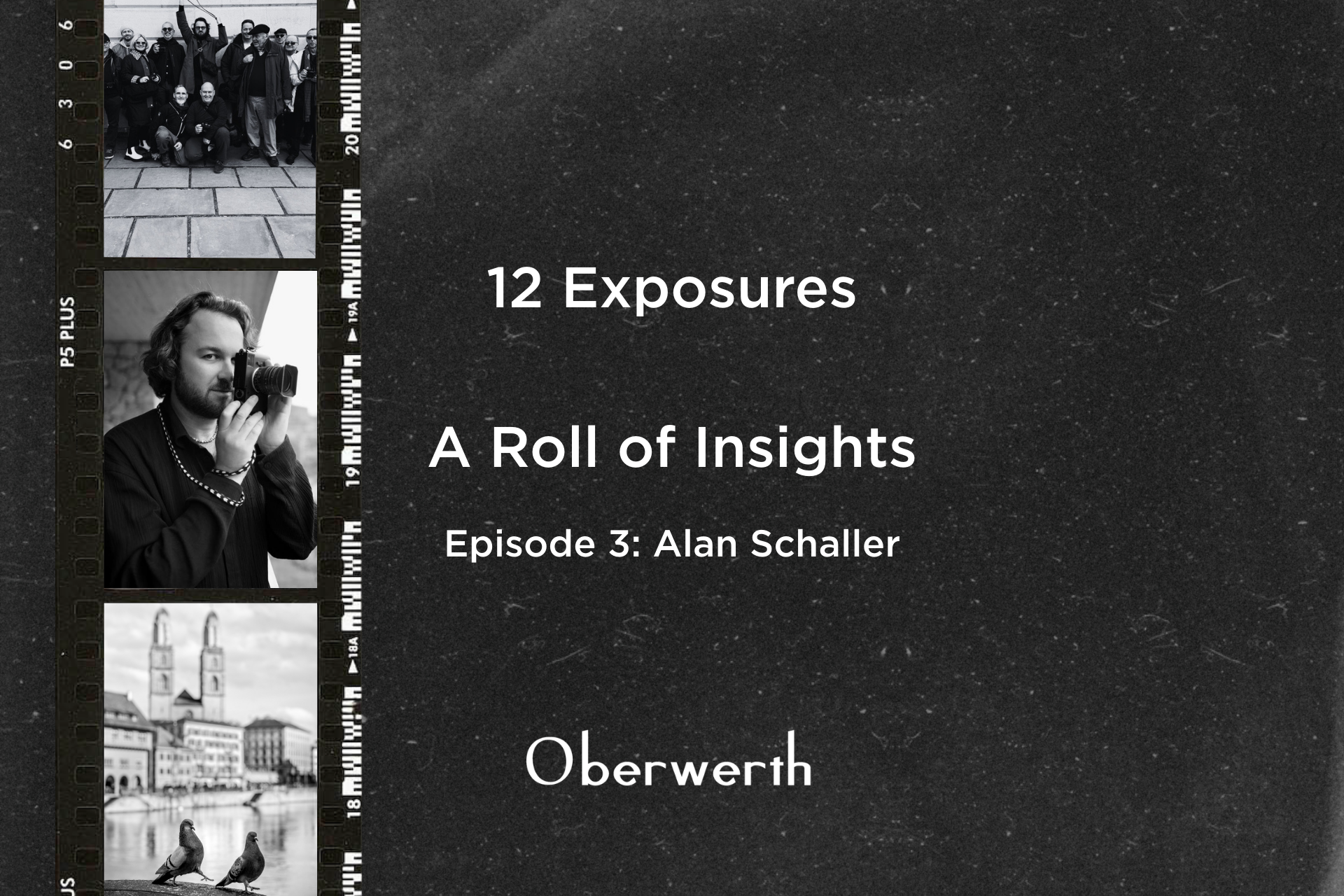
12 Exposures - Episode 3: Alan Schaller
Alan Schaller
Alan Schaller is a London-based street photographer known for his striking black-and-white imagery and strong graphic compositions. In this interview, he reflects on his unconventional journey into photography, the evolution of his distinctive visual style, and his vision behind Irys, a platform created to give photography a more focused and meaningful home in today’s digital world.
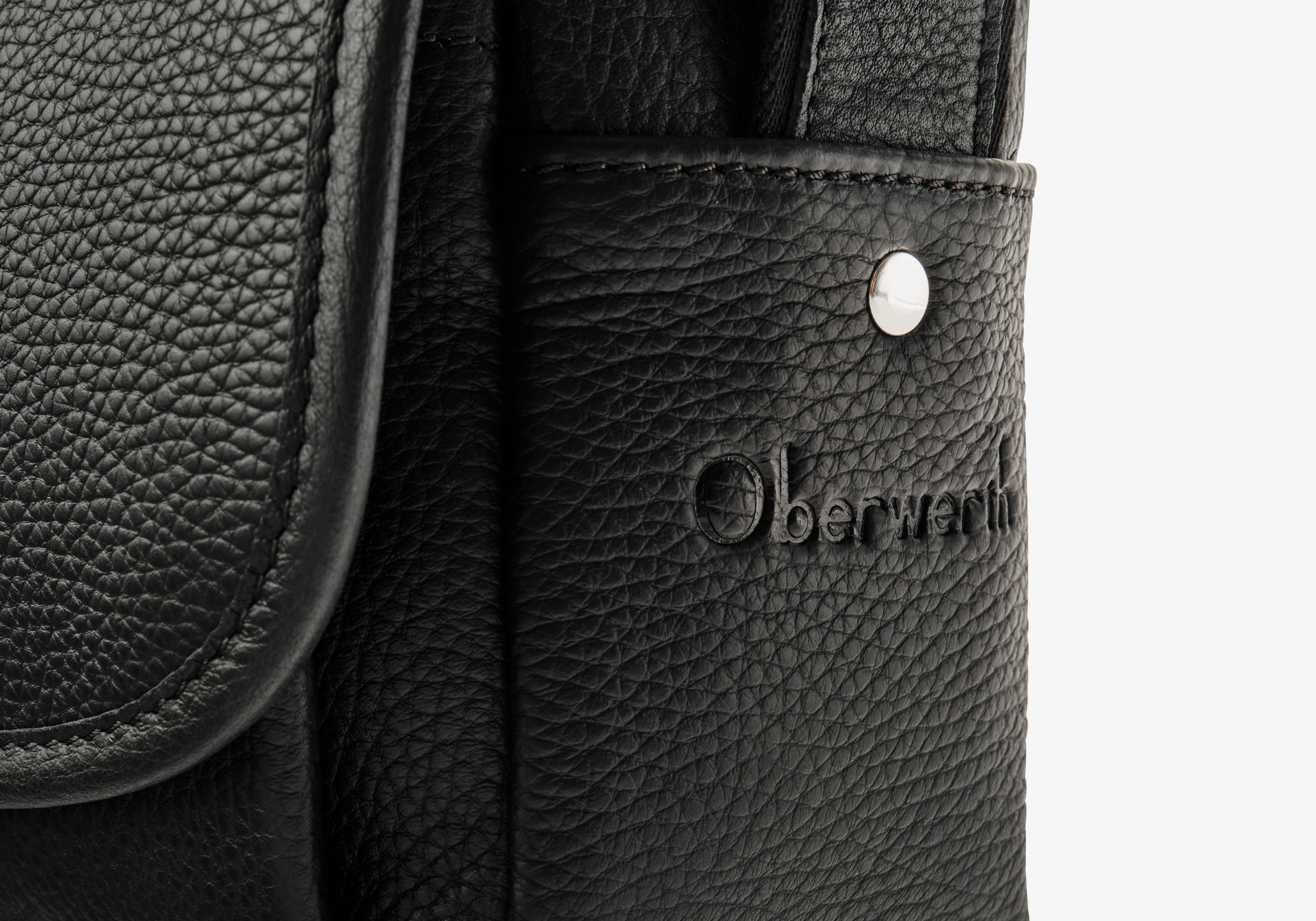
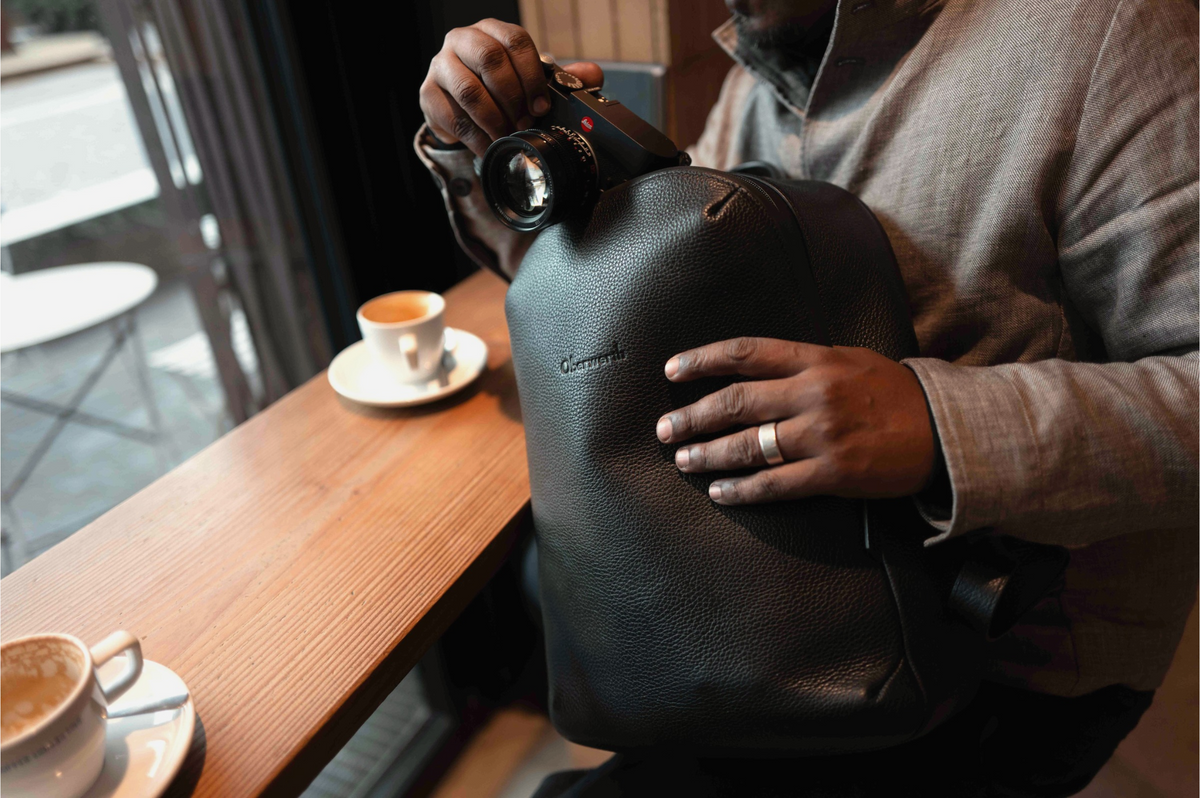
The interview took place just one week before a joint photowalk hosted by Oberwerth and Irys. For the occasion, each participant received a premium Camera Strap Colorado, while Alan was presented with a Signature Bag, which was later raffled off within the Irys community, a gesture that underscores a shared commitment to craftsmanship, community and the celebration of photography.
What first drew you into photography and did you really start quite late?
I never believed in the idea that you can start "too late" in photography. Unlike disciplines such as classical music or professional sport, photography is accessible at any age. When I started, I was working full time in the music industry as a songwriter and producer. Music was my entire professional and social world, but it had become highly collaborative and increasingly business-driven.
Photography started as a hobby, honestly partly because I wanted to impress a woman who was an amateur photographer. Her friend told me to buy a camera so she’d go on a photo walk with me. So I bought a Canon 700D with a kit lens and yes, it worked out, we were together for two years. Photography became more than a pastime. I bought a Leica, even though I could barely afford it, simply because I loved photography that much.
Within about a year, I found myself producing work that attracted professional attention, particularly a series on the London Underground that led to commissions from newspapers such as The Independent and The Guardian. At that point, photography naturally became my main focus.
How did your distinctive black and white style develop over time?
My style developed gradually through focus and limitation. From the beginning, I committed almost entirely to black-and-white street photography. My early work looks very different from what I produce now, apart from its monochrome nature and focus on people.

At first I worked with a 50mm lens. However, after about a year and a half, I realized that it was limiting my vision - especially in tight spaces like the subway. Switching to a 24mm lens was a turning point. It really allowed my visual language to unfold.
Switching to a 24mm lens was a turning point and allowed my visual language to properly take shape. This lens wasn’t common in street photography at the time. I didn’t buy it because someone else used it, I bought it because it was the tool I needed. Once I switched to 24mm, my style really began to form.
Alongside this, I developed a personal approach to editing using Lightroom and Silver Efex, learning how to maintain a consistent visual identity across very different lighting conditions and locations.
How has your relationship with street photography evolved throughout your career?
When I was first introduced to street photography, I didn’t immediately understand it. It seemed random to me. Over time, especially after discovering photographers such as Cartier-Bresson, I began to appreciate its depth and complexity. Street photography became a space where I could observe human behaviour, architecture, and rhythm in everyday life. As my confidence grew, my relationship with the genre deepened from curiosity into long-term commitment, and it remains the foundation of my photographic practice today.
What do you look for most when you’re out photographing: light, mood, or story?
It’s never just one element. Light plays a major role, but not only dramatic sunlight or strong contrast. I’m interested in all kinds of light, including transitional moments like dusk, or even the absence of light altogether. The key is understanding what a scene offers and making decisions that allow it to express its potential. Sometimes challenging light conditions lead to more satisfying results because they force more creative problem-solving. Especially in commercial contexts, adaptability is essential, maintaining a personal style while responding to practical requirements. The best photographers are the ones who think and adapt, who have a strong style, but also flexibility within it.
Which themes or ideas keep inspiring you in your work today?
Isolation in the modern world has been a recurring theme in my work for many years, particularly in my book Metropolis. Although I’m sociable, I’m also quite private, and that duality often emerges visually. More recently, my inspiration comes simply from a sustained love of photography itself. I’m constantly observing, even when I don’t take a picture.
My next book, Street Safari, is about animals I’ve encountered in urban environments. I photograph pigeons very seriously, people laugh at that, but I think some of my best pictures are pigeons. They’re incredibly difficult - fast, unpredictable and that humility in subject matter appeals to me. If you can make something visually powerful from something ordinary like a pigeon, that captures the essence of street photography for me. It’s about observation, the small things around us, not chasing spectacular, cinematic moments every time.
What initially sparked your interest to build Irys?
My motivation came from observing how social media platforms, particularly Instagram, have evolved. While I’m deeply grateful for the role Instagram played in my career, it has increasingly shifted toward short-form video, advertising, and algorithm-driven content. Photography no longer feels central there. I wanted to create a focused space where photography is the priority, free from constant distraction, and where human-made images are valued over automated or AI-generated content.
How has working on Irys influenced the way you think about photographers and their needs?
Building Irys has highlighted how difficult visibility has become for photographers today. Talent alone has never guaranteed success, but pathways to discovery now feel more limited than ever. While recognition shouldn’t be the primary goal, photographers still need spaces where meaningful engagement and exposure can happen. Irys aims to encourage learning, collaboration, and real-world interaction, while also creating opportunities when we genuinely believe in someone’s work.
What role has community played in your own growth as a photographer?
Community has always been important to me, even if photography itself is often a solitary activity. Conversations, shared experiences, and seeing other people’s work have all contributed to my development. That sense of belonging and exchange is something I want Irys to actively foster, both online and through real-world initiatives such as exhibitions, photowalks, and workshops. It’s a whole ecosystem, not just a feed.What challenges do emerging photographers face today in terms of visibility and opportunity?
Emerging photographers face an environment where attention is fragmented and algorithms dominate visibility. Platforms prioritise trends and volume over depth and craft.

As a result, it can be extremely difficult for thoughtful, long-term photographic work to be discovered. Creating alternative spaces where quality and intention matter is increasingly important.
How do you balance your new role as a tech founder with your work as a photographer?
It’s a constant balancing act. There was a period when I could justify photographing for many hours each day, which isn’t possible now. Building Irys is time-consuming, but it has also opened doors I wouldn’t have accessed otherwise. We’ve worked with Apple, spoken to tourism boards, and are exploring opportunities to bring Irys photographers onto projects. It’s been stressful at times, but also incredibly rewarding, like building something from scratch and seeing people actually using it. I still photograph daily, just less intensively, and my long-term goal is to eventually return more time to shooting while the platform continues to grow. How do you hope Irys will support photographers creatively and professionally?
Irys is designed to be more than a social feed. The aim is to build an ecosystem that includes exhibitions, publishing, workshops, photowalks, and connections with brands. Creatively, it should inspire and challenge photographers; professionally, it should help them access opportunities in a more transparent and supportive way.
What impact do you hope communities like Irys will have on the future of photography?
I hope platforms like Irys ensure that photography continues to have a meaningful home. I want future generations to discover photography in a way that feels human, inspiring, and lasting. Ultimately, it’s about celebrating photography and making sure the community around it remains passionate, connected, and visible.
That’s what it’s really about: celebrating photography and the people who create it.