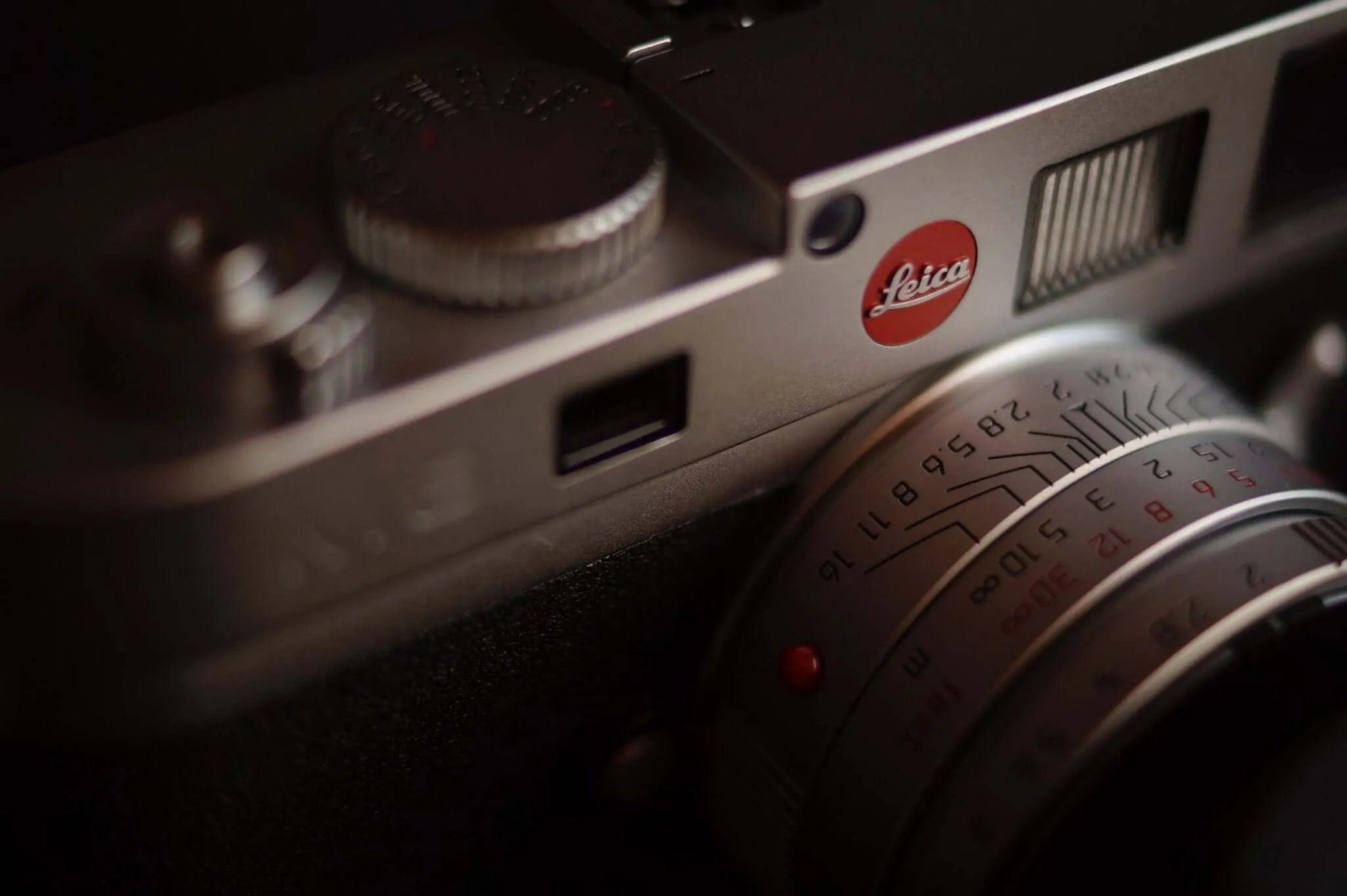
How exactly does the rangefinder work on the Leica?
For photographers, the viewfinder of a camera is the window to the world. With the Leica, the rangefinder can be used to check the image section, its composition and its depth of field. It is therefore an important component that we want to write about in detail here.
Rangefinder functionality Leica
The fact that the rangefinder is a central part of the Leica M is even reflected in its name, because that is exactly what the extra letter stands for. At the time of its market launch, the Leica M was one of the first rangefinder cameras, and today it is one of the few that are still selling well. Basically, not much has changed in the design and function of the Leica rangefinder since the first Leica M in the 1950s.
Mechanically speaking, the rangefinder is a compact component that is connected to the lens by a small lever inside the camera. Here, the distance to the object is measured through the viewfinder, not through the lens as with an SLR camera. In combination with an appropriate lens, the rangefinder, also known as a rangefinder, enables manual focusing with millimeter precision.
In detail, the rangefinder consists of two viewfinder windows whose respective images are superimposed by a mirror system in the camera's viewfinder eyepiece. The resulting image is in turn linked to the distance setting of the camera. In order to focus, both images must lie congruently on top of each other, which is achieved by turning the focus ring on the lens.
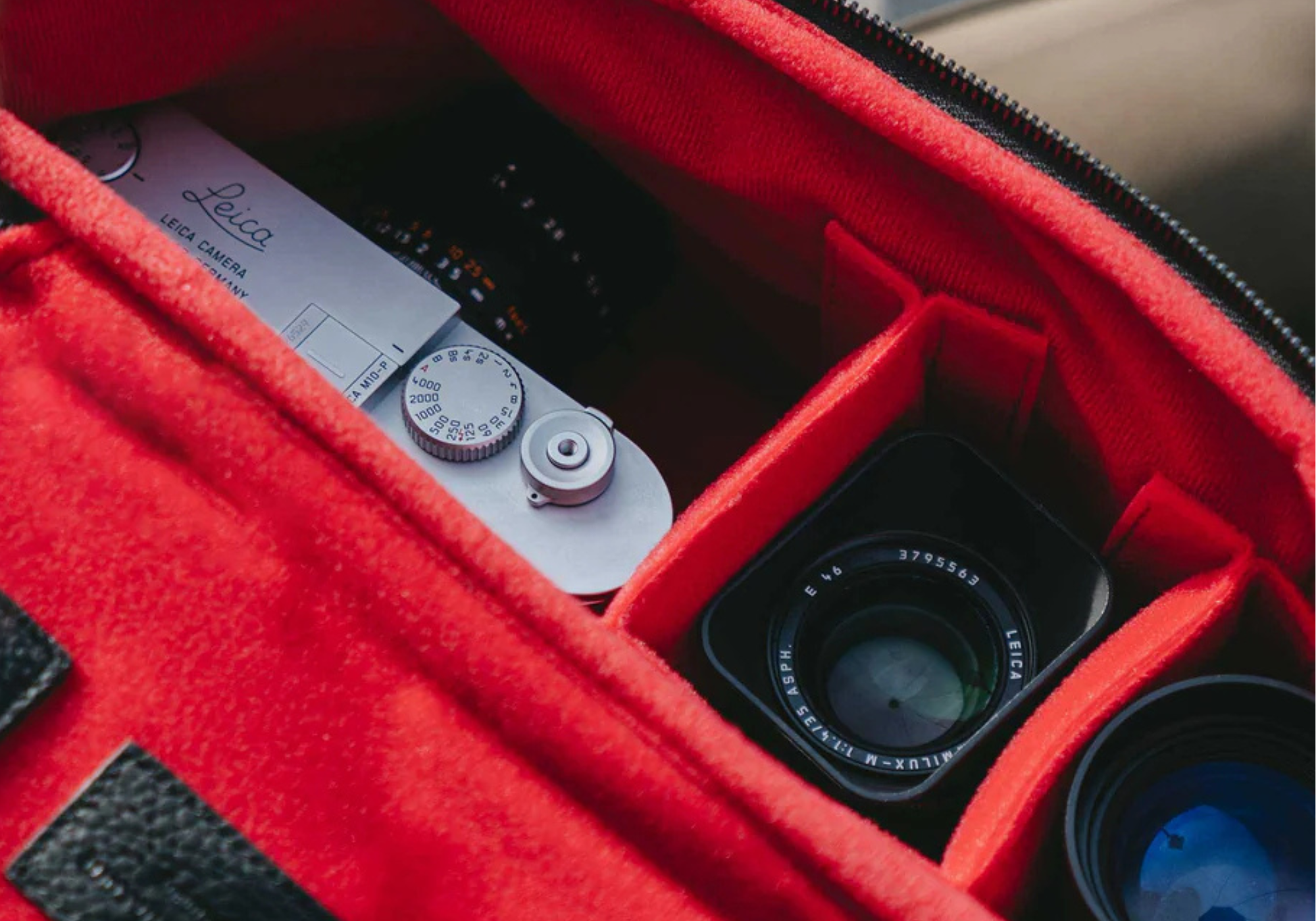
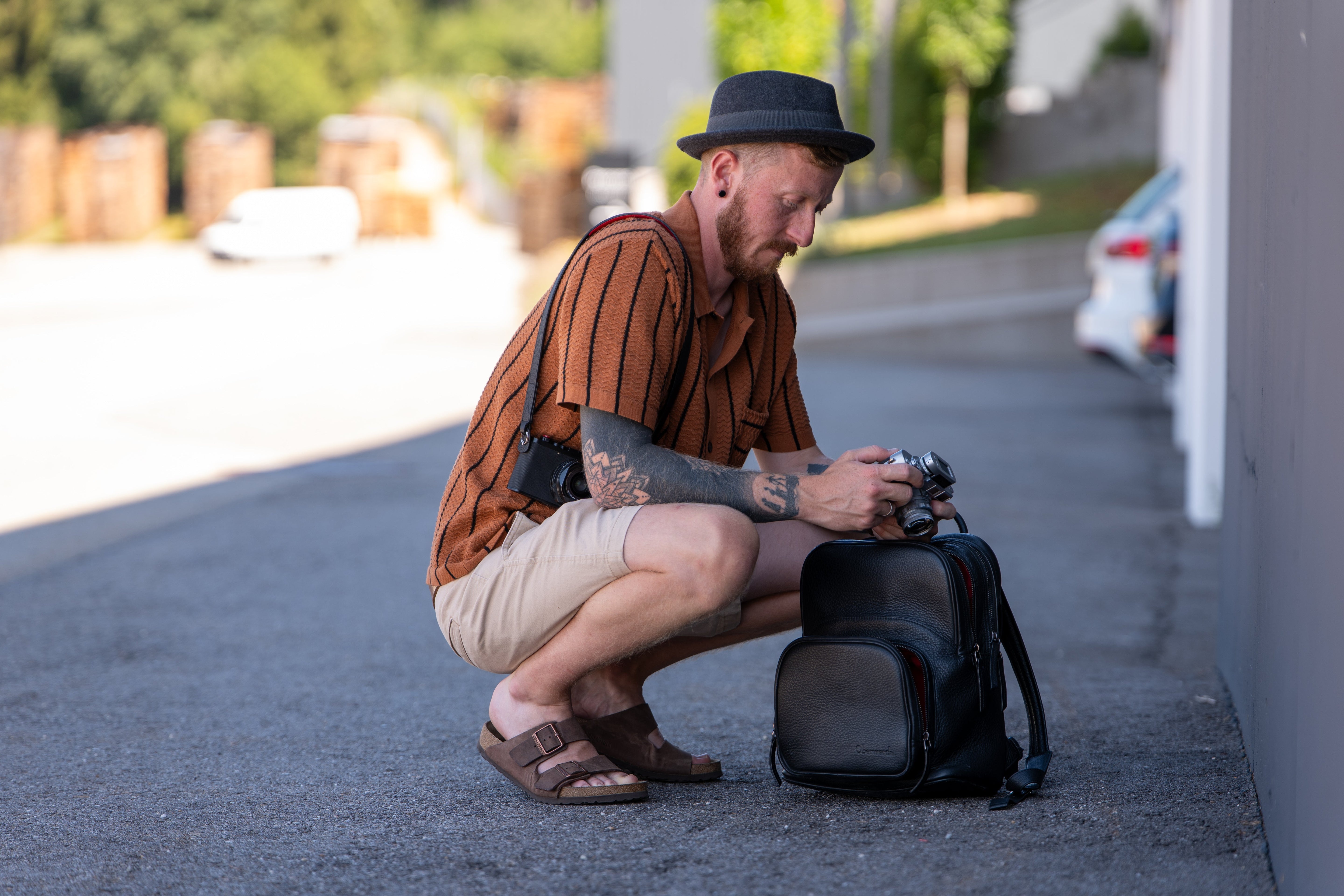
Anyone who works with a rangefinder Leica knows that the moment is over quickly and accessing the body and a second lens should be just as smooth and precise as focusing itself. A compact messenger bag such as the Edward (M Bag) holds the camera and additional lenses in a padded main compartment with freely positionable divider pads. The red inner lining ensures a clear view even in low light, and the full-length front pocket can hold an 11" iPad Pro or notebook, for example - including a hidden AirTag®compartment for greater security on the move.

Advantages of the rangefinder
From a technical point of view, the biggest difference between a rangefinder camera and the very popular SLR cameras is that the distance to the object is measured through the viewfinder and not through the lens as with SLR cameras. As a result, the measuring accuracy of these cameras is much higher than that of an SLR, especially at short focal lengths.
Another important advantage of cameras equipped with a rangefinder is that they can handle the available light particularly well, which is also referredto as available light. The bright and high-contrast viewfinders of the Leica allow sharp, well-composed photos even in difficult lighting conditions. Particularly low-light lenses on SLR cameras darken the viewfinder considerably. The Leica can therefore do without a flash even in places where you would be standing in the dark with an SLR camera without artificial lighting.
And the rangefinder also makes a real difference to the feel of the camera. Photographers appreciate that the rangefinder system makes the Leica M easy and intuitive to use after an initial learning phase. They can concentrate on the central focus - their image - and transform their very own subjective image idea into a photo.
The various illuminated frames that can be displayed, which show the image field of the respective lens, make it easy to observe the surroundings while taking pictures. Even when the shutter is released, the view of the subject is maintained, which offers additional freedom and more spontaneous reaction options to what is happening. Not least because of its rangefinder, the Leica M has been one of the most popular cameras in the field of dstreet photographye for decades, where a high degree of spontaneity and quick reactions are required.
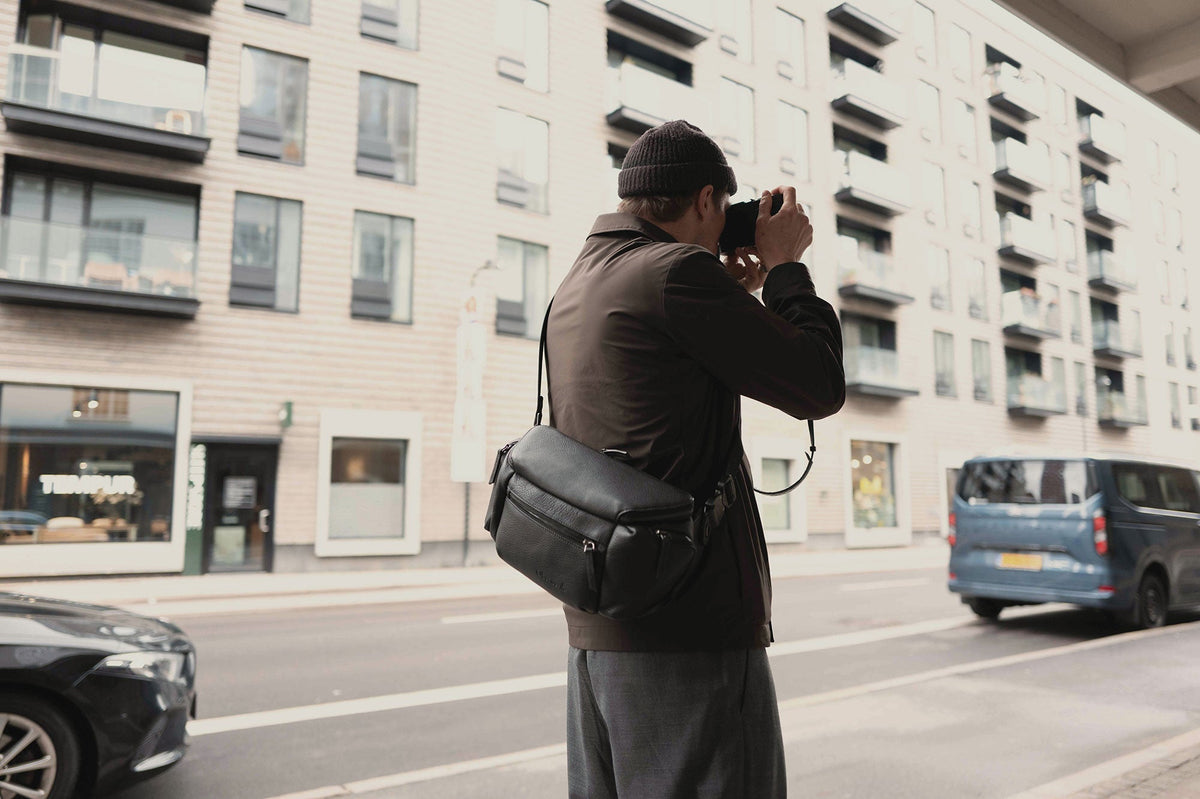
Especially in street photography, where lightness, speed and inconspicuousness are crucial, the importance of reduced, well thought-out equipment is also evident away from the camera. A compact camera bag such as the Sling Bag Pure, which allows quick access, sits close to the body and neither rattles nor bulges, supports precisely this intuitive work with the rangefinder. When the camera and lens are protected but always ready to hand, the focus remains where it belongs: on the moment in front of the viewfinder.

The rangefinder of the Leica M brings with it some special features in the behavior of photographers working with the camera. For example, they have to get much closer to the subject, as shots taken from far away are difficult to compose and focus due to the smaller image section in the rangefinder. This creates a different interaction between the photographer and his subject, he becomes part of the scene he is documenting and does not remain an observer.
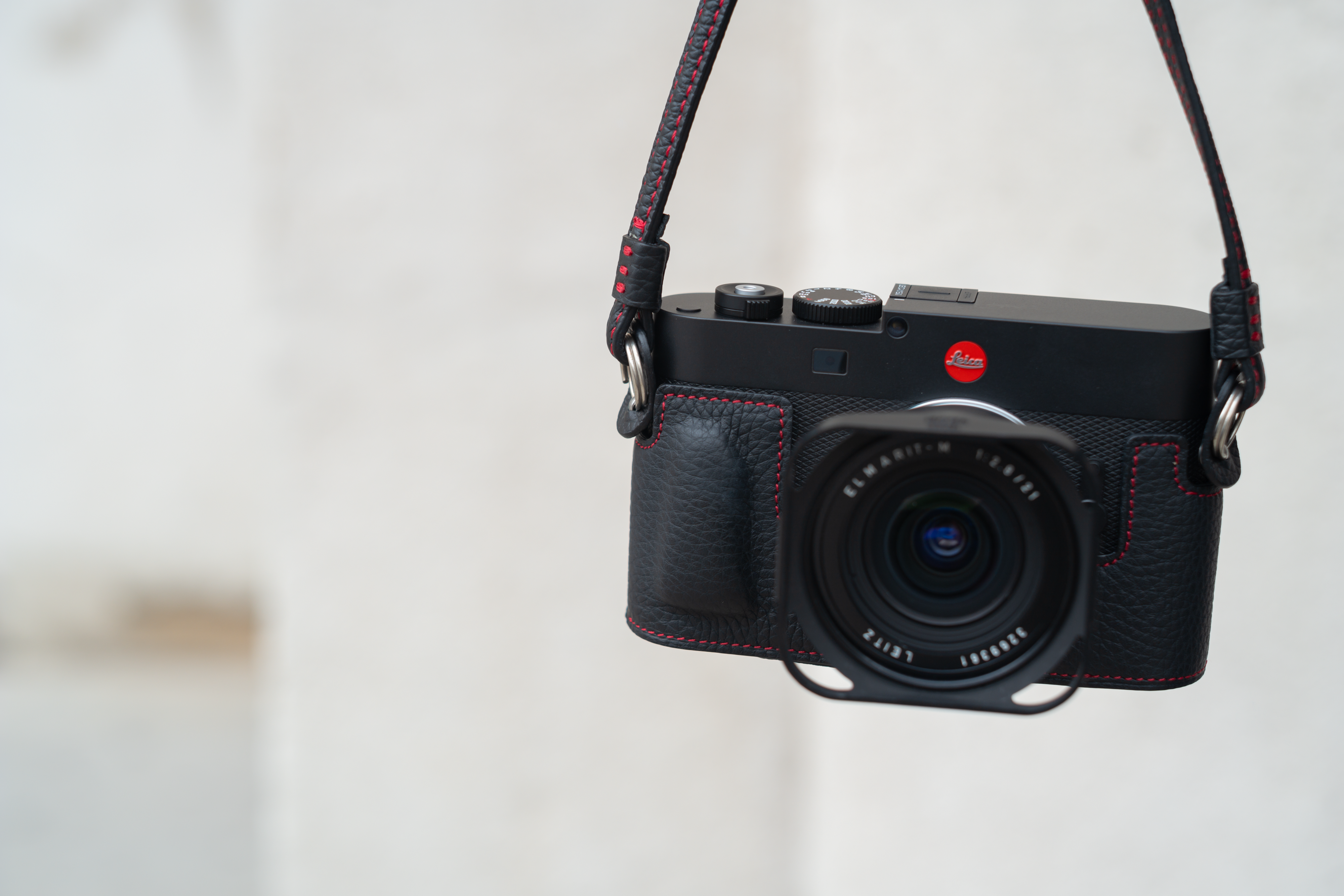
If you consciously move closer to your subject with a rangefinder camera, you move more intuitively, react faster and often hold the camera in your hand permanently. This is precisely where a custom-fit half case comes into its own: It reliably protects the camera body, improves the grip and at the same time preserves the slim, unobtrusive silhouette of the Leica. A high-quality leather half-case such as the Leica M11 TagCase®, precisely tailored to the Leica, supports this direct, close-to-the-body photography - without being bulky, without slowing you down, in the spirit of street photography.
This different way of photographing with the Leica M requires practice and unsuccessful attempts have already deterred some photography enthusiasts from experimenting with a rangefinder camera. If you want to see exactly what the photo will actually look like as you take it, you might be better off with a modern digital camera. Here, an electronic viewfinder is used to simulate the exact exposure of the photo.

Problems with the rangefinder
Despite its many advantages and staunch advocates, a rangefinder camera like the Leica is of course not always the best choice in every situation. Manual focusing, for example, is difficult when you or the subject you are photographing are moving quickly. To work without autofocus, you need a moment to focus before taking the photo. Moving objects often simply do not allow enough time to react. Photographing with a rangefinder camera can also be a headache in the telephoto range, because if the subject is too far away, precise focusing is simply too difficult at some point. At longer focal lengths, the part of the viewfinder that displays the actual image can become very small, which makes precise focusing difficult. However, a viewfinder magnifier, which is offered by manufacturers as an accessory and makes focusing easier, can help.
Another problem with rangefinder cameras is the so-called "parallax effect". As the image is not seen directly through the lens and it is at a small distance from the optics, there is a shift from the viewfinder image to the subsequent photo. The parallax effect is most noticeable in close-up shots. In addition, the rangefinder can shift slightly, which results in blurring of distant subjects. This error can be readjusted at home, for which numerous videos on the Internet provide instructions. However, this type of adjustment involves millimeter work that requires not only expertise, but also the finest dexterity and can be left to the experts. At the Leica factory, for example, problems with the rangefinder can be professionally rectified.