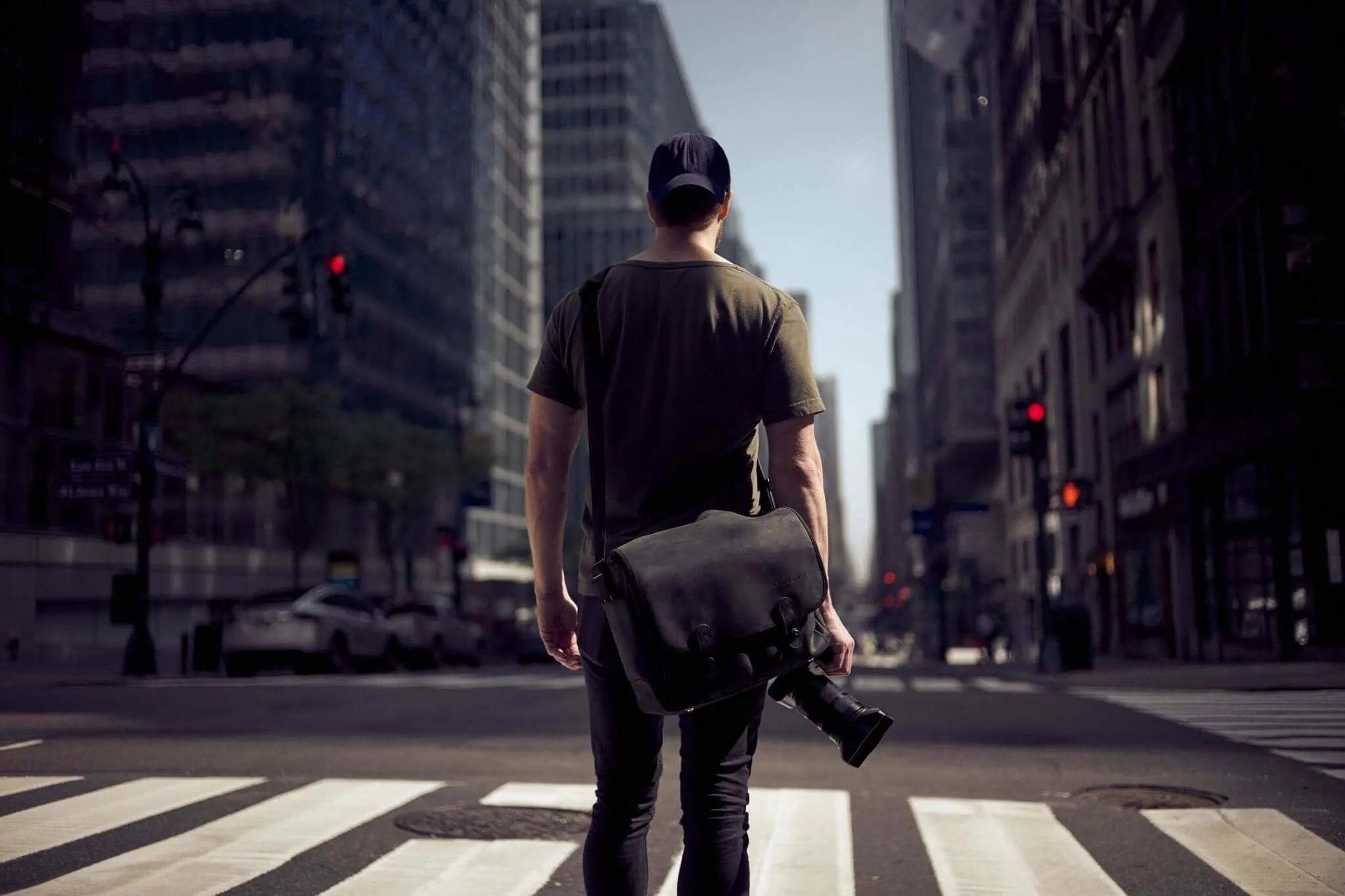
Street photography: Which is the best lens?
Which lens is best for street photography?
In contrast to many other forms of photography, street photography is characterized by the urban context and the subject of the everyday. The well-known American photographer and author Susan Sontag describes the photographer in the context of street photography as "an armed version of the solitary wanderer who explores, pursues and traverses the urban inferno, the voyeuristic stroller who discovers the city as a landscape of lush extremes". What is special about this genre is the speed of the photos, which as a snapshot represent a snapshot of something irretrievably past that cannot be repeated. Street photography strives to capture a feeling and even make the smells and sounds of the street visible.
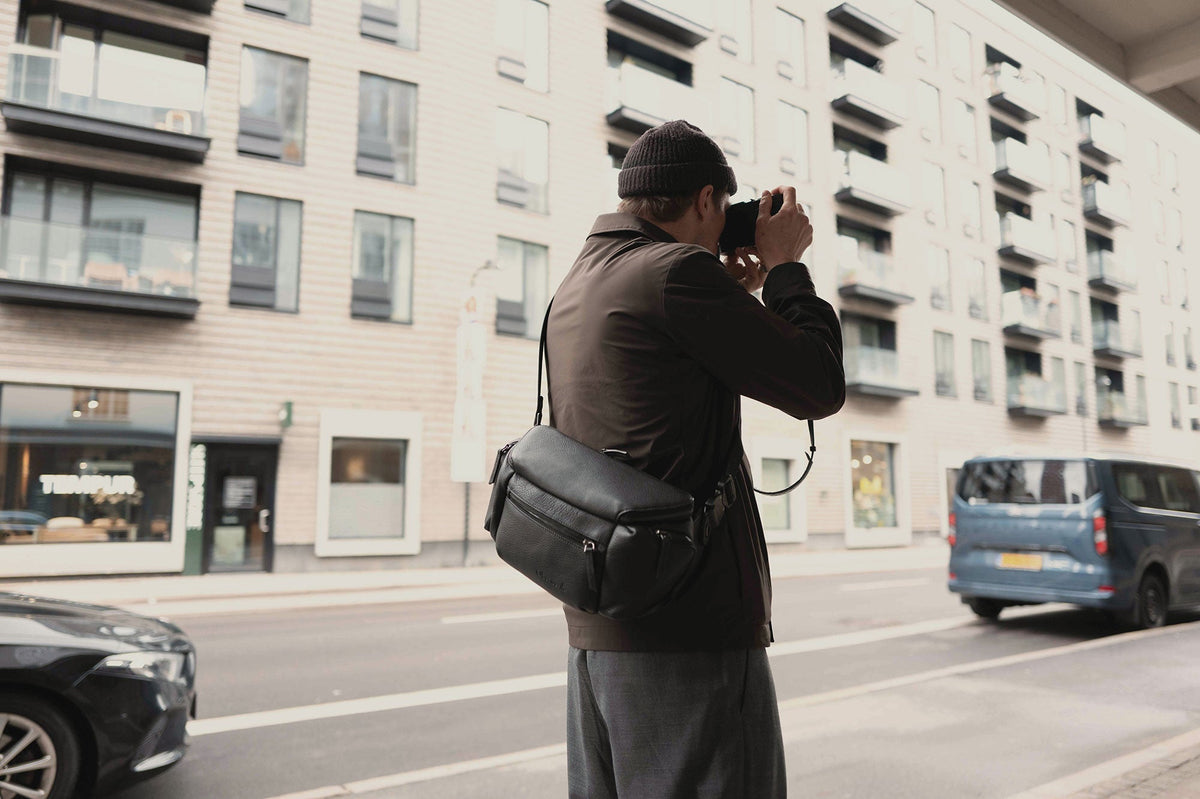
Especially when you spend hours roaming the streets, you need a bag that protects your equipment without weighing you down. A compact bag with intuitive access helps you to shoot spontaneously, even for fleeting scenes. Models such as the SlingBag Pure offer exactly this combination of elegance, functionality and quick handling, perfect for street photography.

What are your personal requirements?
When choosing your own street photography lens, it naturally depends a lot on your personal preferences and level of experience. Many street photographers report that the lens that they mainly work with changes again and again in the course of their work. The way of photographing and the photos themselves also change with each lens and so it is always instructive and exciting for experienced photographers to experiment with a new lens.
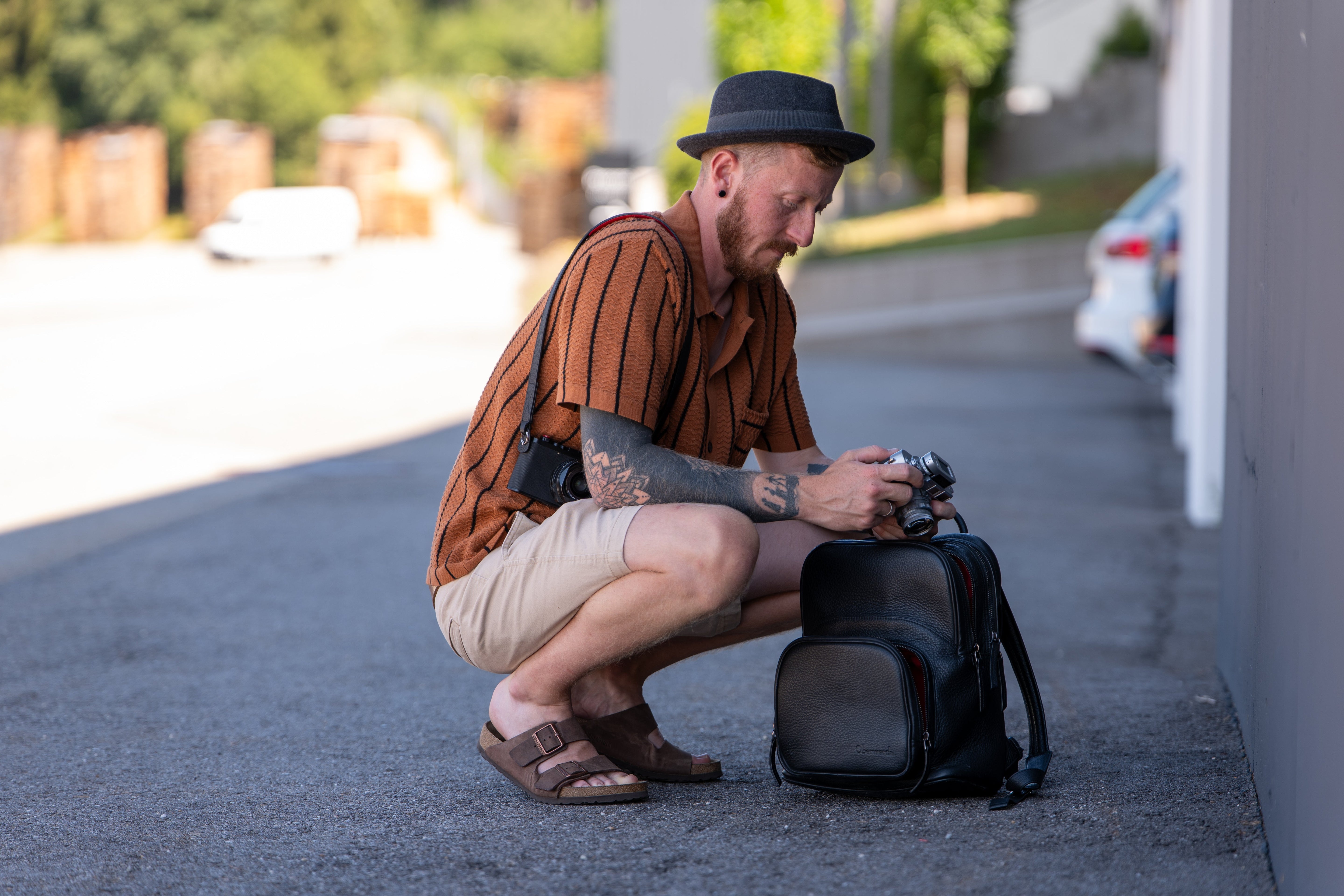
Especially when you spend hours roaming the streets, you need a bag that protects your equipment without weighing you down. A compact bag with intuitive access helps you to shoot spontaneously, even for fleeting scenes. Models such as The Q Bag® offer exactly this combination of elegance, functionality and quick handling, perfect for street photography. Many photographers like to carry two lenses with them, for example a telephoto lens for discreet photography from a distance and one for closer shots. Of course, it also depends on the context, for example when traveling to foreign cultures, if you don't want to distort or change the situation with your own appearance as a photographer, a telephoto lens can be a good solution. In any case, it is important that a lens for street photography is light and yet has a high resolution. General considerations also include the focal length, shutter speed and aperture as well as the light sensitivity of the lens.

The right focal length
When we talk about the focal length of a lens, we mean the section of the image that is captured with a particular lens. The focal length is measured in millimeters, whereby a short focal length such as 16 mm is suitable for a large image section such as a square full of people. A small focal length, e.g. 300 mm, on the other hand, allows a detailed shot of a passer-by on the other side of the square, for example. In general, focal lengths are specific to each lens, with zoom lenses covering a wider range of focal lengths than fixed focal length lenses. While zoom lenses are therefore versatile, fixed focal length lenses are characterized by light intensity and often better image quality, especially in low light conditions, and are generally lighter and smaller, which makes them popular in street photography. If you don't want to commit yourself or don't yet feel confident with fixed focal lengths, you can also carry both types of lens with you as a compromise and decide between a fixed focal length or zoom lens depending on the situation. But which fixed focal length do I need for street photography?
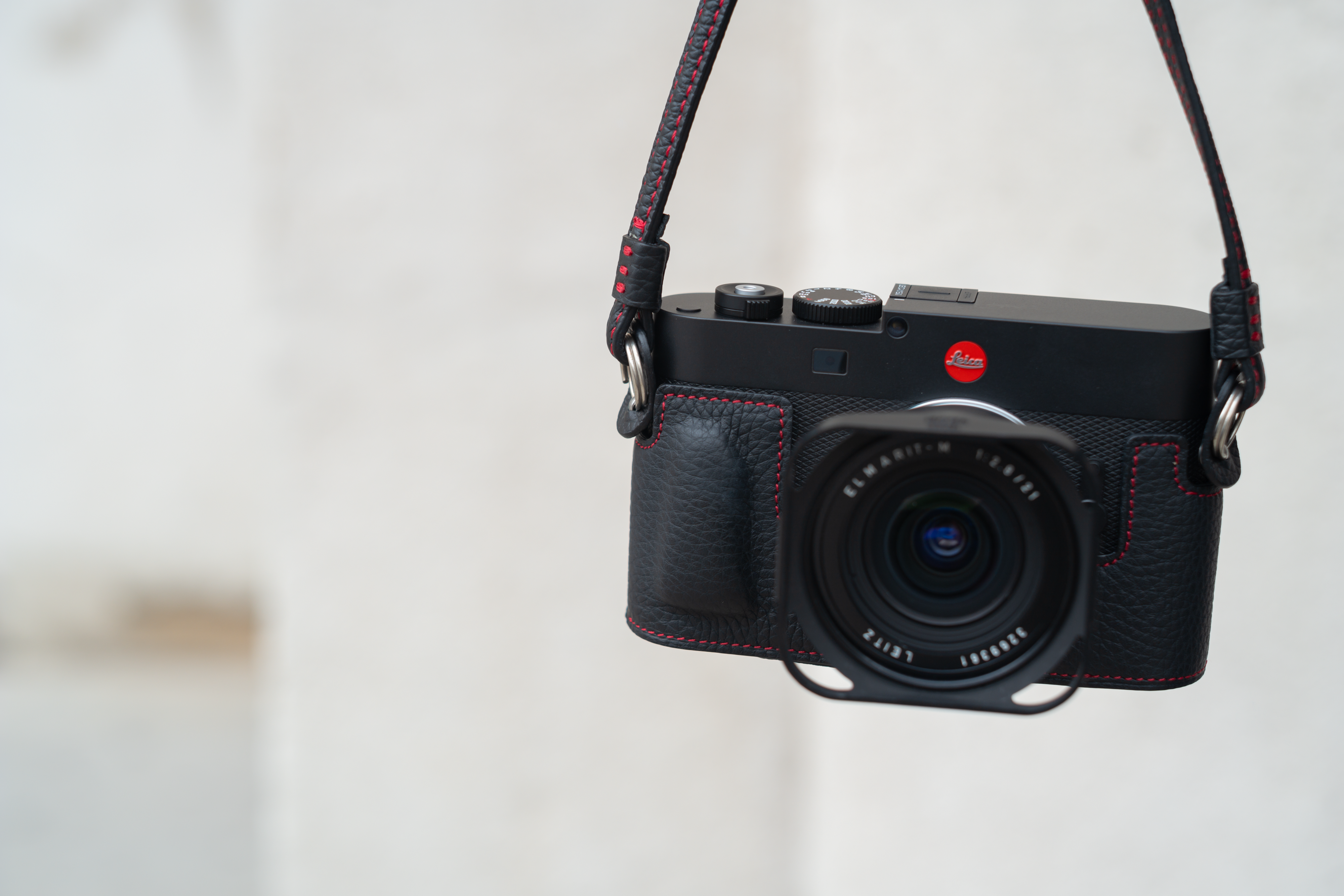
In general, focal lengths between 20 and 50 millimetres are used in street photography, with most street photographers working with 28mm or 35mm focal lengths, as these lenses fit on small, compact cameras. The particular advantages of these lenses are their handiness and inconspicuousness. While a lens with a focal length of 28mm, which is considered the standard in street photography, still allows you to take wide-angle photos with only a little distortion, with a focal length of 35mm you have to get a little closer to the object of your photographic desire. Nevertheless, this focal length is recommended for beginners, as it distorts the background only slightly, but at the same time captures a fairly large image section and thus a scene in its context. A focal length of 55mm also has its advocates, photographers appreciate it because it depicts people and backgrounds exactly as we perceive them with the human eye and therefore photos taken with this focal length have an impressive effect on the viewer and make them feel part of the scene.

Luminous intensity or aperture
The speed is the maximum aperture of the lens. In general, the wider the aperture of a lens can be opened, the more light reaches the camera's sensor. In poor lighting conditions, a large aperture, i.e. a fast lens, may be necessary. The maximum aperture is indicated by the specific f-number for each lens. This starts with an f/ followed by a number where the faster the lens, the smaller the f-number. Fast lenses are often more expensive, but are especially worthwhile if you want to take photos in the city in the early morning or late evening hours. In addition to the exposure, the aperture also influences the sharpness of the images. For example, you need a large aperture or high light intensity for the special effect of pictures with a blurred background.
Shutter speed in street photography
While the aperture of the lens determines the number of light rays that fall on the light sensor (which corresponds to the former film in analog cameras), the shutter speed regulates the duration of the exposure. For example, the shutter speed can influence how bright or dark the image becomes. With a slow shutter speed, moving figures or objects are also blurred, which can be a desirable effect or an obstacle, depending on the image.
Anyone who spends hours taking photographs knows that comfort can make the difference between concentration and creativity. A well-padded, adjustable shoulder strap is particularly useful for long walks through narrow streets or spontaneous changes of location. Bags such as the Signature L combine precise workmanship with durable materials for photographers who don't want to compromise.
Lens connections
In addition to all these points, which relate more to your own technology and personal preferences, the lens mount also plays a role. This is because a lens mount is specific to each chamber manufacturer. This means, for example, that only a Nikon lens or a lens made by a third-party manufacturer for this mount will fit on a Nikon camera. When choosing a suitable lens, you should therefore also take into account any camera you may already have.
If you are travelling with different lenses, an organized interior and quick lens changes are important. A bag like the LSI bag Leo S "Correspondent" with a cleverly divided inner compartment and soft padding helps you to react quickly without losing track, ideal for dynamic street sessions with changing focal lengths.

Last but not least, the price is of course also important when choosing the best lens for street photography. Photographers repeatedly emphasize that constant practice and experimentation can often be more important than the perfect equipment. Every camera and every lens has its own advantages and disadvantages in street photography. In order to take good photos, photographers need to know their tools well and be able to seize the right moment!