

Camera backpack buying guide 2026
The complete guide to choosing the perfect photo backpack

Finding the right camera backpack can fundamentally change your photography experience. Whether you're hiking through mountain landscapes, exploring urban streets or traveling internationally with thousands of dollars worth of gear, your backpack becomes an extension of your creative practice. The wrong choice means discomfort, worries about protection and missed shots while you search for your gear. The right choice means confident mobility and instant access when you need it.
This comprehensive guide takes you through all the important aspects of choosing a camera backpack. From different access types to protection levels, the right sizing for your gear to the choice of material for your conditions, we've compiled years of experience in equipping photographers to help you make an informed decision.
What this guide covers
- Why backpacks? Understanding bag types
- The 7 key features
- Size advice: camera systems & capacity
- Backpacks by photo style
- Material overview: leather vs. synthetic vs. canvas
- Our backpack recommendations
- Frequently asked questions

Why choose a camera backpack?
Before we get into specific features, it's worth understanding when a backpack makes sense compared to other carrying options. Each type of bag serves different needs, and choosing the right size is your first important decision.
Backpack vs. messenger bag vs. sling bag
Camera backpacks distribute the weight evenly over both shoulders and are therefore ideal for heavy loads and longer periods of carrying. They typically offer the largest capacity and the best organization options. The trade-off is speed of access - most require you to remove the backpack to access your gear, although side access designs minimize this issue.
Messenger bags swing forward for quick access without having to remove the bag. They are ideal for street photography and situations where speed is more important than capacity. However, they concentrate the weight on one shoulder, which limits the comfortable carrying time and maximum load.
Sling bags offer a middle ground - they are worn across the body and swung forward for access. They are more comfortable than messenger bags for moderate loads, but cannot match the capacity or weight distribution of a real backpack.

When you should choose a backpack
A backpack becomes the clear choice when:
- Carrying multiple lenses - Two or more lenses, especially telephoto lenses, require backpack capacity
- Long distances are covered - Extended shoots, travel photography and hikes require even weight distribution
- Camera and laptop are combined - Modern workflows often require editing options on location
- Air travel is planned - backpacks fit under seats and in overhead compartments and protect equipment during handling
- Outdoor photography is planned - landscape, wildlife and adventure photography often takes you to remote areas in changeable weather conditions
The 7 decisive features
Every camera backpack balances competing priorities. Understanding these seven feature categories will help you recognize which trade-offs are important for your specific needs.
1. access design: how you get to your gear
Access design fundamentally shapes your photography experience. The three main approaches each serve different use cases:
Back access: the entire back of the bag opens to reveal your gear. Maximum security as thieves cannot access the equipment while you are wearing the backpack. Requires you to put the bag down to remove anything. Ideal for travel photographers who prioritize security.
Side access: A door on one or both sides allows you to swing the bag around your body and grab the camera without removing it completely. Balances safety with speed. The most popular design for working photographers who need frequent access.
Top access: Traditional backpack opening from the top. Good for larger items, but requires digging through layers to get to lower gear. Often combined with other access methods.
2nd level of protection: Padding & weather protection
Your thousands of dollars worth of gear deserves serious protection. Evaluate padding density, divider quality and weather sealing based on your environment and shooting conditions.
Padding density: High-density closed-cell foam offers superior impact protection compared to thin polyester padding. Look for at least 1cm of padding on all surfaces that touch your gear. Premium bags use memory foam that conforms to gear shapes.
Divider systems: High quality dividers use Velcro for flexibility, padded construction for protection and reinforced edges to maintain shape. Cheap dividers collapse under weight and do not adequately separate gear.
Weather protection: Consider both the water resistance of the material and the seam construction. Waterproof materials mean nothing if water seeps in through unsealed zippers or seams. Many bags include rain covers for extreme conditions, but inherent weather protection is important for unexpected situations.
3. capacity: match bag to gear
Camera backpacks range from 15L daypacks to 45L expedition carriers. Bigger is not better - the ideal capacity holds your gear with minimal extra space to prevent slippage while remaining comfortable to carry.
Compact (15-20L): One mirrorless camera, 2-3 lenses, minimal accessories. Perfect for minimalist kits and urban photography. Often approved as personal luggage for airplanes.
Standard (20-30L): One camera, 4-5 lenses including telephoto, flash, laptop up to 15". The sweet spot for most photographers. Hand luggage compliant.
Large (30-45L): Multiple cameras, extensive lens collection, drone, lighting equipment. Professional assignments and multi-day shoots. May be checked on some airlines.
4. comfort: carrying system design
Camera gear weighs significantly more than typical backpack contents. A 10kg load will feel drastically different depending on the quality of the carrying system. Important elements:
- Shoulder straps: width, padding density and attachment points determine shoulder comfort. S-shaped straps prevent slipping. The padding should be firm rather than soft - it compresses less under load.
- Back panel: Ventilation channels or mesh prevent excessive sweating. The padding should support the lumbar area. Stiff frame plates help with weight distribution.
- Hip belt: Essential for loads over 8kg. Transfers weight from shoulders to hips. Should be removable for lighter loads or urban environments where it gets in the way.
- Chest strap: Connects shoulder straps across the chest to prevent slippage and improve load stability. Adjustable position adapts to different body types.
5. organization: pockets & compartments
Beyond the main camera compartment, organizational features determine workflow efficiency. Consider how you will access batteries, memory cards, filters, phone and personal items.
Essential Pockets:
- Dedicated laptop sleeve with padding (preferably floating off the ground)
- Quick access top or front pocket for phone/wallet
- Internal mesh pockets for batteries and memory cards
- External side pockets for water bottle or tripod
- Hidden or secure pocket for passport and valuables
6. tripod & external attachment
Most photographers will need a tripod transport option at some point. Evaluate both the security of the attachment systems and whether they impede access to other bag features.
Bottom strap system: Tripod hangs under the bag, accessible without opening. Can swing and hit obstacles. Works for compact travel tripods.
Side pocket transportation: Tripod slides into expandable side pocket with top strap. Secure and stable. Can block side access. Best for larger tripods.
Central attachment: Some hiking-oriented backpacks position tripods centrally behind the bag. Excellent weight distribution, but requires removal of the backpack for access.
7. aesthetics & discretion
How your bag looks is not just vanity. In some environments, an obvious camera bag attracts unwanted attention. In professional environments, appearance influences customer perception.
Tactical/Technical Look: MOLLE webbing, prominent branding and aggressive appearance immediately identify camera bags. Favored by some outdoor photographers, problematic in theft-prone urban environments.
Urban/professional look: Clean lines, minimal branding and premium materials blend into business and travel contexts. Leather bags are particularly discreet and exude quality at the same time.
Everyday backpack look: Some bags deliberately appear like normal backpacks and completely conceal their camera-specific nature. Maximum discretion for street photography and traveling in challenging areas.
Shop the look

Shop the look
Size advice: Camera systems & capacity
Different camera systems have dramatically different space requirements. Understanding the space requirements of your equipment will help you choose the right capacity.

Mirrorless systems (Sony, Canon EOS R, Nikon Z, Fujifilm)
Modern mirrorless cameras offer the best size to performance ratio. The bodies are compact, and shorter footprints allow for smaller native lenses. A typical mirrorless kit - body plus three lenses - fits comfortably in a 20L backpack with room for accessories and personal items.
Typical mirrorless kit example:
- Sony A7 IV or Canon EOS R6 body
- 24-70mm f/2.8 standard zoom
- 70-200mm f/4 telephoto lens
- 35mm or 50mm f/1.4 fixed focal length
- Batteries, cards, filters
Recommended capacity: 20-25L
Sony camera bags
DSLR systems (Canon EOS 5D/6D, Nikon D850)
DSLRs and their associated lenses require more space. The mirror box adds body depth, and older lens designs tend to be larger. Calculate 20-30% more capacity compared to equivalent mirrorless setups.
Typical DSLR kit example:
- Canon 5D Mark IV or Nikon D850 body
- 24-70mm f/2.8 standard zoom
- 70-200mm f/2.8 telephoto lens
- Speedlight flash
- Batteries, cards, accessories
Recommended capacity: 25-35L
Nikon camera bags
Compact & rangefinder systems (Leica, Fujifilm X100)
Premium compact cameras and rangefinder cameras reward smaller bags. Leica M bodies with three small fixed focal lengths fit into bags that would barely hold a DSLR body on their own. The challenge is to find bags that are small enough without sacrificing protection quality.
Typical compact kit example:
- Leica M11 or Q3 body
- 28mm, 50mm, 90mm Summicron fixed focal lengths
- Minimum accessories
Recommended capacity: 15-20L
Leica camera bagsRocky Mountain


Backpacks by photo style
Your shooting style determines which features are most important. Here's what you should look for based on common photography disciplines.
Travel photography
Priority features: Airplane compliance, security, comfort for all-day carry, weather protection
Travel photographers need bags that transition seamlessly from airport to ancient temple to mountain vantage point. Prioritize carry-on compliance (typically under 45L and within airline dimensional limits), lockable zippers or hidden compartments for security, and comfort systems for hours of walking. Weather protection is more important than waterproofness - you need protection from unexpected drizzle, not prolonged heavy rain.
Consider bags that are not immediately recognizable as camera gear. Tourist areas around the world attract thieves who recognize popular camera bag brands. A leather backpack, which could just as easily contain business documents, provides natural camouflage.
WeekenderWedding & event photography
Priority features: Quick access, professional appearance, capacity for dual body setup, comfort for long events
Wedding photographers are constantly moving through different locations, often shooting 10-12 hour days. Side access becomes essential - you can't ask the bride to wait while you put your bag down and look for a lens. Professional appearance is important; your bag is part of your image. Many wedding photographers prefer leather bags that suit formal settings.
The capacity should hold at least: two bodies, three zooms (16-35, 24-70, 70-200), fixed focal length for low light, two flashes and substantial batteries and cards. This typically means at least 25-30L.
Messenger BagsLandscape & nature photography
Priority features: Weather protection, tripod attachment, comfort when hiking, durability
Landscape photographers often hike into remote areas in challenging weather. Weather sealing becomes critical - not just the materials, but sealed zippers, reinforced seams and included rain covers for extreme conditions. Tripod portability is essential as virtually all serious landscape work requires one.
Comfort systems need to handle rough terrain. Look for bags with load-lifting straps, padded hip belts and breathable back panels. The internal organization should accommodate filters (gradient ND, polarizers) as easily as lenses.
Hydro LineStreet photography
Priority features: Discretion, quick access, minimal space requirement, comfort when walking
Street photographers benefit from bags that don't announce expensive gear. The ideal street photography backpack looks like a regular bag, provides instant access to a single camera and carries minimal additional gear. Many street photographers use compact backpacks for bodies plus 2-3 small fixed focal lengths and reserve messenger bags for single camera setups.
In urban environments, the risk of theft is real. Back access increases security. Neutral colors and minimal branding help your bag - and you - stand out in crowds.
Camera backpacks
Casual

Saffiano
Material overview: leather vs. synthetic vs. canvas
Your choice of material influences durability, weight, weather protection, appearance and long-term value. Each main material category serves different priorities.
Premium leather
Advantages: Exceptional durability, becomes more beautiful with age, professional appearance, natural water protection when properly treated, distinctive aesthetics, easy to repair
Considerations: Higher initial cost, heavier than synthetic alternatives, requires occasional maintenance
High-quality leather camera bags represent a different philosophy than synthetic options. While synthetic bags lose value immediately, full-grain leather develops character over years of use - the resulting patina tells the story of your photographic journey. Well-made leather bags usually last 20-30 years with proper care.
Not all leather is the same. Full-grain leather uses the entire surface of the hide and represents the highest quality. Top grain leather grinds away imperfections and sacrifices some durability for uniformity. Genuine leather (lowest grade) and bonded leather should be avoided for camera applications.
Vegetable-tanned leather, processed using traditional plant-based methods, develops a richer patina than chrome-tanned alternatives. It is more environmentally friendly and typically indicates higher standards of craftsmanship.
Technical synthetic (CORDURA®, ballistic nylon)
Advantages: Lightest weight, excellent abrasion resistance, superior water protection, lower cost
Considerations: Shows wear clearly, difficult to repair, industrial appearance, less distinctive
High performance synthetic materials such as CORDURA® offer excellent performance in tough conditions. When weight is important - long hikes, frequent travel - synthetics offer significant advantages. Technical fabrics are also easy to clean and resist stains.
Waxed cotton (waxed canvas)
Advantages: Classic aesthetics, natural water protection, develops character, moderate weight
Considerations: Requires regrowth, less abrasion resistant than leather or CORDURA®, limited color options
Waxed cotton occupies a middle ground between leather and synthetics. It offers heritage aesthetics and natural water protection with less weight than leather. However, it requires periodic regrowth to maintain water protection and does not achieve the longevity of leather or the technical performance of synthetics.


Our camera backpack recommendations
Based on the criteria discussed in this guide, here are our recommendations from the Oberwerth collection for different photographer profiles.

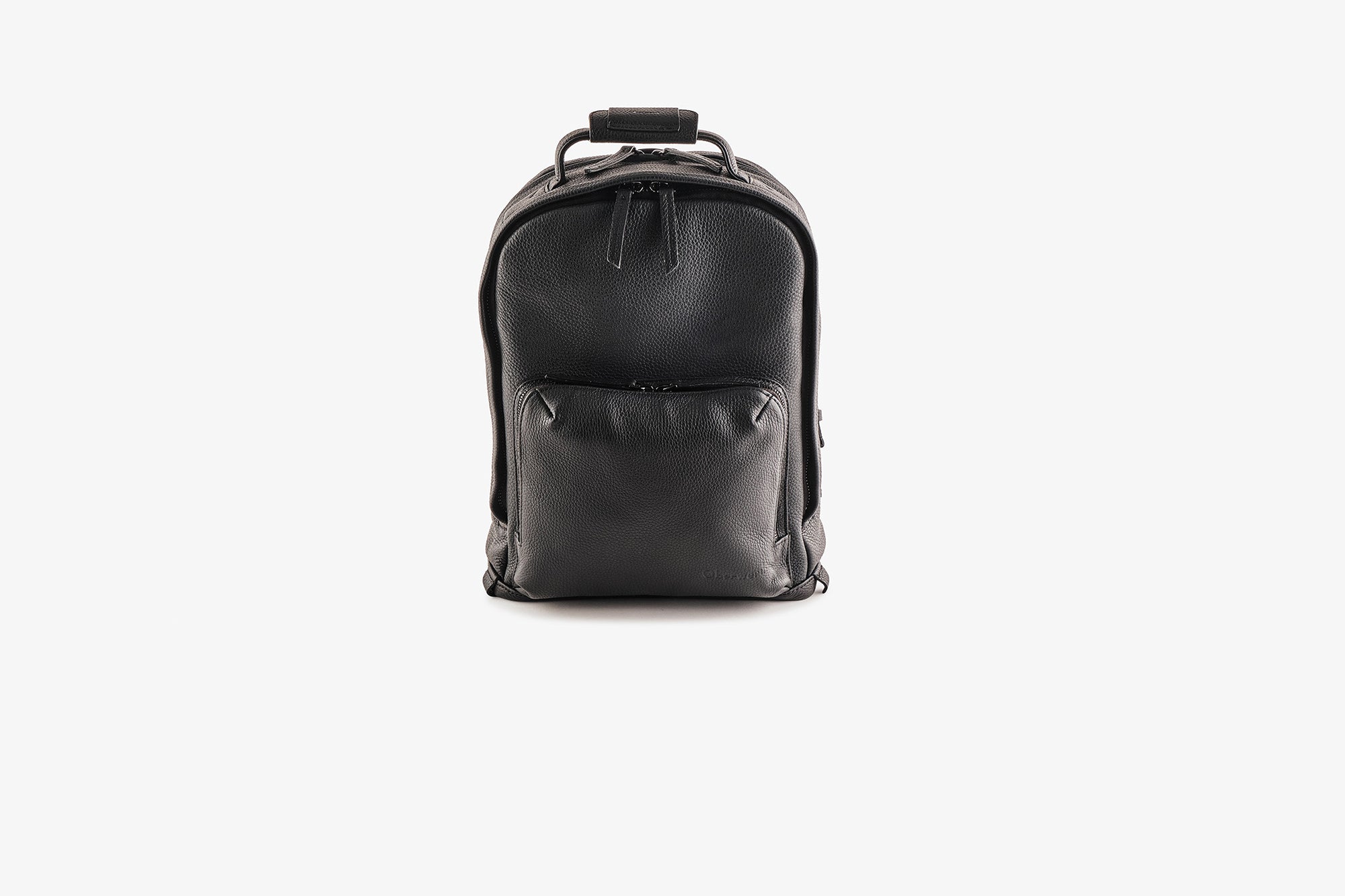
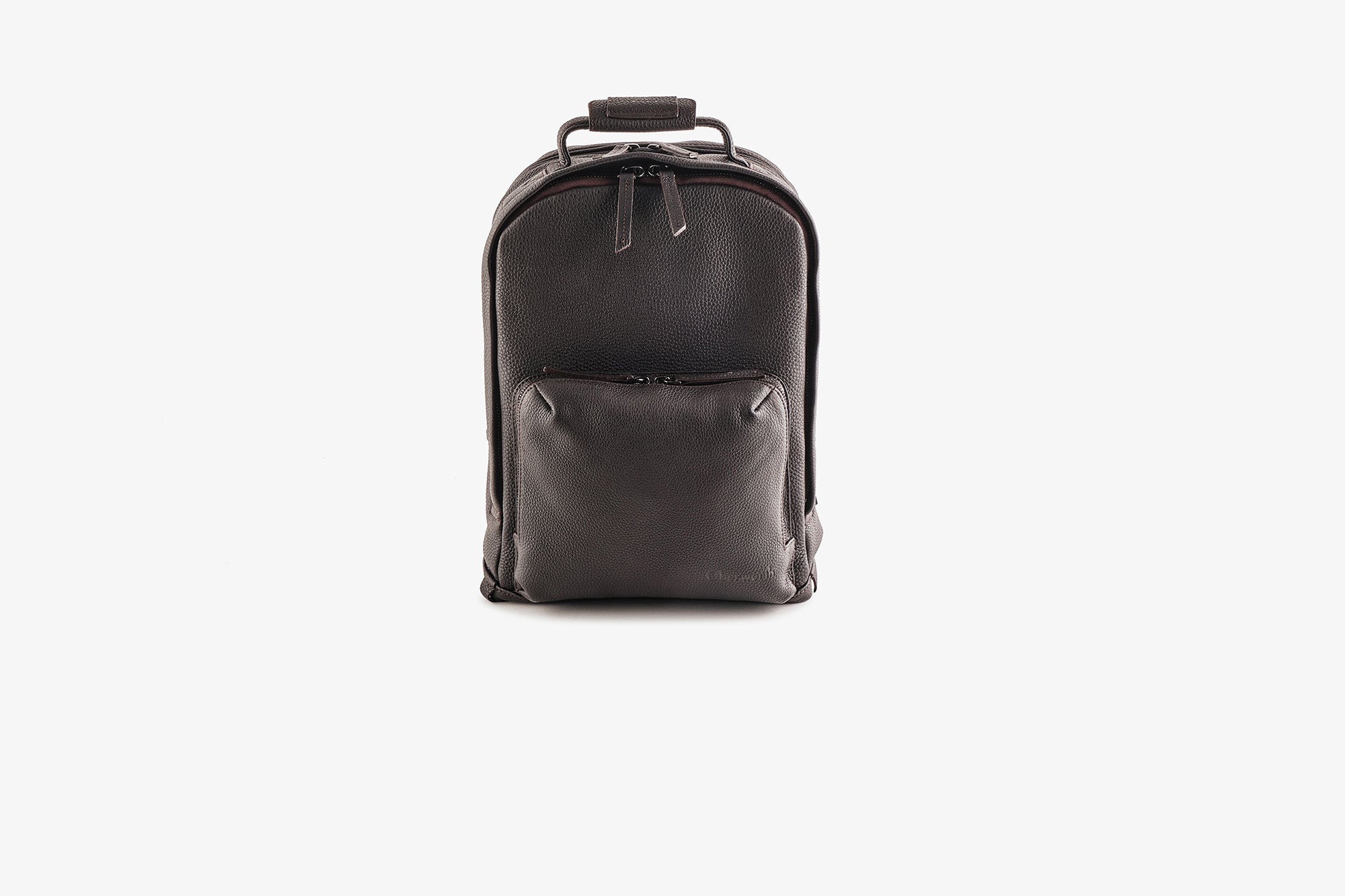
Oberwerth Matterhorn - The premium all-rounder
The Matterhorn embodies everything a premium leather camera backpack should be. Handcrafted from full-grain cowhide in the Casual Line's signature rolled texture, it balances professional appearance with practical functionality.
Key features:
- Removable CORDURA®-lined photo pocket with adjustable dividers
- Dedicated laptop compartment (13" or 14" versions)
- Front organizer pocket for personal items
- Ergonomic leather shoulder straps with full-length padding
- Ventilated back panel
- Converts to business/travel backpack without photo insert
Suitable for: 1 DSLR or mirrorless camera + 2-3 lenses + flash + accessories
Ideal for: Travel photographers, wedding/event professionals, anyone looking for premium quality without compromising on function

Oberwerth Q Backpack - Compact excellence
Developed in collaboration with photographers specifically for compact camera systems, the Q Backpack proves that smaller kits deserve equally sophisticated carrying solutions. The Saffiano leather construction offers scratch resistance alongside elegant aesthetics.
Key features:
- Scratch-resistant Saffiano leather
- Padded camera compartment, optimized for compact cameras
- Laptop/tablet sleeve
- Integrated trolley holder for traveling
- Ergonomic shoulder straps
Suitable for: Leica Q3, M series with small lens or similar compact mirrorless + 1-2 additional lenses
Ideal for: Leica photographers, minimalists, street photographers, anyone who prioritizes elegance and discretion

Oberwerth Business Backpack - Professional versatility
For photographers who also need to transport professional business equipment, the Business Backpack offers double functionality. Its three-compartment design accommodates laptop, documents and camera equipment or can fulfill pure business needs when photography is not the focus of the day.
Key features:
- Three independent compartments
- Laptop compartment for up to 16" MacBook
- Document-friendly organization
- Optional photo insert sold separately
- Trolley sleeve for traveling
Suitable for: With photo insert: 1 compact body + 2-3 lenses. Without: complete business equipment with laptop + documents
Ideal for: Business people taking photos, commercial photographers at meetings, anyone who needs a bag for dual purposes
Frequently asked questions
The size depends on your equipment and whether you are carrying a laptop. For a mirrorless body with 3 lenses and a 13" laptop, 20-25L is typically sufficient. DSLR users or those with extensive kits should consider 25-35L. Always measure your largest lens and make sure the bag will accommodate it.
High quality leather adds around 0.5-1kg compared to synthetic alternatives - a reasonable compromise for dramatically increased durability, professional appearance and the pleasure of using premium materials. The weight difference becomes negligible once you add camera gear.
Most camera backpacks under 45L meet carry-on requirements, but check the dimensions against your airline's specific limits. International carriers often have stricter requirements than domestic flights. The Oberwerth Matterhorn and Q Backpack are designed with air travel in mind.
Treat leather every 3-6 months with high-quality leather care product. Avoid prolonged exposure to direct sunlight. Clean dirt with a damp cloth and allow to dry naturally. Store stuffed with paper to retain its shape. With proper care, leather bags will last for decades.
Back access bags open from the panel that rests against the body and require the bag to be removed and put down for access. They offer maximum security as thieves cannot access the contents while you are carrying the bag. Side access bags have doors on the sides for quick equipment access without complete removal. Side access is faster; back access is more secure.
Most camera backpacks are water-repellent rather than waterproof. They can cope with light rain and splashes, but should not be submerged. Some include rain covers for extreme weather. Oberwerth's Hydro line offers improved water protection through specially treated leather with lotus effect properties.
Generally no. Oversized bags allow equipment to shift during transportation, which reduces protection. Extra empty space also adds weight and bulk without benefit. Buy for your current gear with modest room for growth. If your gear grows significantly, consider a second bag for different use cases.
Indispensable for landscape, architecture and product photographers. For street, event and documentary work - rarely needed. Consider your actual shooting style rather than theoretical scenarios. Many bags offer tripod attachment that you will never use, while some photographers carry tripods separately regardless of bag features.

Make your decision
The perfect camera backpack doesn't exist in the abstract - it exists in relation to your specific needs, equipment, shooting style and values. A landscape photographer hiking mountain trails has fundamentally different requirements than a wedding photographer moving through elegant locations.
We encourage you to prioritize the features that are most important to your photography rather than chasing every possible feature. A bag that excels at your primary use case will serve you better than one that does everything adequately but nothing brilliantly.
At Oberwerth, we've built our reputation on uncompromising quality and true craftsmanship. Every bag we make carries a lifetime guarantee because we stand behind materials and workmanship that truly last. When you invest in an Oberwerth backpack, you're investing in gear that will get more beautiful with use while protecting your creative tools for decades to come.
Questions about which bag suits your needs? Contact us at info@oberwerth.com
Related guides
Camera Sling Bag Guide
Leather Camera Bag Guide
Canon Camera Bag Guide
Leica Camera Bag Guide
Travel Photography Bag Guide
Leather care guide