
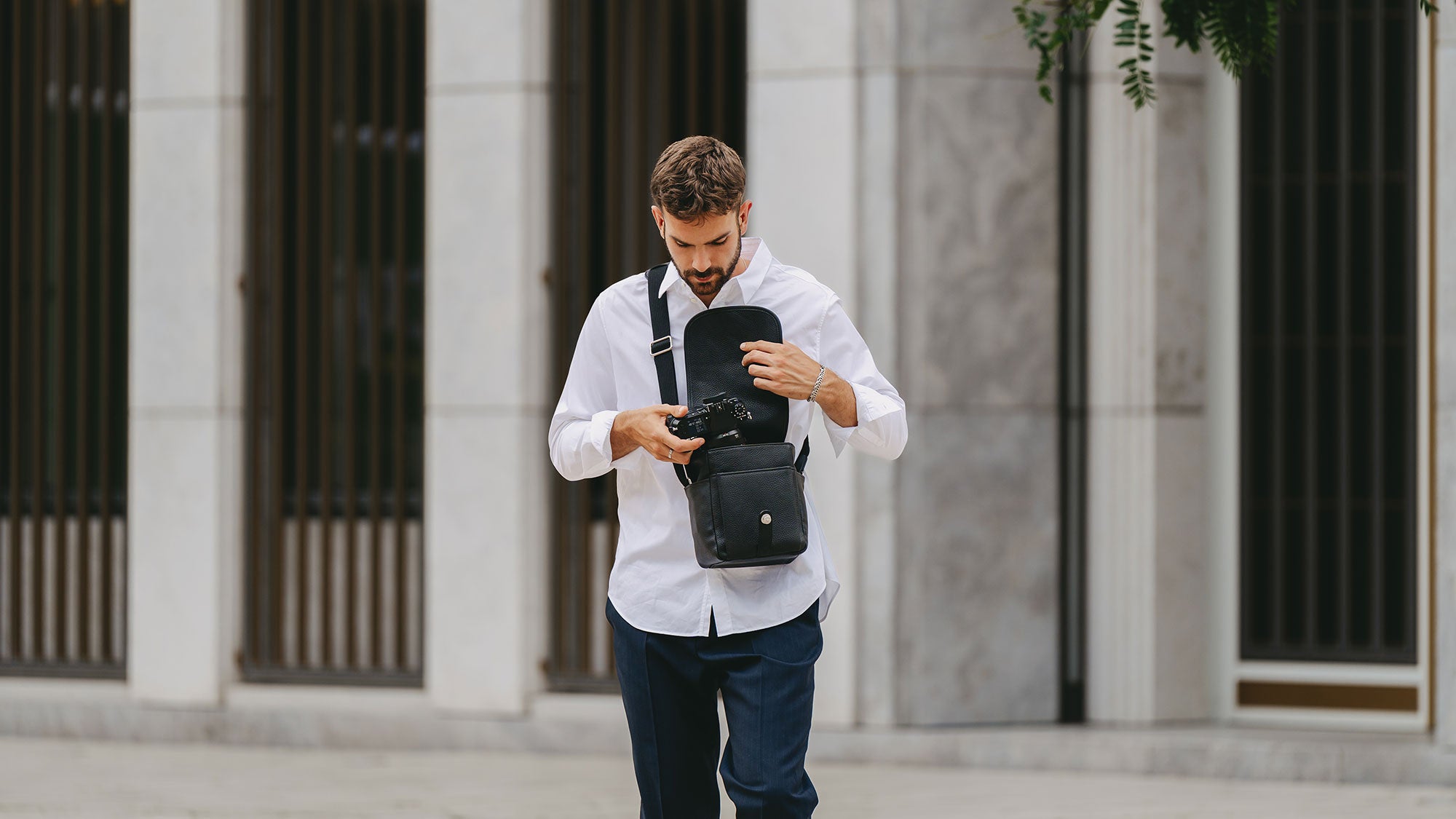
Fujifilm GFX Bag: Carrying Solutions for the GFX 100 II, 100S, and Medium-Format Systems
The Fujifilm GFX system occupies a unique position: it offers medium-format image quality in bodies that are comparable in size and handling to full-frame cameras. The GFX 100 II features a 102-megapixel sensor in a body that a full-frame photographer can operate intuitively. The GFX 100S brought this sensor into an even more compact, travel-friendly form factor, and the GFX 100RF brings the fixed-focal-length concept to medium format. This portability changes everything about how a GFX is carried—these are medium-format cameras you can truly take anywhere, which means the bag becomes more important, not less. This guide covers carrying solutions specifically for GFX system photographers: shoulder bags, backpacks, and half cases tailored to the camera bodies, the larger GF lenses, and the actual workflows of GFX owners.
Contents of this Guide
- How the GFX system differs when using full-frame sensors
- GFX 100 II, 100S & GFX100RF: Dimensions and System Weights
- The GF Lens Factor: Why Lens Depth Determines Your Choice of Bag
- Oberwerth Shoulder Bags for the Fujifilm GFX
- The GFX100RF Half Case (TagCase)
- Camera backpacks for GFX systems with multiple lenses
- Travel and Air Travel
- Carrying Solution and Work Style: The Right Combination
- Materials and Workmanship
- Frequently Asked Questions
How the GFX system differs when shooting with a full-frame camera
Most camera bag guides are designed for 35mm or APS-C systems. The defining feature of the GFX system is that it bridges two worlds. The bodies feel like premium full-frame cameras, but the sensor—43.8 x 32.9 mm, about 1.7 times the area of a full-frame sensor—and the lenses designed for it belong to the medium-format category. This results in a specific set of requirements when it comes to carrying the equipment.
Three distinctions are crucial:
1. The body size is manageable—the lens size is not
The GFX 100S body isn't dramatically larger than a professional full-frame DSLR. The challenge lies with the lenses. GF lenses are designed to project a medium-format image circle, which makes even standard focal lengths physically substantial. The GF 110mm f/2—a portrait classic—is 126 mm long and weighs over 1 kg. A bag designed to hold a GFX body with a kit zoom lens won’t close over a GFX body with the GF 110mm attached.
2. Weight adds up quickly
A GFX 100 II body weighs about 1,030 g. With two or three GF lenses, the system’s weight exceeds 3 kg—even before adding a tripod, batteries, or filters. When working on location for an entire day, this weight requires proper load distribution—a padded, wide shoulder strap for a shoulder bag or a true hip-carrying system for a backpack.
3. The camera goes everywhere with you
Unlike a studio-based digital back system, GFX cameras are taken out onto the street, on trips, and into the field. They’re used just like full-frame cameras. This means that the bag isn’t just for protection during transport—it’s a daily work tool that must offer quick access, comfortable carrying, and protection under real-world conditions, often all at the same time.
GFX 100 II, 100S, and GFX 100RF: Dimensions and System Weights
| Specifications | Fujifilm GFX 100 II |
|---|---|
| Housing Width | 152.4 mm |
| Housing Height | 117.4 mm |
| Body Depth (without lens) | 98.6 mm |
| Weight (including battery) | 1,030 g |
| Sensor | 102 MP, 43.8 x 32.9 mm |
| Weather Protection | Yes (60+ sealing points) |
| Specifications | Fujifilm GFX 100S / 100S II |
|---|---|
| Housing Width | 150 mm |
| Housing Height | 104.2 mm |
| Body Depth (without lens) | 87.2 mm |
| Weight (including battery) | 900 g (100S) / 883 g (100S II) |
| Sensor | 102 MP, 43.8 x 32.9 mm |
| Weather Protection | Yes |
| Specifications | Fujifilm GFX100RF (fixed focal length) |
|---|---|
| Housing Width | 133.5 mm |
| Housing Height | 90.4 mm |
| Case Depth | 76.5 mm |
| Weight (including battery) | 735 g |
| Lens | Fixed lens, 35mm f/4 (≈28mm equiv.) |
| Sensor | 102 MP, 43.8 x 32.9 mm |
With its fixed lens, the GFX100RF is the most compact GFX model and is particularly well-suited for solutions that fit close to the body, such as a half case. The GFX 100 II is the largest camera body in the series, featuring an integrated grip and a large viewfinder. To determine the exact interior dimensions of a specific bag-and-camera-body combination, use the Oberwerth Bagfinder or check the respective product page before purchasing.
The GF Lens Factor: Why Lens Depth Determines Which Bag to Choose
With the GFX system, the lens has a greater impact on the size of the bag than the body does. Here are the dimensions of common GF lenses that affect portability:
| GF Lens | Length / Weight |
|---|---|
| GF 50mm f/3.5 (Pancake) | 48 mm / 335 g |
| GF 63mm f/2.8 | 71 mm / 405 g |
| GF 35–70 mm Zoom | 73 mm / 390 g |
| GF 110mm f/2 | 126 mm / 1,010 g |
| GF 32–64 mm f/4 Zoom | 116 mm / 875 g |
| GF 100–200 mm Zoom | 211 mm / 1,375 g |
The practical result: A GFX body paired with the GF 50mm pancake lens remains compact and fits easily into a smaller shoulder bag. The same body with the GF 32-64mm or even the 100-200mm zoom requires significantly more space and, realistically, a backpack. Photographers who build a GFX kit around the longer zooms should plan on a backpack from the start; those who work with the compact prime lenses (50mm pancake, 63mm) or use the GFX100RF have more flexibility when it comes to shoulder bags and half cases.
Oberwerth Shoulder Bags for the Fujifilm GFX
A leather shoulder bag is ideal for GFX photographers who carry their camera body with one or two compact to medium-sized GF lenses—a setup that’s common among travel, documentary, and portrait photographers. Oberwerth manufactures its shoulder bags in several sizes, which are marketed under the name of the SL-Bag series.
The SL-Bag Series: George, Little William, and Richard 2
The Camera Bag George is the smallest shoulder bag in the series (listed as “The SL Bag Small”). The Little William (The SL Bag Medium) offers more capacity, and the Richard 2 (The SL Bag Large) is the largest and deepest model, available in the Hydro-Leather version. For a GFX body with a lens attached, the medium or large version is usually the obvious choice—the exact fit depends on the lens used and should be confirmed via the Bagfinder or the product specifications.
The appropriate size depends on the lens: a compact prime lens fits in a smaller bag, while a zoom lens requires the larger one. To determine which specific SL Bag size accommodates a particular GFX body with a specific GF lens, check the product page or use the Oberwerth Bagfinder.
Edward (M Bag) and other models
The Edward (The M Bag) is another shoulder bag in the Oberwerth lineup that is featured in the Fujifilm collection. In addition, Oberwerth offers the Camera Bag Louis and models from the Momentum line (Momentum Bag XS through XL) made of ReLon material. Which of these models is suitable for a specific GFX setup depends on the camera body and lens.
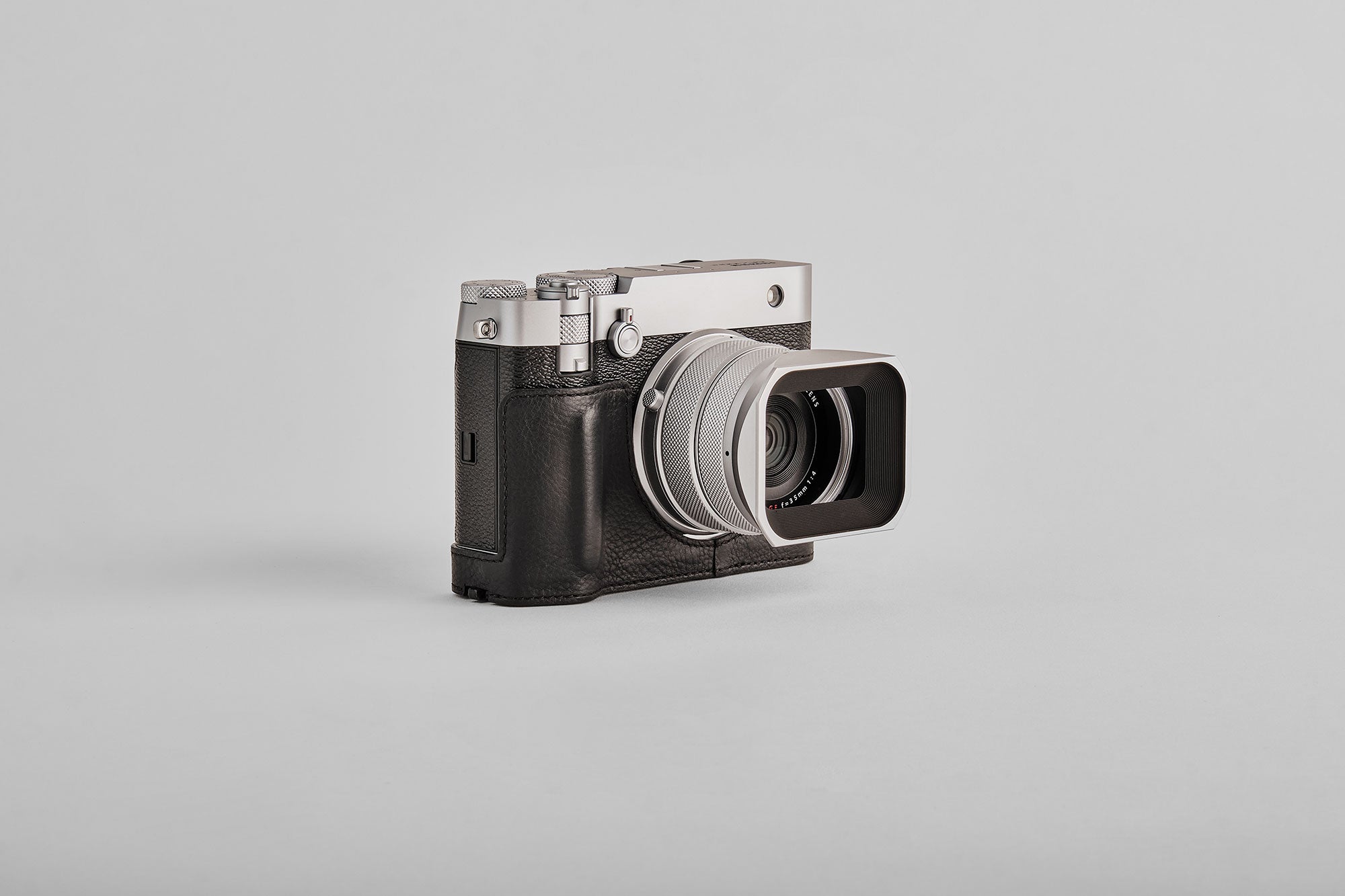
The Fujifilm GFX100RF Half Case (TagCase)
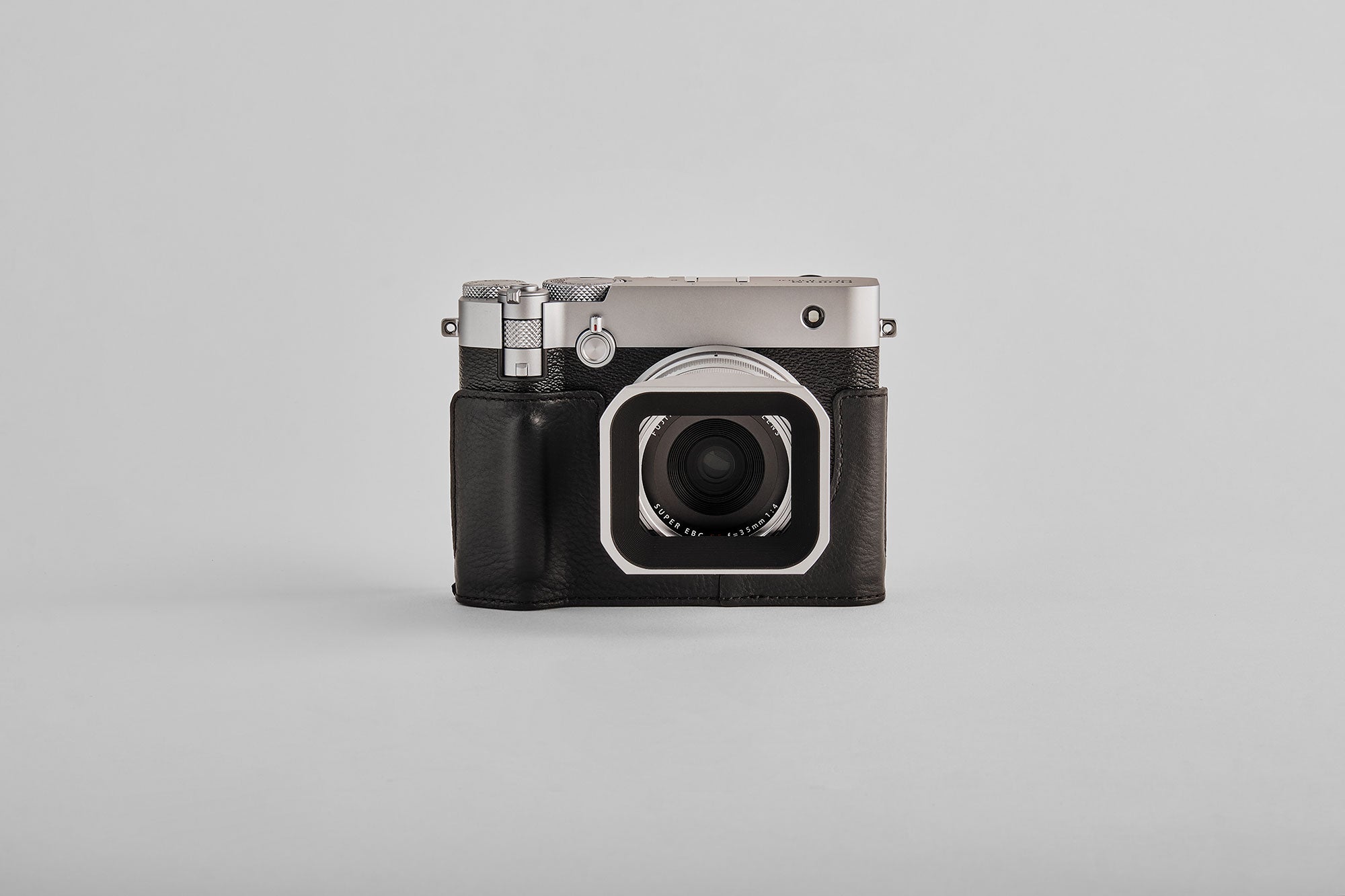
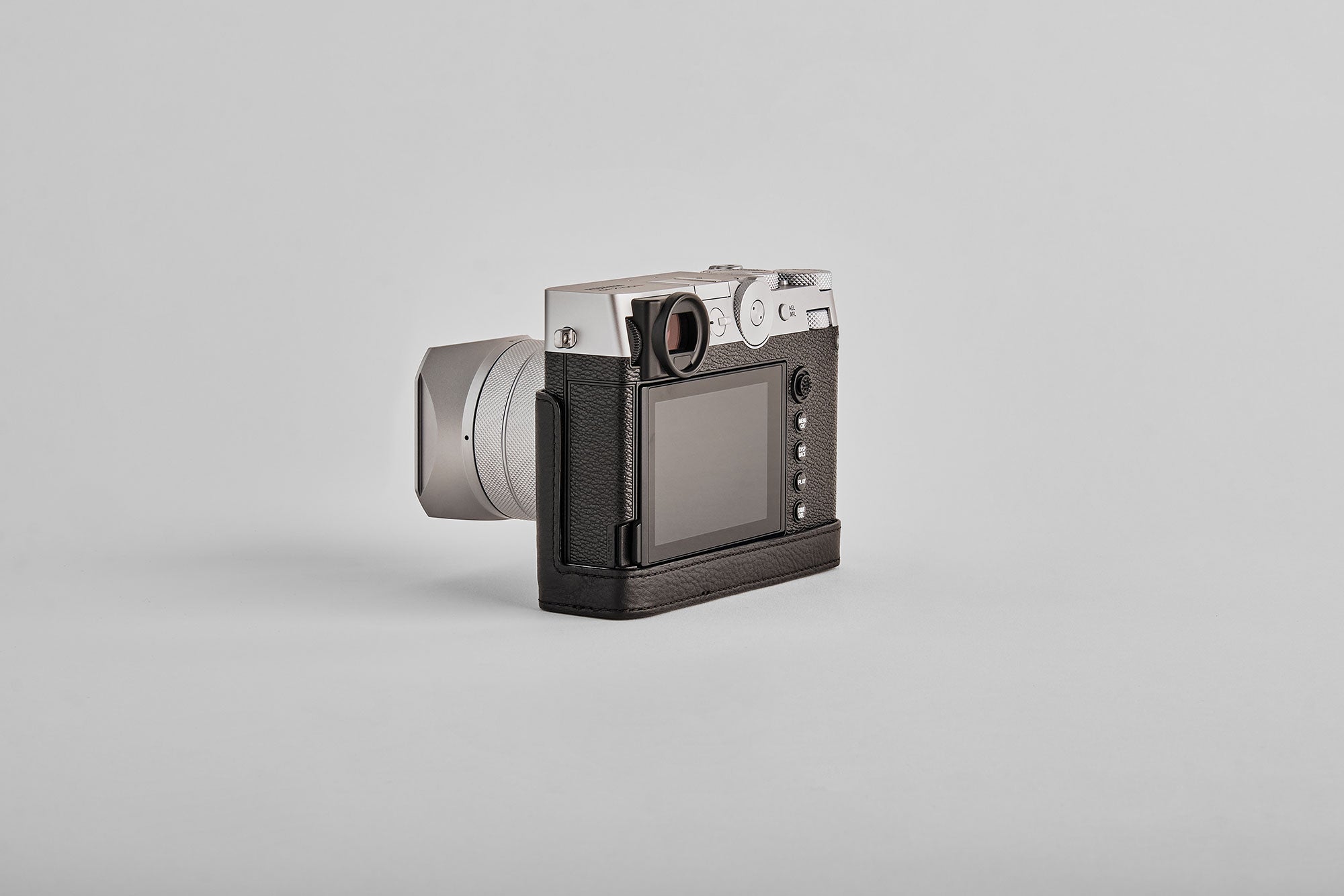
For owners of the GFX100RF, Oberwerth offers a half case designed specifically for this camera: the Fujifilm GFX100RF Half Case (TagCase), handcrafted from Casual Line full-grain leather. It fits the camera perfectly, preserves its clean silhouette, and reliably protects it from bumps and scratches.
What the TagCase Does
- Precision-fit protection for the bottom and sides of the GFX100RF while fully preserving its silhouette
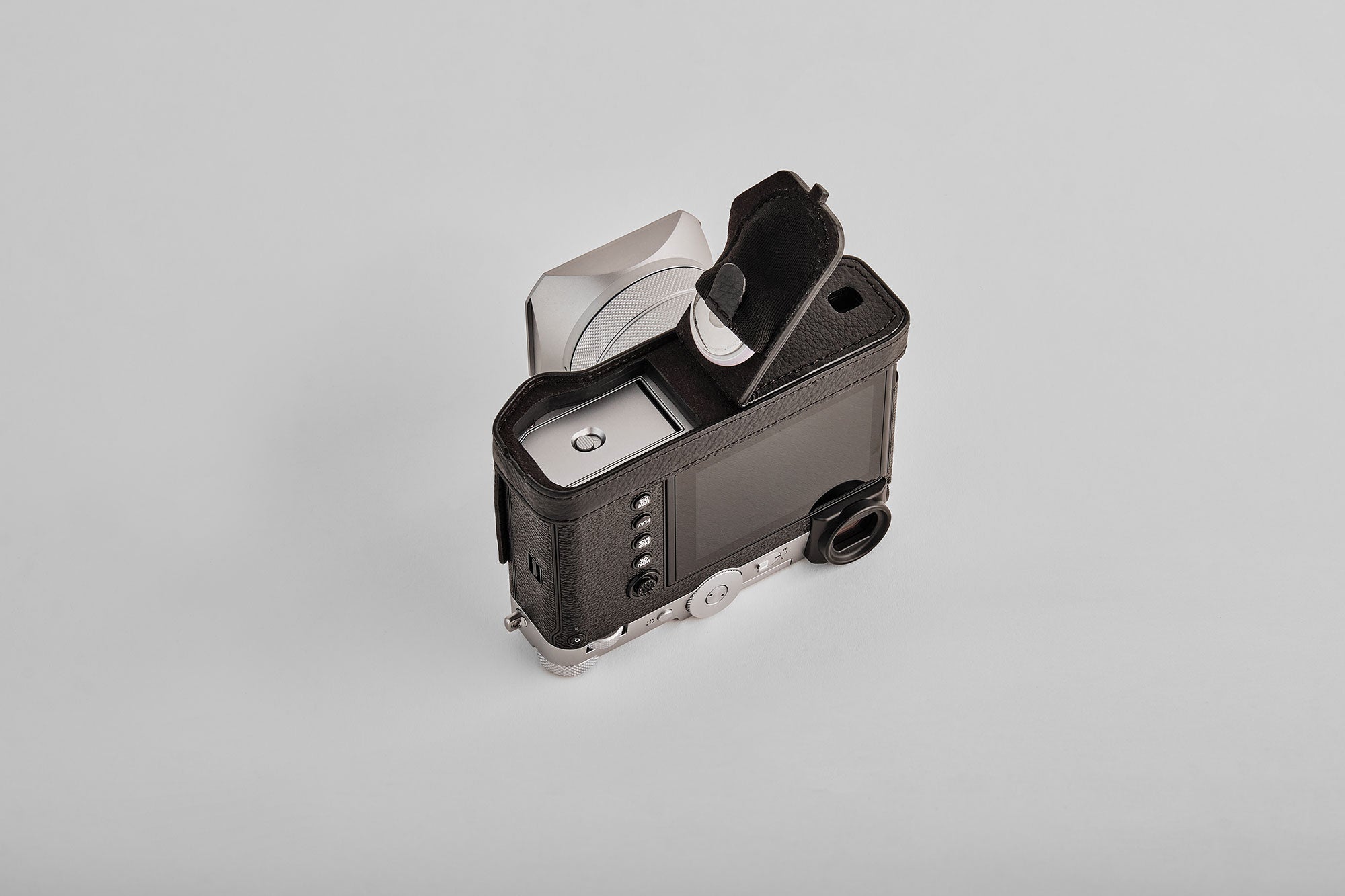
- All controls, ports, and the battery and memory card compartments remain fully accessible
- Suede lining, subtle aluminum reinforcement, and an integrated handle for a secure grip
- Integrated AirTag compartment for discreet tracking of your gear
- Lifetime warranty, as with all Oberwerth products
The TagCase is the obvious solution for GFX100RF photographers who want to keep their camera permanently protected yet ready for use at any time—similar to the half-case concept that Oberwerth offers for Leica models.
Camera backpacks for GFX systems with multiple lenses
As soon as a GFX kit includes two or more lenses—especially one of the zoom lenses—a backpack becomes the most practical carrying solution. The combination of camera body weight, lens size, and the frequent use of a tripod in GFX workflows makes a structured backpack the go-to choice for most serious GFX setups.
The Oberwerth Everest 16" Camera Backpack
The Everest 16" is the camera backpack in the Oberwerth lineup, crafted from full-grain leather. With room for a camera body, multiple lenses, and a laptop, it’s the obvious choice for GFX photographers who need to transport a more complete system to their assignments. Please check the product page for the exact compartment layout and compatibility with a specific GFX configuration.
Oberwerth also carries the Matterhorn backpack in its lineup. For GFX photographers looking for a photo backpack with a leather exterior, these models are the relevant options—which one is specifically suitable for a GFX setup with certain lenses should be confirmed via Bagfinder or the product specifications.
Travel and Air Transportation
The portability of the GFX system makes it a true travel camera in a way that larger medium-format systems are not—but the value of the equipment still warrants careful planning when transporting it.
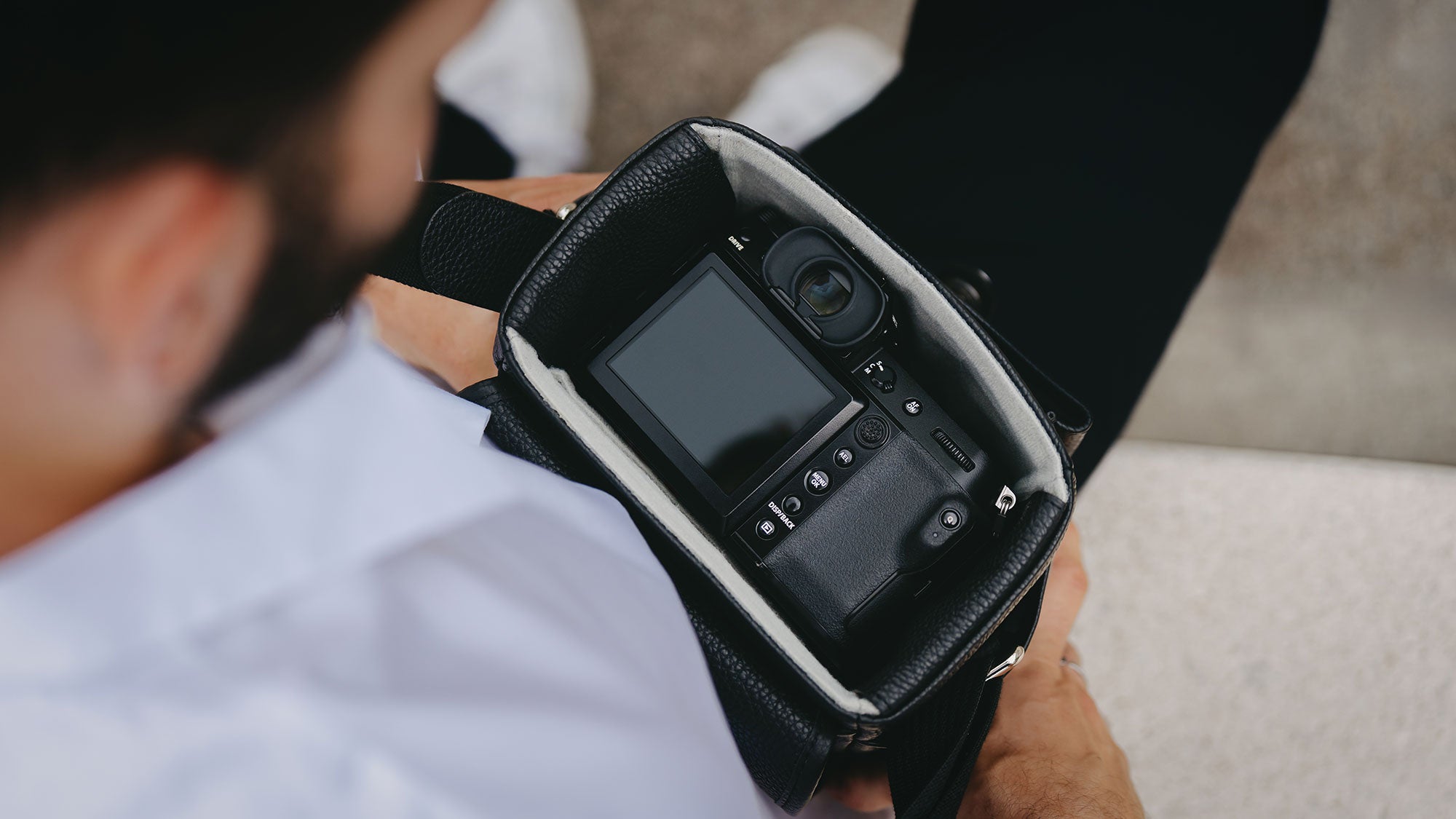
Carry-On Luggage Strategy
A GFX kit should always be carried as carry-on luggage and never checked. A photography backpack containing a GFX body and two to three lenses usually fits within standard carry-on dimensions, though weight limits are more often the restriction. Photographers traveling with their entire system and a laptop should check the airline’s carry-on weight limit before departure.
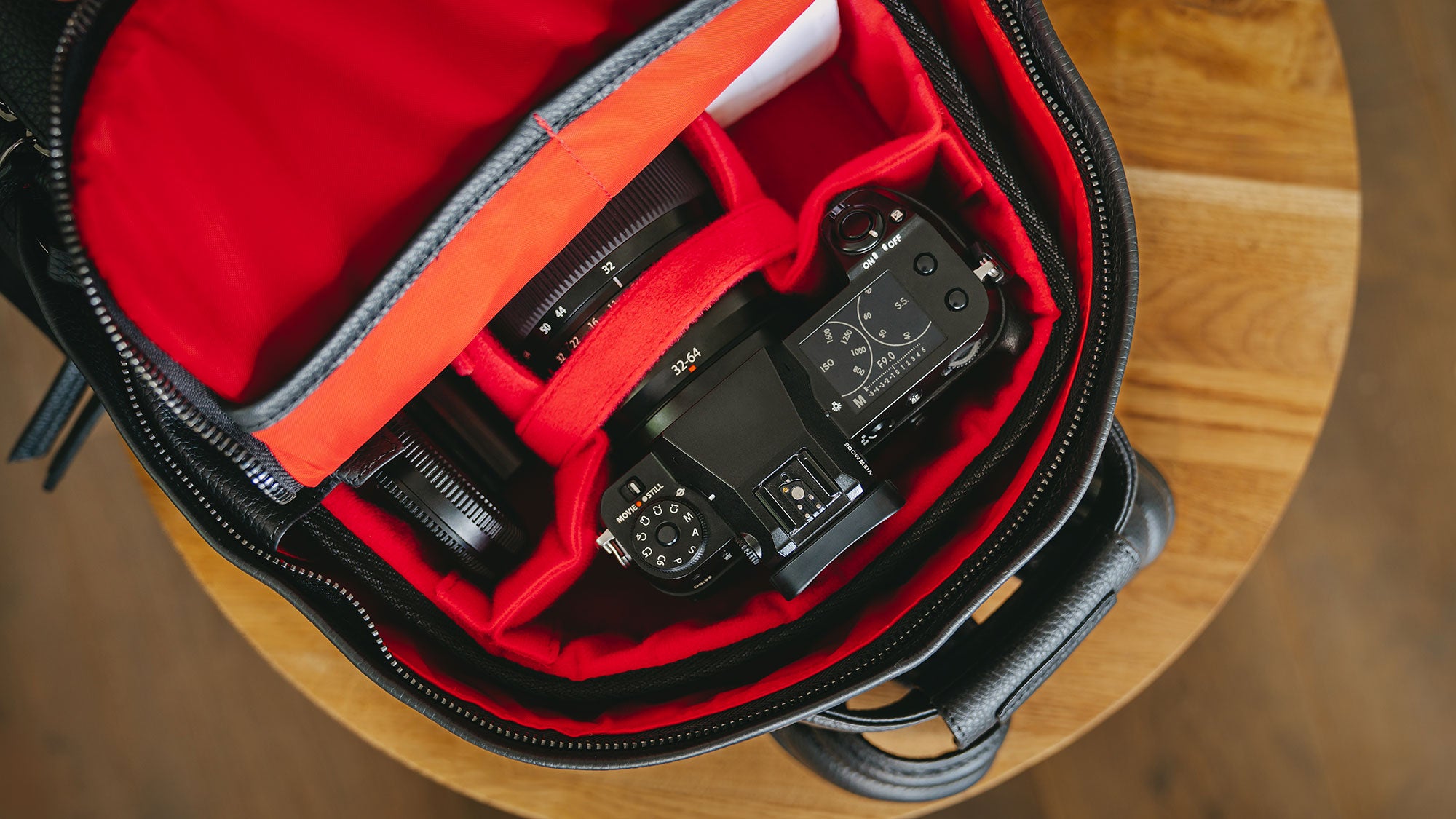
On-site transfer
Many GFX photographers use a two-bag approach when traveling: a backpack for transport and air travel, and a compact shoulder bag for daily use at their destination, which holds only the camera body and the lens they’re currently using. This keeps the photography kit light and accessible, while the backpack stays at the lodging.
Carrying Solution and Work Style: The Right Combination
| Workflow Context | Obvious Oberwerth solution* |
|---|---|
| GFX100RF as a permanently protected fixed-focal-length lens | GFX100RF Half Case (TagCase) |
| GFX as a compact travel camera (body + pancake lens/63mm) | Shoulder bag from the SL-Bag series (smaller size) |
| Travel/Documentary (Body + 1 zoom lens or 2 prime lenses) | Little William or Richard 2 (SL Bag Medium/Large) |
| Location Advertising (Camera Body + 2–3 Lenses + Tripod) | Everest 16" Camera Backpack |
| A Sophisticated Everyday Carry | Matterhorn Photo Backpack |
| Air Travel with the Integrated System | Everest 16" (carry-on) + shoulder bag provided on site |
*The specific compatibility of each bag with a particular GFX body and lens should be confirmed using the Oberwerth Bagfinder or the respective product page. A recurring theme when choosing a GFX carrying solution is lens-driven sizing: Always base your choice on the deepest body-and-lens combination you plan to carry.
Materials and Workmanship: What a GFX System Deserves
A Fujifilm GFX system represents an investment of several thousand euros for the body alone, and significantly more when you add GF lenses. The carrying solution should reflect both the value and the design sensibility of the system. Fujifilm’s own design language—retro-inspired, tactile, and built around physical dials and artisanal touches—naturally harmonizes with leather.
Oberwerth Leather Collections
Oberwerth manufactures its bags in several leather lines. The Casual Line combines full-grain, ground leather with light pigmentation and comes from a tannery with LWG Gold certification. The Hydro Line is water-repellent and features a lotus effect—the perfect choice for GFX photographers who work outdoors and in changeable weather. Oberwerth also offers other materials such as Saffiano, luxury leather, and the technical ReLon material.
Inner Protection
The interior padding for a GFX system should be firmer and more substantial than that for a lightweight mirrorless camera body. The combination of the body’s weight and large lenses generates more impact when in motion, which a well-designed bag absorbs through dense, structured padding. Oberwerth bags feature a soft velour lining and modular dividers that secure the body and keep accessories visible.
Frequently Asked Questions
That depends entirely on the lens. With a compact prime lens like the GF 50mm Pancake, the system remains small enough to fit in a shoulder bag; with a zoom lens like the GF 32-64mm, it requires a larger bag from the SL Bag series or a backpack. Always use the deepest body-plus-lens combination as a baseline and confirm specific compatibility using the Oberwerth Bagfinder or the product page.
Yes. For the GFX100RF, Oberwerth offers a half case designed specifically for this camera—the Fujifilm GFX100RF Half Case (TagCase) made of Casual Line full-grain leather with an integrated AirTag compartment. For the larger GFX interchangeable-lens system cameras, we recommend shoulder bags and backpacks designed to accommodate the entire system.
A leather shoulder bag can hold a GFX body with one or two compact to medium-sized lenses. For a complete system with three or more lenses plus a tripod, the total weight exceeds what can be comfortably carried on one shoulder for an extended period. In that case, a photo backpack like the Everest 16" with proper weight distribution is the obvious choice.
The GFX 100 II body is taller and deeper than most full-frame camera bodies due to its built-in grip and large viewfinder. Many standard camera bags for full-frame cameras can accommodate the body, but they become tight when a GF lens is attached. The body dimensions should be checked against the interior dimensions of each bag, allowing for extra space for the lens.
For the compact GFX100RF with its built-in fixed-focal-length lens, the GFX100RF Half Case (TagCase)—designed specifically for this model—is the obvious choice when you want lasting protection without compromising operational readiness. If you want to transport the camera along with accessories, you can store it in a compact shoulder bag from the SL-Bag series.
In terms of functionality, GFX bodies are weather-sealed and rugged, comparable to professional full-frame bodies. The case for greater protection is based on two factors: the higher replacement cost of the equipment and the greater impact generated by the heavier body and lenses when in motion. A GFX bag should have firmer, more structured internal padding than a bag designed for a lightweight mirrorless camera.
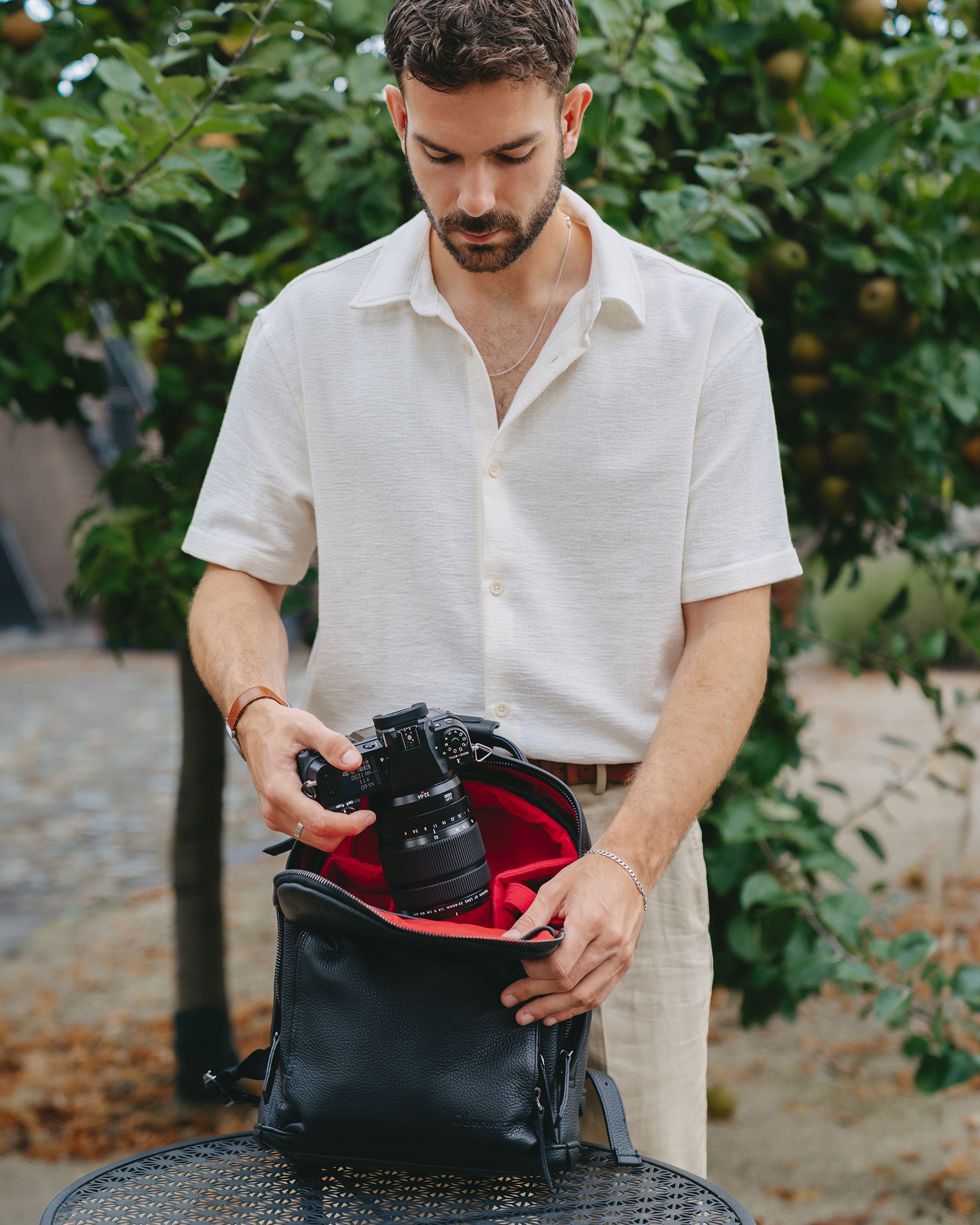
Finding the Right Fujifilm GFX Bag
The Fujifilm GFX system earns its place by delivering medium-format quality without the hassles of medium format. The right bag preserves this advantage: it protects and organizes the system without sacrificing the portability that makes the GFX special. For most GFX photographers, the decision comes down to the number of lenses—an SL-Bag series shoulder bag for a body plusone or two lenses, an Everest backpack for the entire system, and—for the GFX100RF—the custom-fit Half Case.
Whatever format suits your work—the material should reflect the thoughtful, tactile character that draws photographers to the GFX system in the first place. Oberwerth’s leather bags are handcrafted in Germany and built to age alongside the equipment they carry.