This is the camera Masaharu Fukuyama uses! A comprehensive analysis of his equipment and photographic philosophy
Masaharu Fukuyama's camera of choice is the Leica M4 - the answer was clear from the start
If you search for "the camera Masaharu Fukuyama uses", the same name almost always comes up:
the Leica M4.
As a musician, actor and photographer, he used this exact model for many years. At a time when digital cameras are ubiquitous and smartphones are considered the "best camera", Fukuyama continues to hold on to an analog camera. And not just any camera - but a purely manual camera from the 1960s, without autofocus or automatic exposure.
Why?
If you look into this question, you quickly realize that it's not just about a preference for a particular device. It's about a fundamental attitude towards photography. The question is not "How do I take pictures?", but "Why do I take pictures?".
What is the Leica M4? Why an analog camera in the smartphone age?
The Leica M4 was introduced by Leica in Germany in 1967 and is a classic rangefinder camera.
In contrast to SLR cameras, the viewfinder shows a separate image - the photographer sees the world directly with his own eye, even at the moment of the shutter release. This is one of the most fundamental features of the M4.
On paper, the camera looks unspectacular:
No automatic. No autofocus. Film instead of sensor. Hardly any electronic components.
But that is precisely its core.
All decisions are made by the photographer.
Shutter speed, aperture, focus - everything is determined manually.
Distance is estimated, light is read, the moment is consciously chosen.
Modern cameras make these decisions automatically.
The Leica M4 does not.
It is a tool - and what you do with it is entirely up to you.
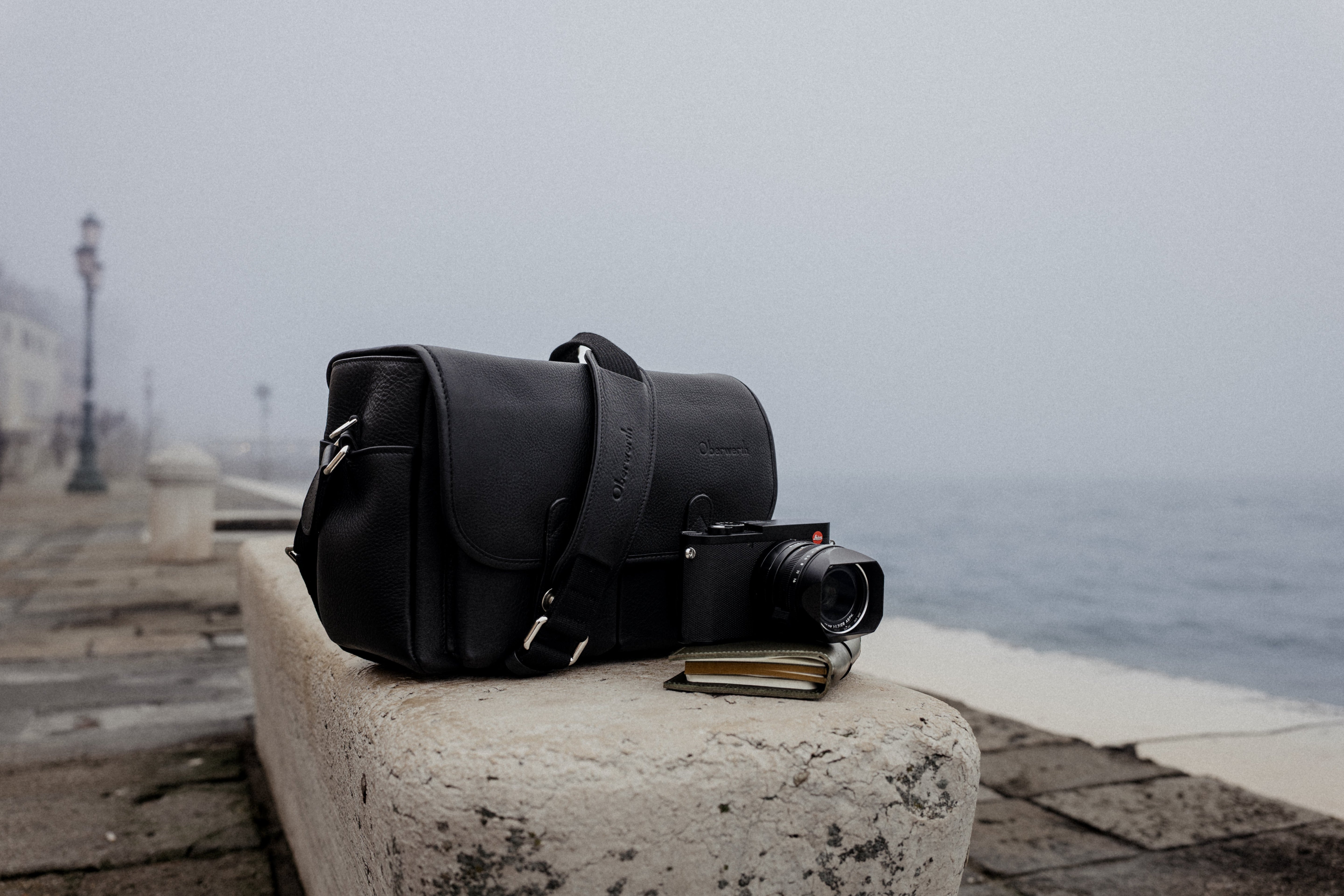
Anyone who lives this conscious, decelerated way of photography also needs a bag that reflects exactly this claim - the Oberwerth M Bag combines minimalist design with maximum protection for classic rangefinder cameras.
With a weight of around 560 g, a solid metal housing and a characteristically quiet, precise closure, it offers a feel that many describe as unique.
Especially with analog cameras such as the Leica M4, protection is crucial, and with the handmade lens cases Donau from Oberwerth, even sensitive accessories remain safely and stylishly stowed away.

"Don't let the machine take the picture" - why Fukuyama chooses the M4
When Masaharu Fukuyama talks about photography, one thought always comes to mind:
"Photograph with your own eyes."
The Leica M4 forces you to do this.
No autofocus, no automatic - every picture is a conscious decision.
If a photo succeeds, your own assessment was correct.
If it fails, the responsibility lies with the photographer.
This tension changes photography.
You pause for a moment.
Observe the light.
Estimate the distance.
Feel the moment.
The camera demands your full attention.
A compact, immediately accessible solution such as the Oberwerth Sling Bag is recommended for precisely such conscious photo moments - close to the body, quickly opened and perfect for spontaneous shots.
For Fukuyama, this is not a disadvantage, but the essence of photography.
As a musician, he is sensitive to the interplay between man and instrument - and that is exactly how he sees the camera.
An image that is created by his own perception and decision carries a presence that no automated system can generate.
It is precisely this conscious work on the move that is supported by a bag like the Oberwerth George, classic in design and made for photographers who really want to use their equipment.
Masaharu Fukuyama as a photographer - the philosophy behind Leica
Masaharu Fukuyama is not only occasionally active as a photographer, but works seriously in this field.
His connection to Leica goes beyond a mere brand preference. In exhibitions and photographic contexts, he is regularly mentioned in connection with Leica.
This connection is also historically significant:
Henri Cartier-Bresson, who coined the term "decisive moment", also worked with Leica rangefinder cameras.
These cameras enable discreet, fast photography - without disturbing the scene.
A similar approach can also be seen in Fukuyama's work:
Unforced moments.
Natural light.
Non-staged situations.
Large cameras often appear present and influence the behavior of the subject.
The Leica M4, on the other hand, is small, quiet and unobtrusive.
It creates closeness - without creating distance.
Working with film also plays an important role.
Film only offers a limited number of shots.
Every shutter release is a decision.
Every moment is consciously chosen.
This restriction leads to a more intensive examination of the subject - and this is precisely where the strength of analog photography lies.
The Oberwerth Q Bag is ideal for precisely this discreet approach - compact, unobtrusive and perfect for spontaneous moments in street photography.
The choice of tool is part of the expression
The fact that Masaharu Fukuyama continues to use the Leica M4 goes beyond a technical decision.
A tool reflects the mindset of its user.
Modern cameras enable technically perfect images with minimal effort.
Fukuyama consciously decides against this.
He does not rely on automation, but on perception, experience and intuition.
This is not a preference for "inconvenience".
It is a conscious decision for the intensity of the photographic process.
In exhibitions, music videos and artistic projects, his connection to Leica becomes visible again and again. It is part of his expression - not just a tool.
The choice of the Leica M4 is the result of a long process - a camera that exactly fits his way of seeing the world.
Choosing a camera means choosing a perspective.
And that is exactly what the Leica M4 shows in the hands of Fukuyama:
It's not just about technology.
It's about attitude.
The choice of tool is part of the expression - and this analog camera proves it in a quiet but powerful way.