Important points when choosing a camera bag or backpack
After buying a camera, many people are faced with the next question:
"Which camera bag or backpack should I choose?"
If you only decide on the basis of appearance or price, typical problems can quickly arise:
Your camera or lenses don't fit in properly
The bag is heavy and quickly leads to shoulder or back pain
You can't take your camera out quickly when a good photo opportunity arises
A camera bag is not just a place to store your camera, it is a crucial piece of equipment that has a significant impact on how comfortable and enjoyable you can take photos. In this article, we explain five important points when choosing a camera bag or backpack, based on realistic shooting situations, so that even beginners can easily understand what suits them best. If you would like to discover camera bags and backpacks sorted by photography style, you can view the entire selection in the Oberwerth camera bag and backpack collection.
Point 1 | First determine your photography style and typical areas of use
Why is this the first step?
The most important step when choosing a camera bag or backpack is to understand what type of photography you do most often. Depending on the style, the required volume and ideal bag shape differ significantly.
Typical photography styles
Street photography & travel snapshots - Lightweight, compact and comfortable to carry for long periods of time
Landscape & nature photography - Often several lenses and sometimes a tripod are required
Photography of children & pets - A design that allows quick access to the camera is particularly important
Professional use (events, weddings, etc.) - Large equipment and high carrying comfort over long periods of time are crucial
For example, if you mainly shoot in the city, a backpack that is too large can quickly become impractical and cause you to leave your camera at home at some point. Conversely, a bag that is too small can quickly lead to frustration due to lack of space if you have several lenses. Being aware of where and what you are photographing is the most important first step in choosing a camera bag without making the wrong purchase. If you mainly take photos in the city or when traveling, it is worth taking a look at compact solutions that remain light and inconspicuous. Models such as the Sling Bag Pure offer precisely this advantage: you can carry your camera close to your body, have quick access and remain flexible in everyday life, ideal for spontaneous shots on the move. For further orientation according to areas of use, recommendations for camera bags can also be helpful.

Point 2 | Check storage space and interior layout (volume & dividers)
Thinking storage space "backwards"
A common mistake made by beginners is to assume: "If my camera fits inside, that's enough". Instead, you should first list everything you are actually taking with you:
Camera body (one or two cameras)
Lenses (standard, telephoto, fixed focal length, etc.)
Spare batteries and charger
Filters and cleaning accessories
Tripod, flash or laptop (if required)
Once you know your equipment, it is advisable to choose a bag with some extra space. This gives you flexibility and security if you add more accessories later.
The importance of dividers
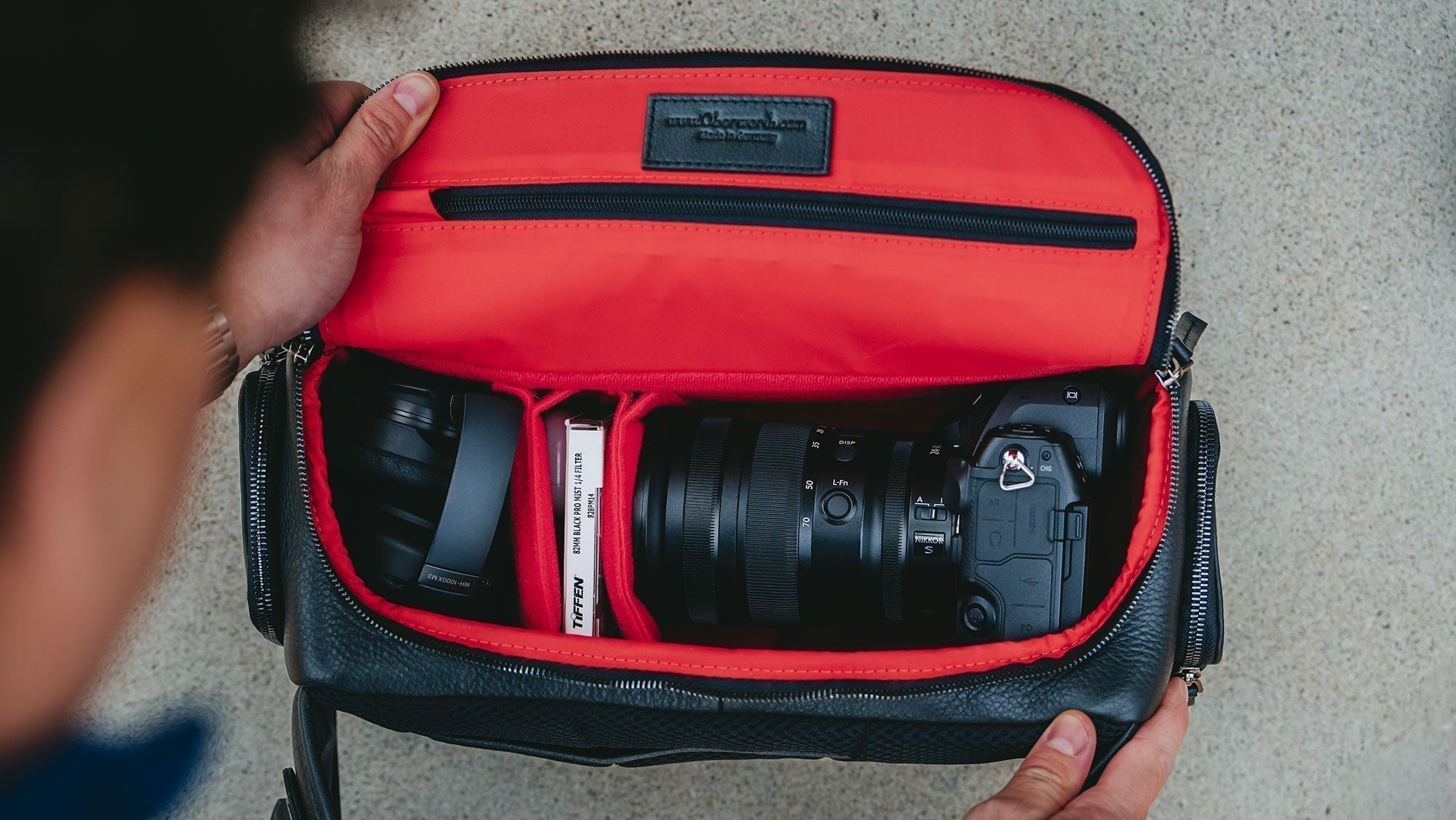
Inside a camera bag, dividers play a key role in protecting your equipment. Models with adjustable (removable) dividers are particularly recommended for beginners. Adjustable dividers allow you to
Customize the interior layout to suit your equipment,avoid unnecessary empty space,prevent the camera and lenses from bumping into each other.
If the dividers are fixed, the bag can become impractical over time if your equipment changes. If you want to organize your equipment flexibly, bags with an adaptable internal structure are particularly useful. The M Bag offers a padded main compartment with freely positionable dividers, so you can arrange your camera, lenses and accessories to suit your current setup.
Point 3 | Check accessibility and opening system
Different types of access
Camera backpacks usually have one or more of the following types of opening:
Side access - Allows the camera to be removed while the backpack is being worn
Top access - Makes it easier to pack and unpack from the top
Rear access - Provides more security and protection against theft
Which option is best for beginners?
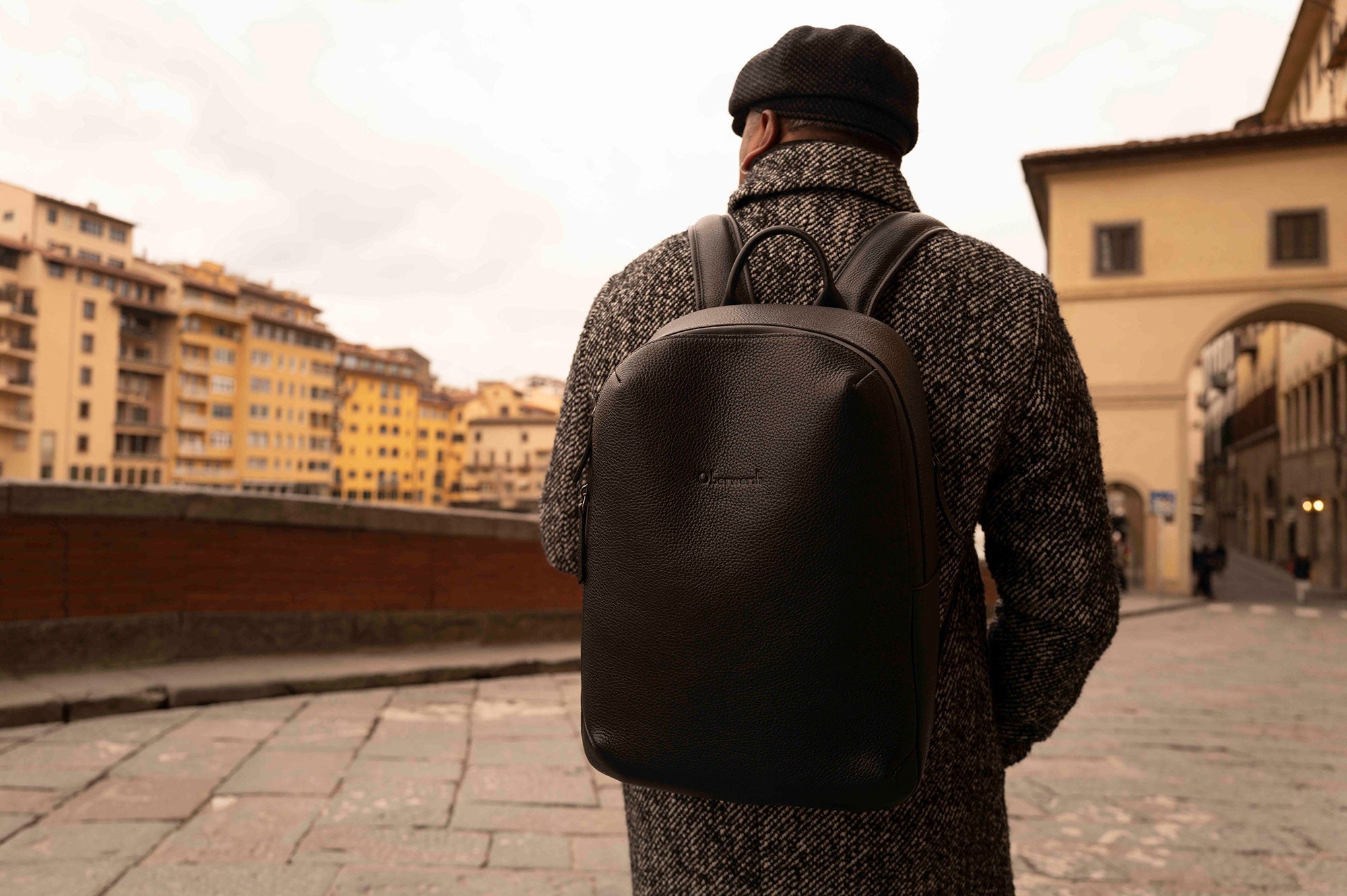
Backpacks with side access are particularly practical for beginners who frequently take photos in the city or when traveling. As you don't have to take the backpack off, you are less likely to miss spontaneous photo moments. In busy areas or when traveling, on the other hand, rear access offers additional security. When making your choice, you should consider whether speed or security is more important to you. A bag that suits your photography style will make taking photos much more enjoyable. You can explore camera bags and backpacks that offer both quick access and high security.
Point 4 | Don't forget protection and weather resistance
Important points to protect your equipment
Cameras and lenses are precision equipment, so protection is a crucial factor when choosing. Make sure the bag has the following features:
Well-padded interior
Sturdy, dimensionally stable dividers
A reinforced base
The base is particularly important, as this is where the greatest load is placed when the bag is put down.
Weather protection is essential
When taking photos outdoors, it can rain unexpectedly at any time.
Models with water-repellent or weatherproof materials offer additional safety. Even on seemingly dry days, this protection provides a reassuring feeling.

Point 5 | Comfort, size and design also play a role
Prioritize comfort for extended use
The more equipment you carry, the more noticeable the weight of your bag becomes.
Beginners in particular should therefore pay attention to the following points:
A breathable back panel with a mesh structure to reduce heat build-up
A chest strap for additional stability
An even weight distribution on both shoulders
These details may seem unimportant at first glance, but they make a big difference on long photo tours.
Suitability for everyday use is also important
Modern camera backpacks are increasingly designed in such a way that they are not immediately recognizable as a camera bag.
Important features are:
A design that is also suitable for work or study
Separate compartments for laptop or tablet
Compatibility with hand luggage dimensions for air travel
If these points are met, you will automatically take your camera with you more often.
Conclusion
To avoid making the wrong purchase when choosing a camera bag or backpack, you should consider these five points in the right order:
Determine your photography style and typical areas of use
Check the storage space and interior layout
Ensure quick access
Evaluate protection and weather resistance
Consider carrying comfort and suitability for everyday use
Choosing a bag that suits your photography style will make shooting more comfortable and you'll enjoy taking your camera with you even more. We hope this guide will help you find the perfect camera bag or backpack for your needs.