
Waterproof camera bag: The complete guide to photo bags for all weathers
At a glance: Our water-repellent camera bags


Table of contents
- Waterproof vs. water-repellent: understanding the terms correctly
- The two categories of waterproof photo bags
- Water-repellent leather: the Oberwerth approach
- The right bag for your conditions of use
- By bag shape: shoulder bag, sling, backpack, camera-specific
- By camera system
- Care of a water-repellent leather bag
- Typical mistakes when buying
- Frequently asked questions
Waterproof vs. water-repellent: understanding the terms correctly
"Waterproof" is one of the most misunderstood terms in photographic accessories. The industry distinguishes between three protection classes - and the difference determines whether your camera will survive a rain shower or not.
Photo bags with welded seams, roll-top closures and coated technical fabrics (PVC, tarpaulin, TPU) arecompletely waterproof. They can also withstand brief immersion. Dry bags from specialist outdoor brands fall into this category. The compromise: they look like technical equipment - functional, but not elegant.
Weatherproof (or weather-resistant) describes camera bags that keep out rain, snow and splash water, but are not suitable for submersion. They use coated fabrics, covered zippers and occasionally an included rain cover. Most serious photo bags above 200 € fall into this class.
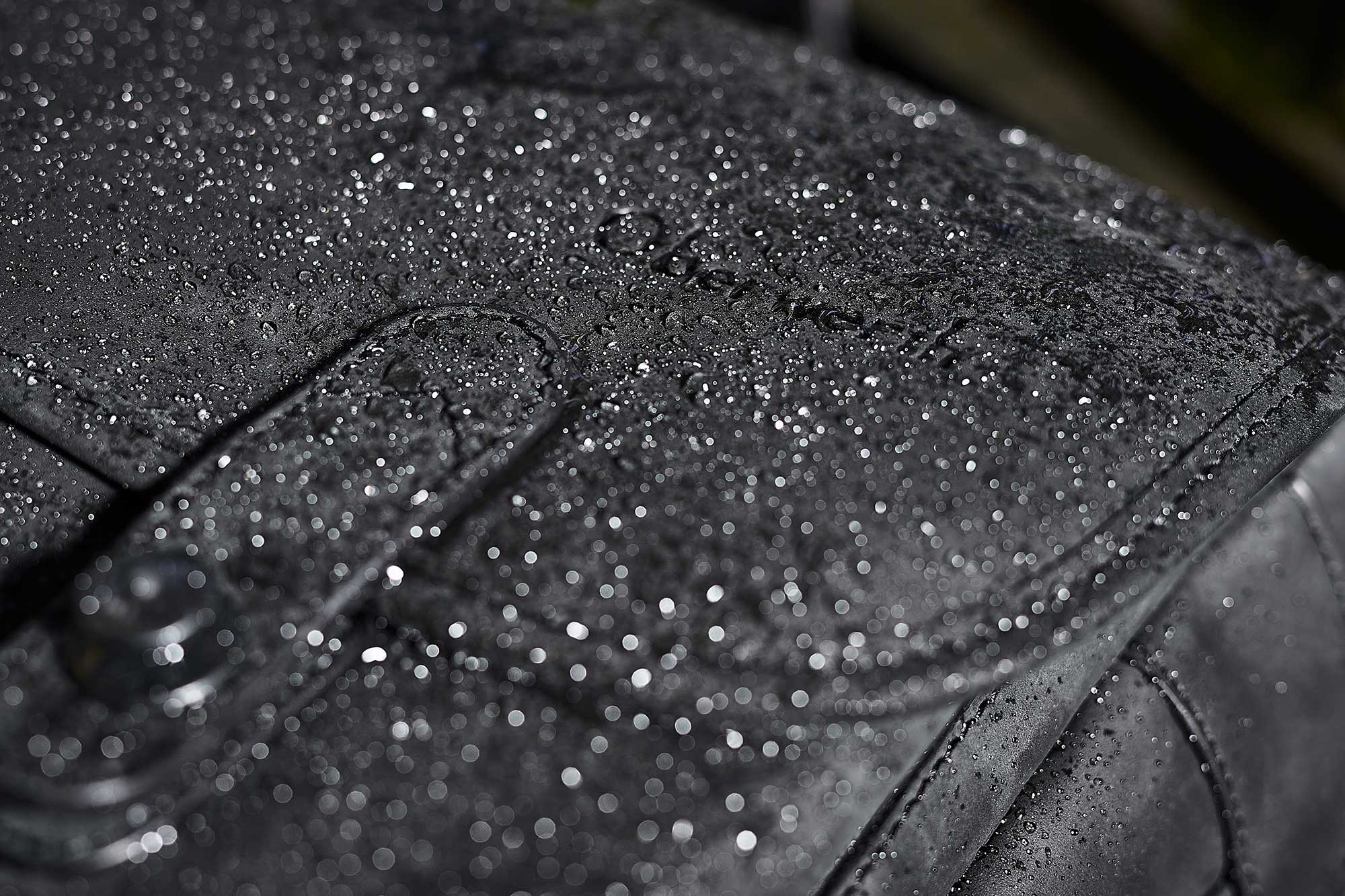
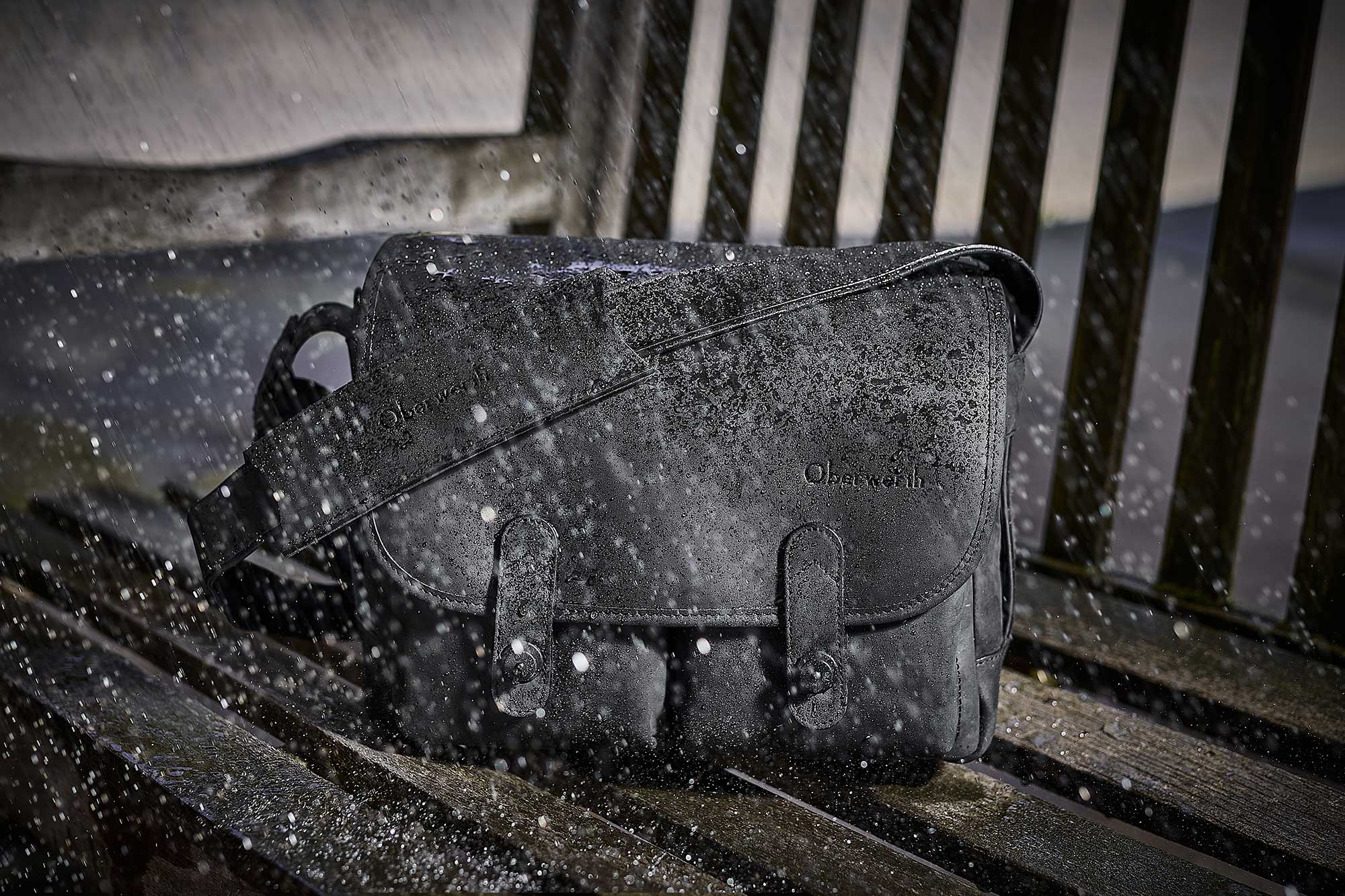
Water repellent refers to a surface property. Water rolls off instead of penetrating the material. This can be achieved through coatings - or, in the case of high-quality leather, through a special tanning process that gives the leather natural hydrophobic properties. The result looks like conventional leather, but raindrops run off in a visible lotus effect.
For most photographers, complete immersion protection is overkill. The key question is: how will your photo bag perform if you get caught in the rain for twenty minutes between two locations? This is the area where weatherproof or water repellent becomes relevant - and where the interesting design decisions lie.
The two categories of waterproof photo bags
The market is clearly divided into two approaches. Neither is universally better - the right choice depends on where and how you photograph.
1. technical dry bags
These photo bags are designed with a single priority in mind: Keeping water out in extreme conditions. They are usually made of PVC tarpaulin, coated nylon or TPU-laminated fabric, typically with a roll-top closure that provides a mechanical seal. Brands such as Lowepro DryZone, Pelican and Overboard dominate this segment.
Suitable for: Kayaking, boating, traveling in tropical rainy seasons, situations where the bag might get completely submerged in water. Professional adventure and sports photographers in extreme weather.
Compromises: Utilitarian aesthetics without patina and aging. Bulky closures slow down access. Plastic materials become brittle over time. Not appropriate for client meetings, weddings or any environment where the appearance of your bag matters.
2. water-repellent premium camera bags
These camera bags strike a balance between weather protection and aesthetics. The bag keeps out drizzle and light rain with treated materials and protected closures, but is made to be carried into a hotel lobby, client appointment or restaurant.
Within this category, hydrophobized leather is the most interesting option - a natural material that develops character over time while repelling water like a technical fabric.
Suitable for: Travel photography, wedding photography, street photography in changeable weather, professional use where appearance matters.
Compromises: Not suitable for diving. Higher price. Needs basic leather care over the years.
Hydrophobic leather: the Oberwerth approach
Many photographers are unfamiliar with this category. The common assumption is that leather and water don't mix - you have to choose between the timeless feel of a leather bag and real weather protection. Water-repellent leather resolves this conflict.
The process is not an applied coating in the conventional sense. During the tanning process, the leather fibers themselves are treated so that water molecules roll off the surface instead of penetrating the grain. The leather retains its breathability, its natural structure and its ability to develop a patina over time - but raindrops roll off with Oberwerth's characteristic lotus effect.
The Oberwerth Hydro Line is based on this principle. Each bag in the line uses vegetable-tanned leather that has already been hydrophobized during production. This gives it water-repellent properties without sacrificing the qualities that make leather valuable in the first place.
What hydrophobized leather does:
- Keeps out rain and snow over a longer period of time
- Prevents water stains and edges from dripping
- Dries faster than conventional leather if it does get wet
- Remains breathable and ensures better heat regulation
- Develops its patina during normal use
What it does not do:
- Immersion protection (no leather bag should be intentionally submerged)
- Unlimited resistance to torrential downpours - every bag needs protection at some point
For the photographer who wants to carry the same bag to coastal shoots, client dinners and airport lounges, water-repellent leather solves a problem without sacrificing a beautiful bag.
Shop the look
Shop the look
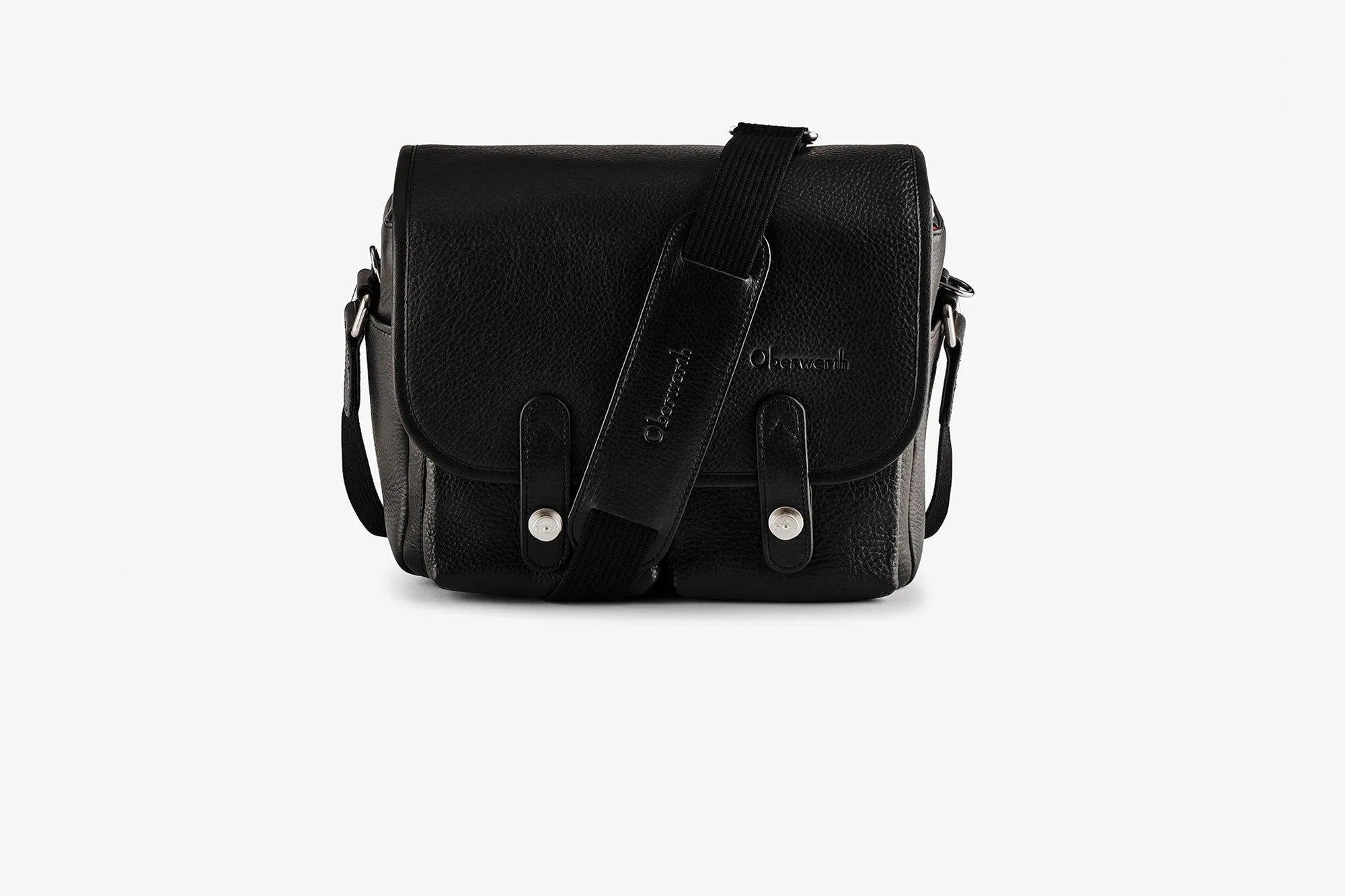
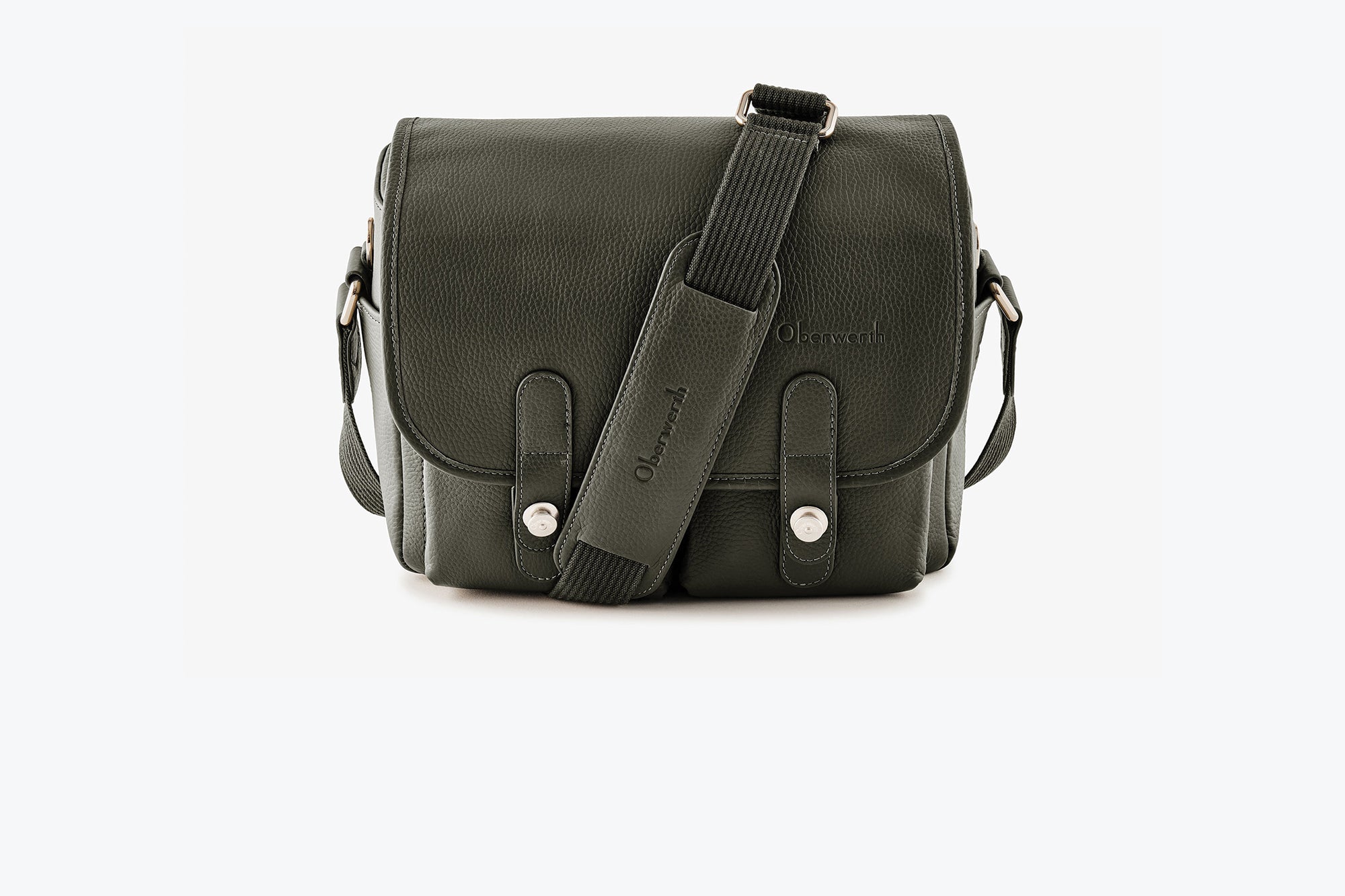
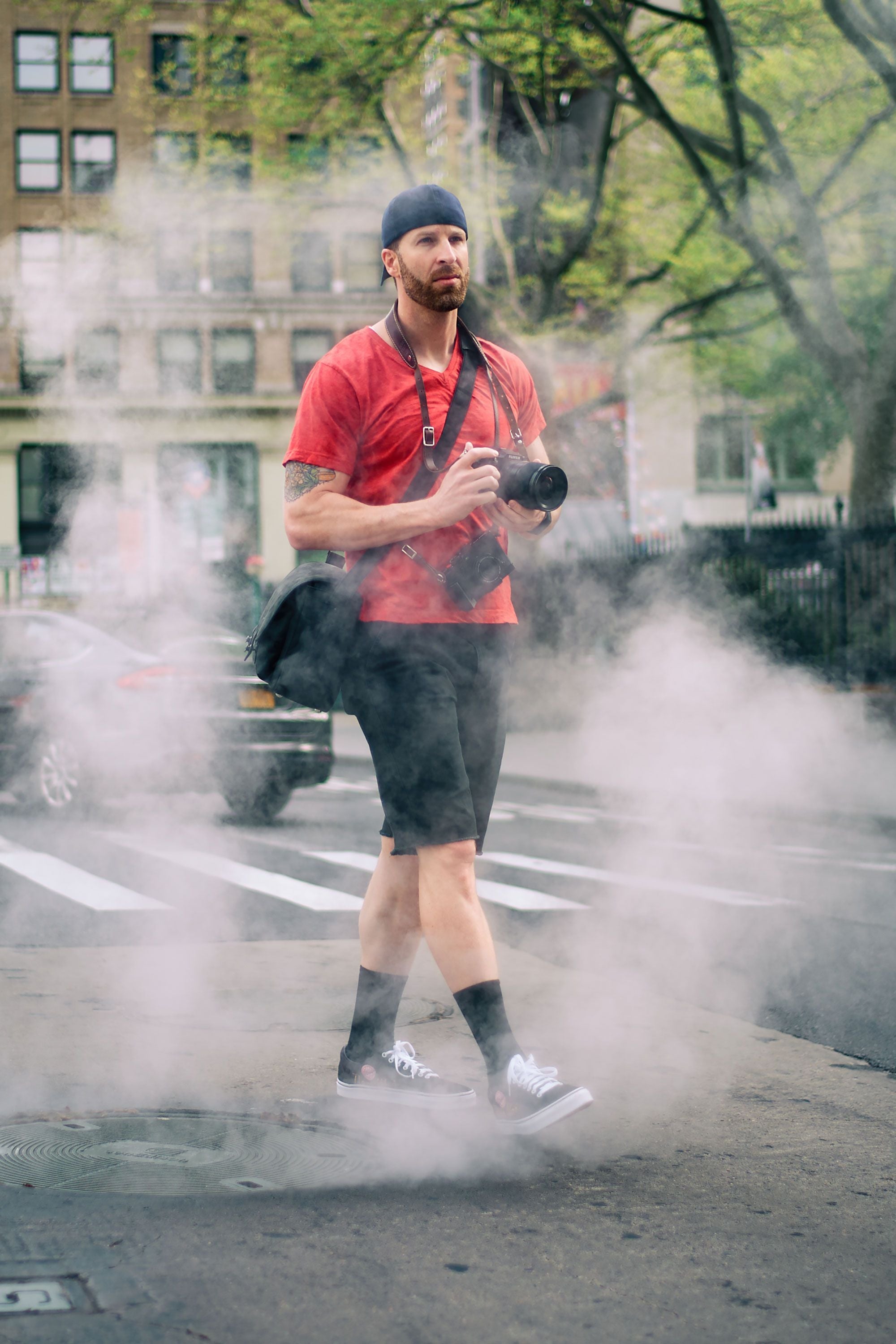
Shop the look
The right bag for your operating conditions
Use the actual application as a basis, not the product data sheet.
Step 1: Define the worst case for the weather
Be honest about how extreme your conditions will really be. Most photographers overestimate them.
- Occasional rain when traveling - Short showers, short exposure between locations. Waterproofed leather will do.
- Constant working in the wet - outdoor events, coastal photography, frequent rain. Go for weatherproof photo bags with covered zippers or hydrophobic leather combined with sensible protection habits.
- Extreme conditions - white water, maritime environments, tropical monsoons. Only technical dry bags.
Step 2: Define the context of use
A bag that looks right in the jungle can look wrong in the wedding location. Think about where you will actually carry the bag between shots:
- Client contact, weddings, corporate work → leather or high-quality canvas
- Travel, urban work, changing environments → versatile materials that make the transition
- Pure outdoor/adventure scenarios → technical construction fits
Step 3: Matching with your equipment
Your camera system determines the interior volume, the padding depth and the partition wall configuration.
- Compact fixed focal length cameras (Fujifilm X100VI, Leica Q3) → small shoulder bags or half cases
- Mirrorless cameras with 2-3 lenses → small to medium messenger or sling bag
- Pro DSLR or mirrorless kit → medium to large messenger, sling or backpack bag
- Two-body setup for weddings or events → larger messenger or photo backpack
Step 4: Assignment to the Oberwerth line
Each Oberwerth model is available in several leather treatments. The Hydro Line is specifically designed for all-weather use, adopting the same silhouettes and proportions as our Classic and Casual Line.
Discover Hydro LineBy pocket shape: finding the right design
Shoulder bags (Edward Hydro)
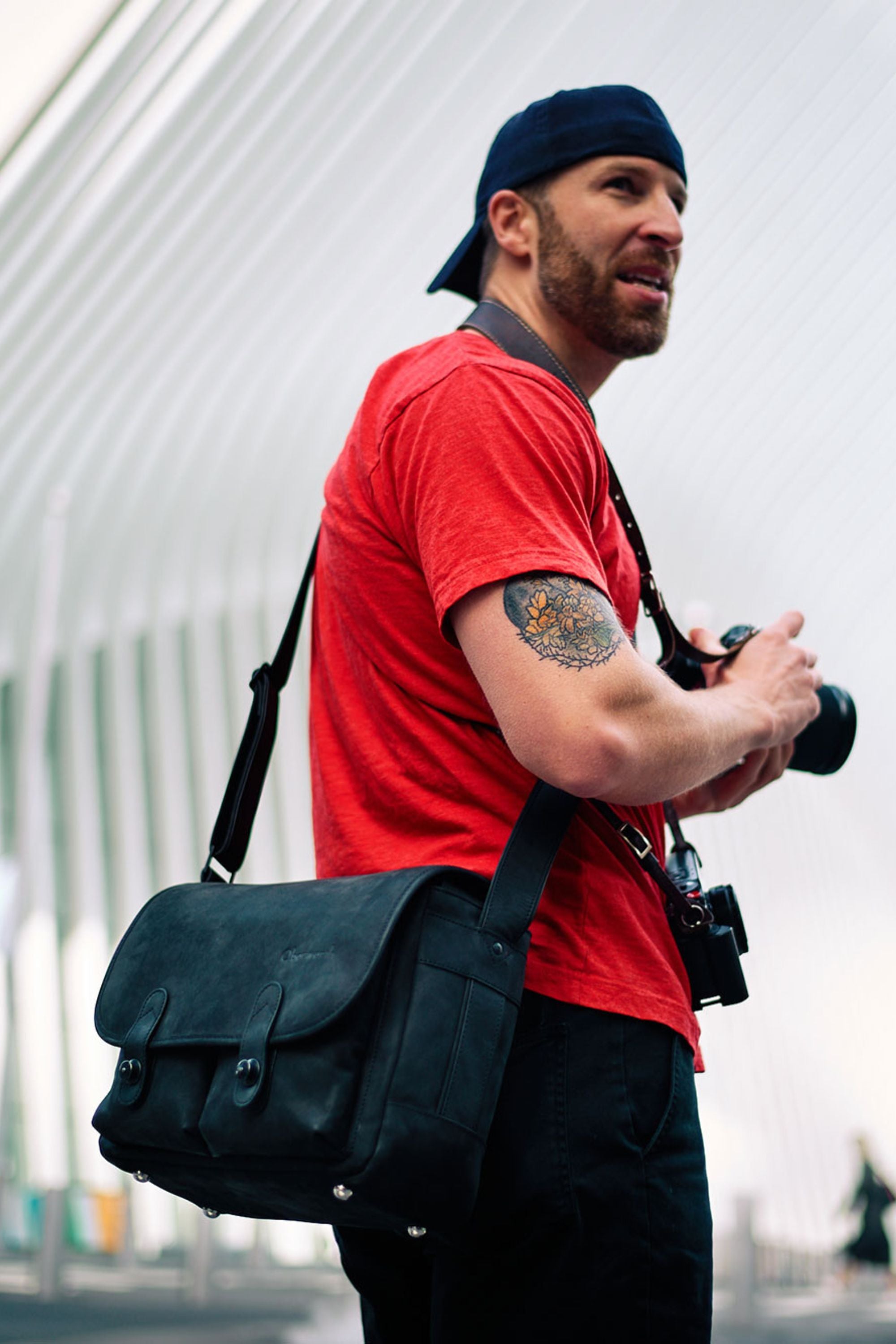
The classic one-shoulder bag remains the most versatile form for photographers who do not need to carry a complete production kit. The Freiburg accommodates a system camera with interchangeable lens plus tablet and works equally well for everyday use and travel. The Edward offers a sportier profile in the same size category.
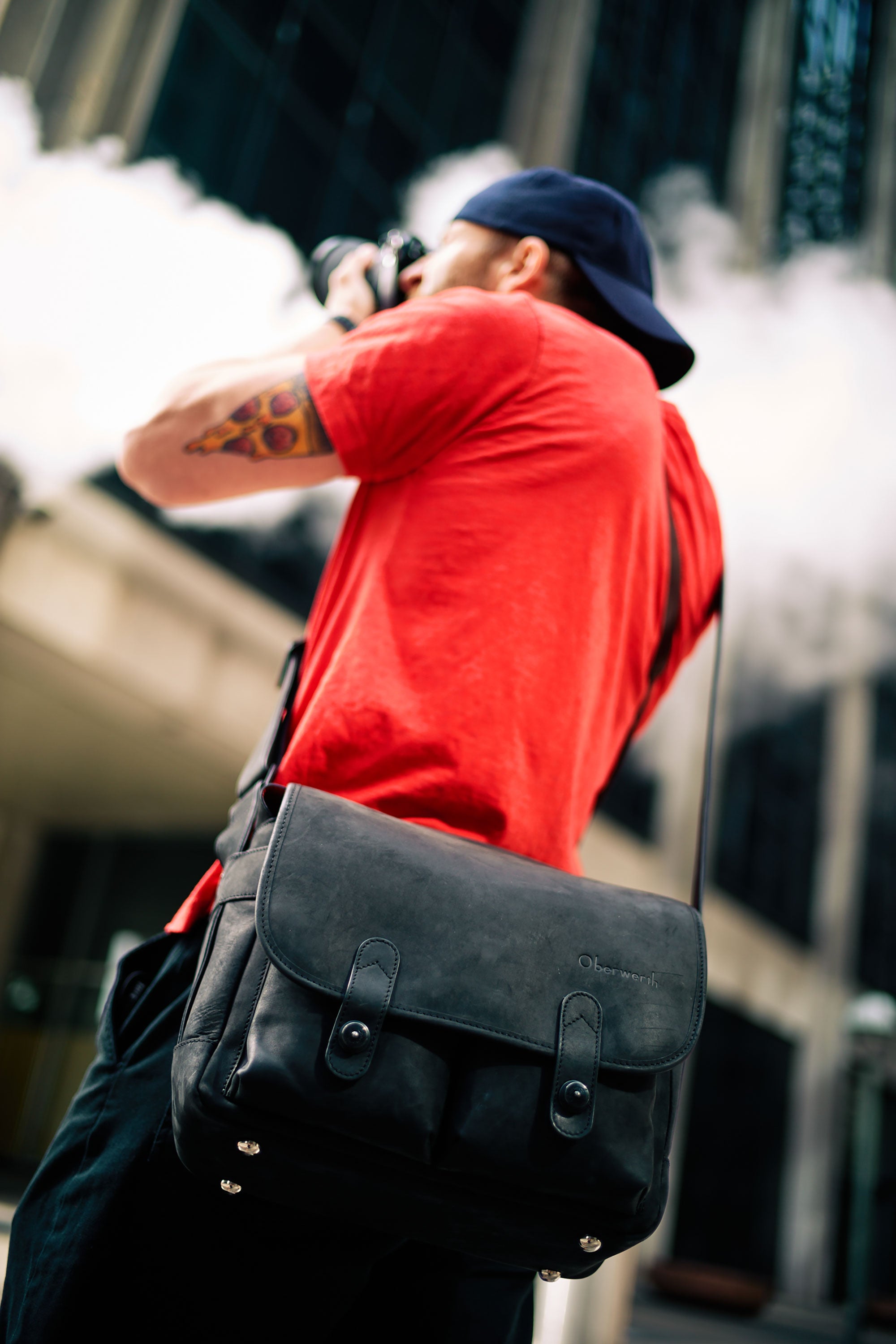
In water-repellent leather, these bags can be used in dry weather or in the drizzle without having to swap equipment. Covered LOXX® fasteners protect the main compartment; the leather itself repels moisture from the outside.
Ideal for: Leica M11, Fujifilm X-T5, Sony A7 series with one to two lenses, compact mirrorless kits.
Sling Bags
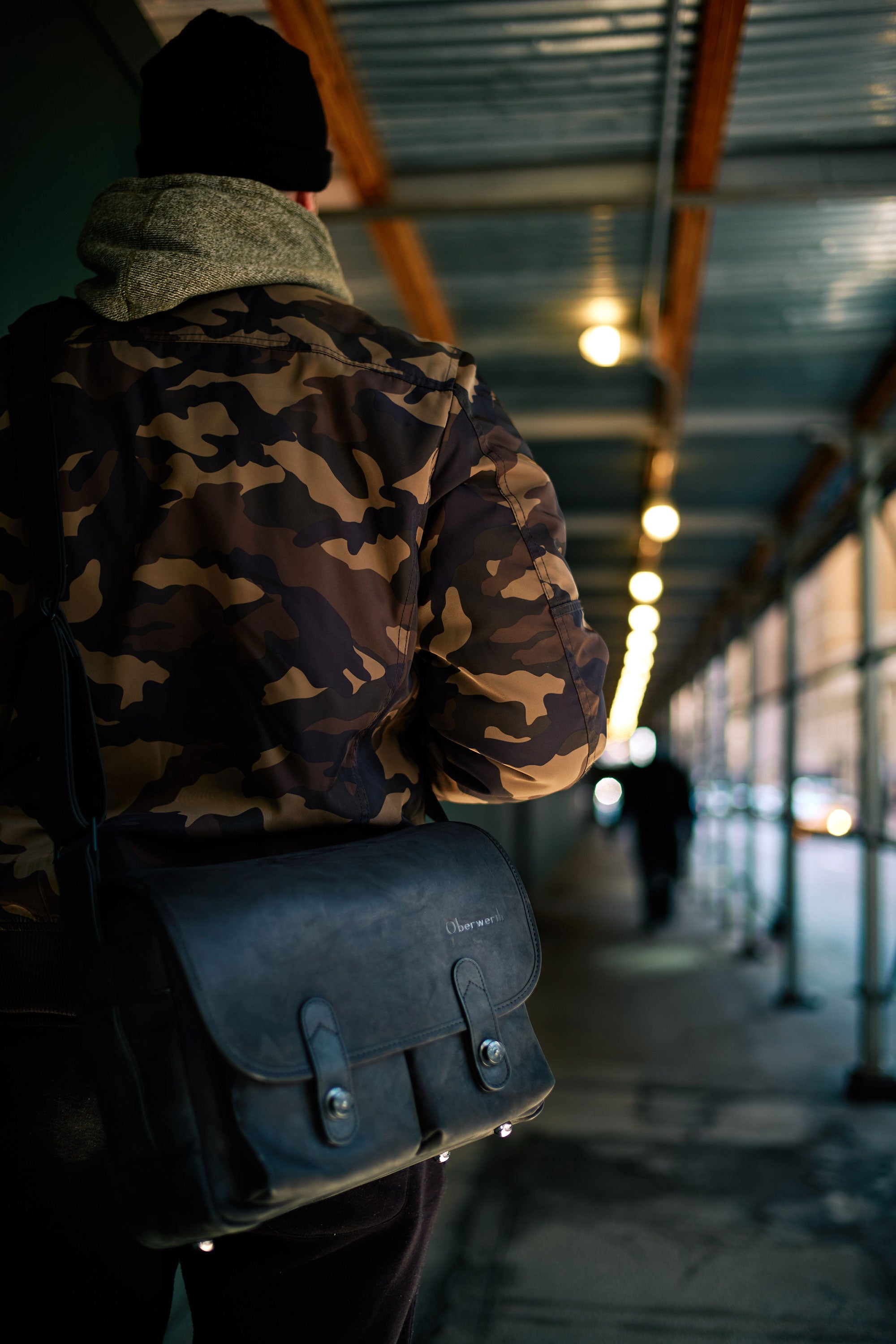
A bag with a single shoulder strap, worn across the body and swiveling forward in one motion for instant access to the camera. Street photographers and documentary photographers choose slings for their balance of quick access and understated profile. In water-repellent leather, the sling shape also becomes practical in changing weather - rain no longer means you have to switch to a different bag for the day.
Ideal for: Street photography, documentary work, one-body mirrorless photographers.
Camera-specific models (Q Bag, SL Bag, M Bag, Louis)
Oberwerth manufactures a range of bags that are tailored to specific camera bodies rather than generic dimensions. The Q Bag is designed for the Leica Q3, Q2 and Q1 - it holds the body with and without the handle, with enough space for charger, lens hood and cable. The SL Bag Large is designed for the Leica SL with 90-280mm zoom plus a separate laptop compartment. The M Bag holds a complete Leica M kit with one or two bodies and several lenses. The Louis is designed around the Leica M11.
Each of these models is available in hydrophobized leather - a crucial point for dedicated Leica users who carry a camera in a bag for years. The bag becomes part of the camera system instead of a generic case.
Photo backpacks
For photographers carrying a complete kit - body, multiple lenses, laptop, accessories - weight distribution becomes a priority. A shoulder bag with the same contents will become uncomfortable within an hour; a backpack distributes the load over both shoulders and the back padding.
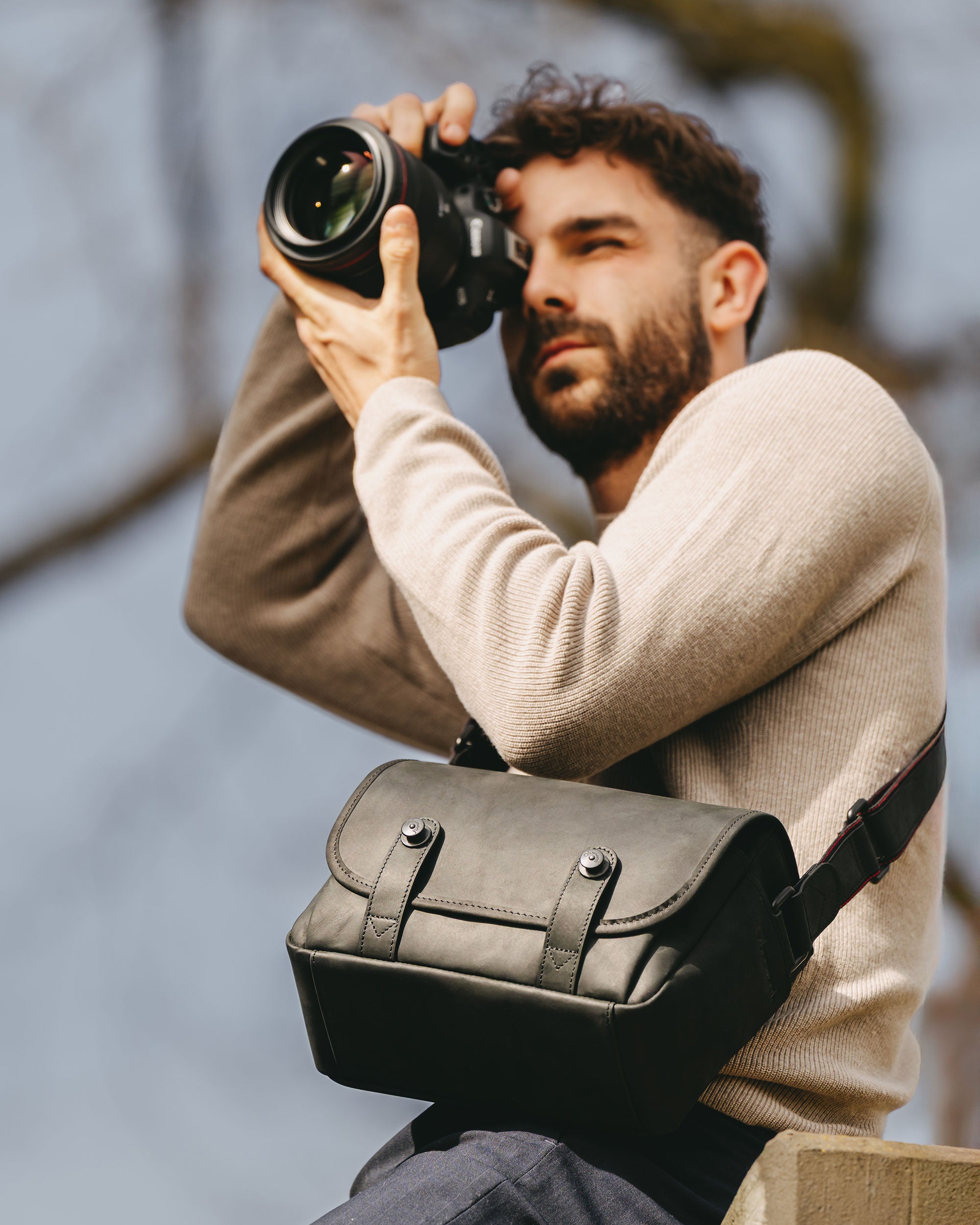
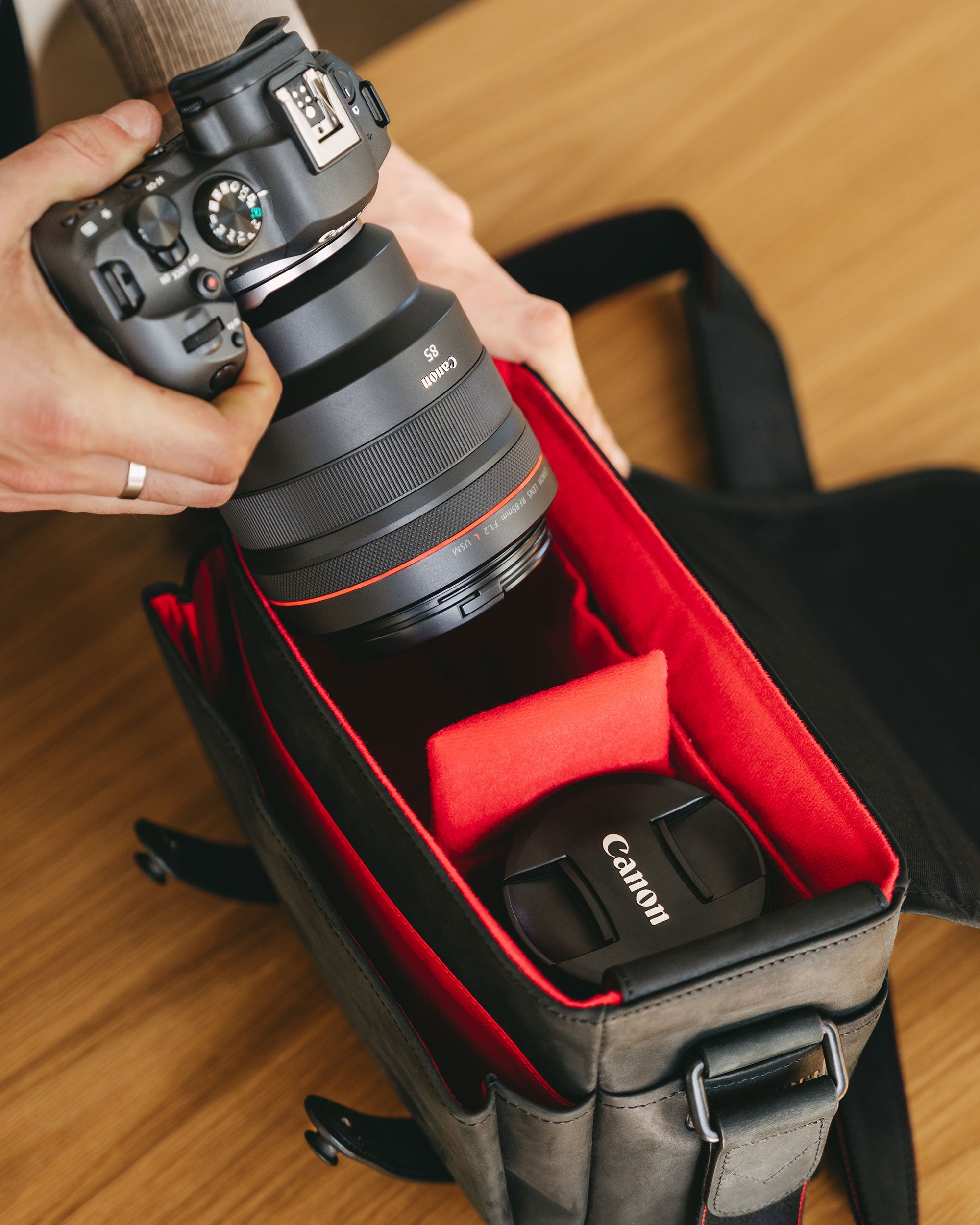
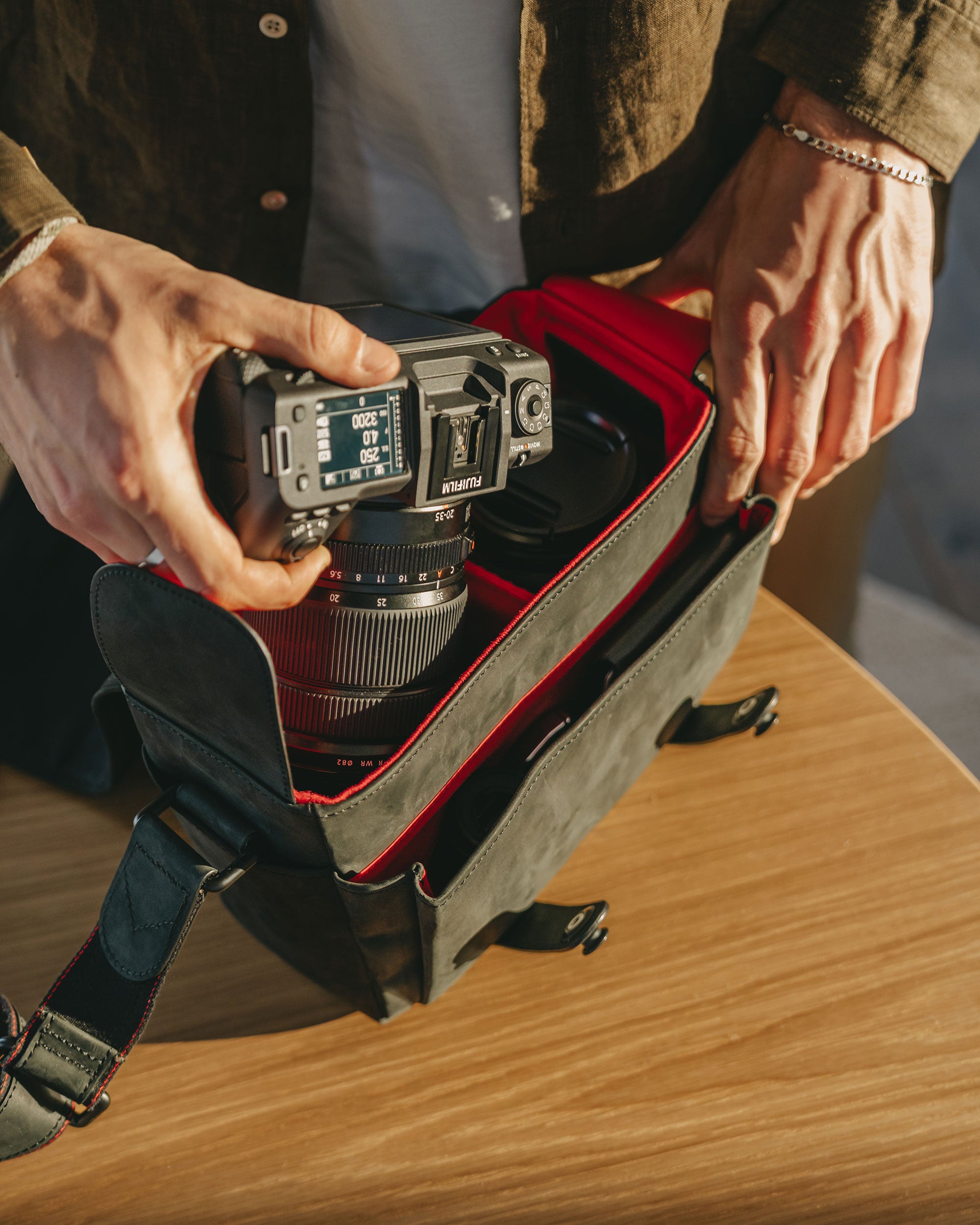
Edward (The M Bag)
By camera system
Mirrorless (Sony Alpha, Canon R, Nikon Z, Fujifilm X)
Modern mirrorless bodies are smaller than their DSLR predecessors, which expands the range of bags available. A hydrophobic leather shoulder bag that would have been cramped for a DSLR now comfortably holds a mirrorless body with two lenses. The Freiburg Hydro and the Harry & Sally Hydro cover most mirrorless configurations.
Mirrorless camera bag guideDSLR (Canon EOS, Nikon D-series)
Full-frame DSLRs with professional optics require deeper and longer internal dimensions. Reach for the larger Hydro Line shoulder bags or a messenger model designed for a body with a 70-200mm attached.
Canon Camera Bag GuideMedium format (Hasselblad, Fujifilm GFX)
The wider design and larger lens diameters of medium format equipment benefit from bags with flexibly adjustable dividers. The internal width is more important here than the depth.
Leica (M11, Q3, SL3)
Leica users are often the most consistent fans of the leather aesthetic - which makes the Hydro Line particularly relevant here. Q Bag, M Bag, Louis and SL Bag are each tailored to specific Leica bodies.
Leica Camera Bag Guide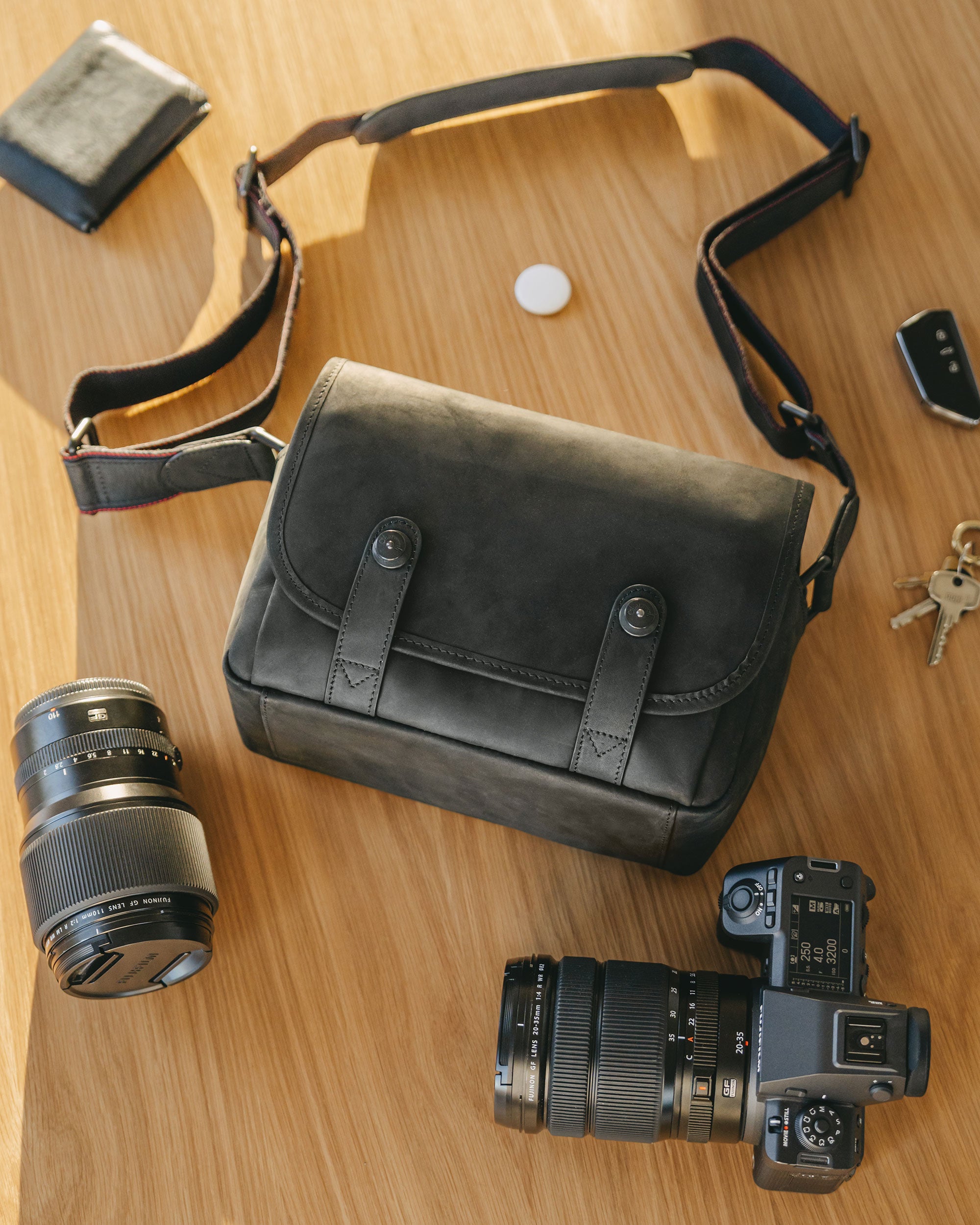
Care of a hydrophobized leather bag
The hydrophobic treatment is permanent, not sprayed-on protection. It does not wash out. Nevertheless, the leather itself benefits from basic care to maintain its suppleness and appearance for decades.
Regular care:
- Wipe with a soft, dry cloth after rain, dust or dirt
- Treat once or twice a year with the Hydro Plus Organic Spray from Oberwerth. The spray combines cleaning, care and impregnation based on bamboo extract - specially developed for hydrophobic leather and explicitly recommended by the manufacturer for the Hydro Line
- When not in use, store in a breathable dust bag (never in sealed plastic)
- Avoid prolonged exposure to direct sunlight and proximity to heat sources (radiators, dashboard in summer)
If the bag gets completely wet:
- Allow to air dry slowly at room temperature - never use a hairdryer or heater
- Dab off any standing water with a microfiber cloth before drying
- Only condition when the leather is completely dry
- Slight color changes after drying are normal for vegetable-tanned leather and blend in with the patina
An honest note: When exposed to high levels of heat and moisture (e.g. when sweating or in tropical climates), hydrophobic leather can leave subtle discoloration on light-colored clothing. This effect is part of the natural, unsealed leather surface - not a defect. It diminishes over time and the discoloration can usually be removed in the washing machine.
What you should avoid:
- Generic waterproofing sprays for footwear or technical fabrics - the hydrophobic property is already built in, generic sprays can leave a residue. Instead, use the Hydro Plus product that has been specially developed for the line
- Aggressive leather cleaners or saddle soap - too harsh for vegetable-tanned hides
- Wipe off dirt with water while the bag is dry - always brush dry first
Typical mistakes when buying
Buy "fully waterproof" when you actually need weatherproof. Roll-top dry bags are slow to access and look out of place outside of adventure contexts. Unless your photo bag actually needs to be submersible, weatherproof construction serves most photographers better.
Treat hydrophobic leather like a technical fabric. The hydrophobic property copes with rain and brief exposure. It does not mean you should leave the bag out in the downpour indefinitely or "test dip" it in a river.
Neglect the closures. The weather resistance of a bag depends heavily on how its openings seal. Covered zippers, overlapping flaps and weatherproof LOXX® closures make the difference between a bag that stands up to the rain and one that doesn't - regardless of the outer material.
Weather protection over fit. A waterproof photo bag that doesn't hold your gear properly is worse than a weatherproof bag with a perfect fit. Camera protection comes first from padding, dividers and internal structure; weather protection is the second layer.
Bigger is not better. Oversized bags tempt you to carry more than you need - and padding loses effectiveness when gear shifts around inside. Size to your actual work kit, not the hypothetical maximum.


Edward camera bag (M Bag)
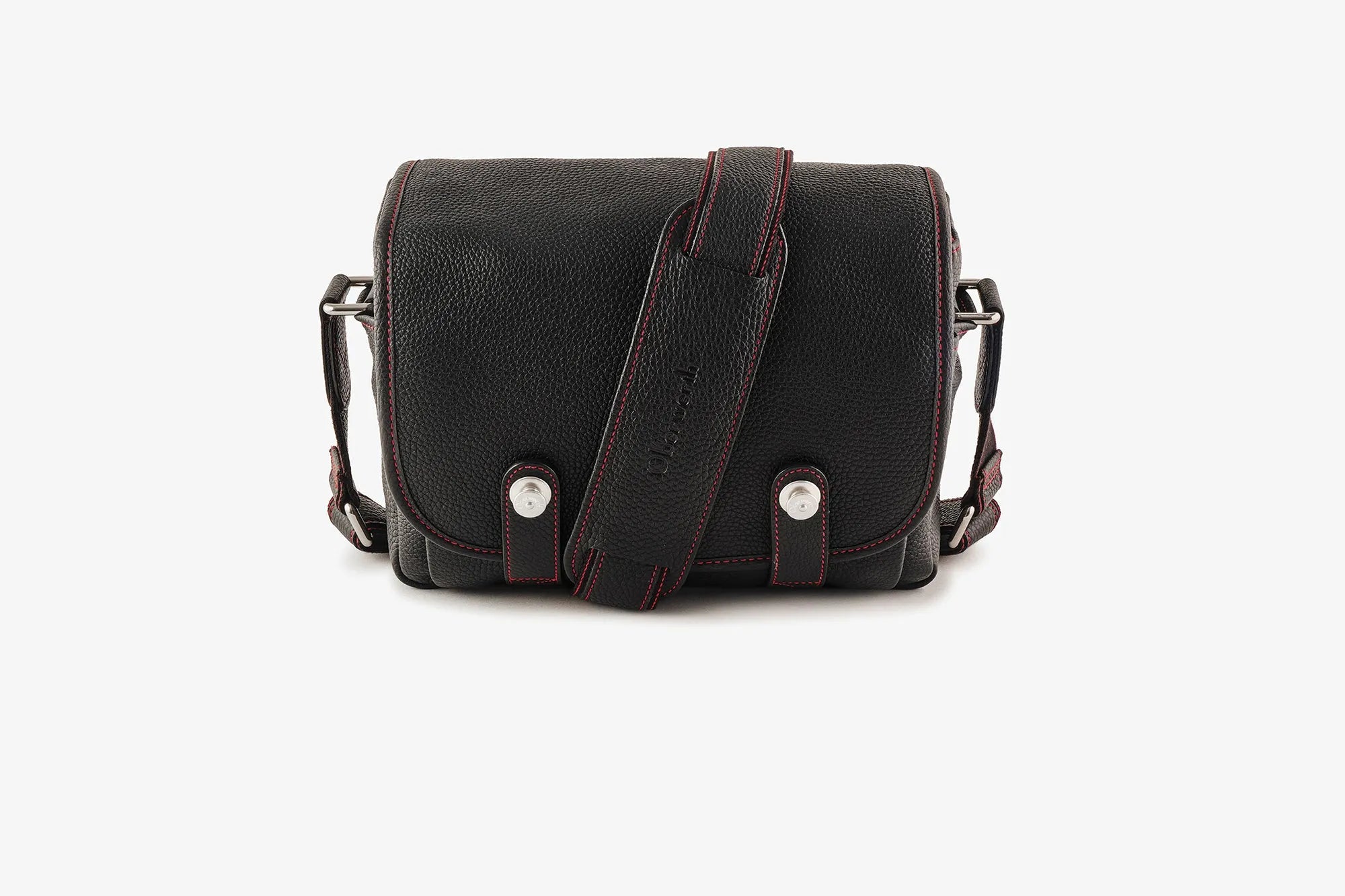
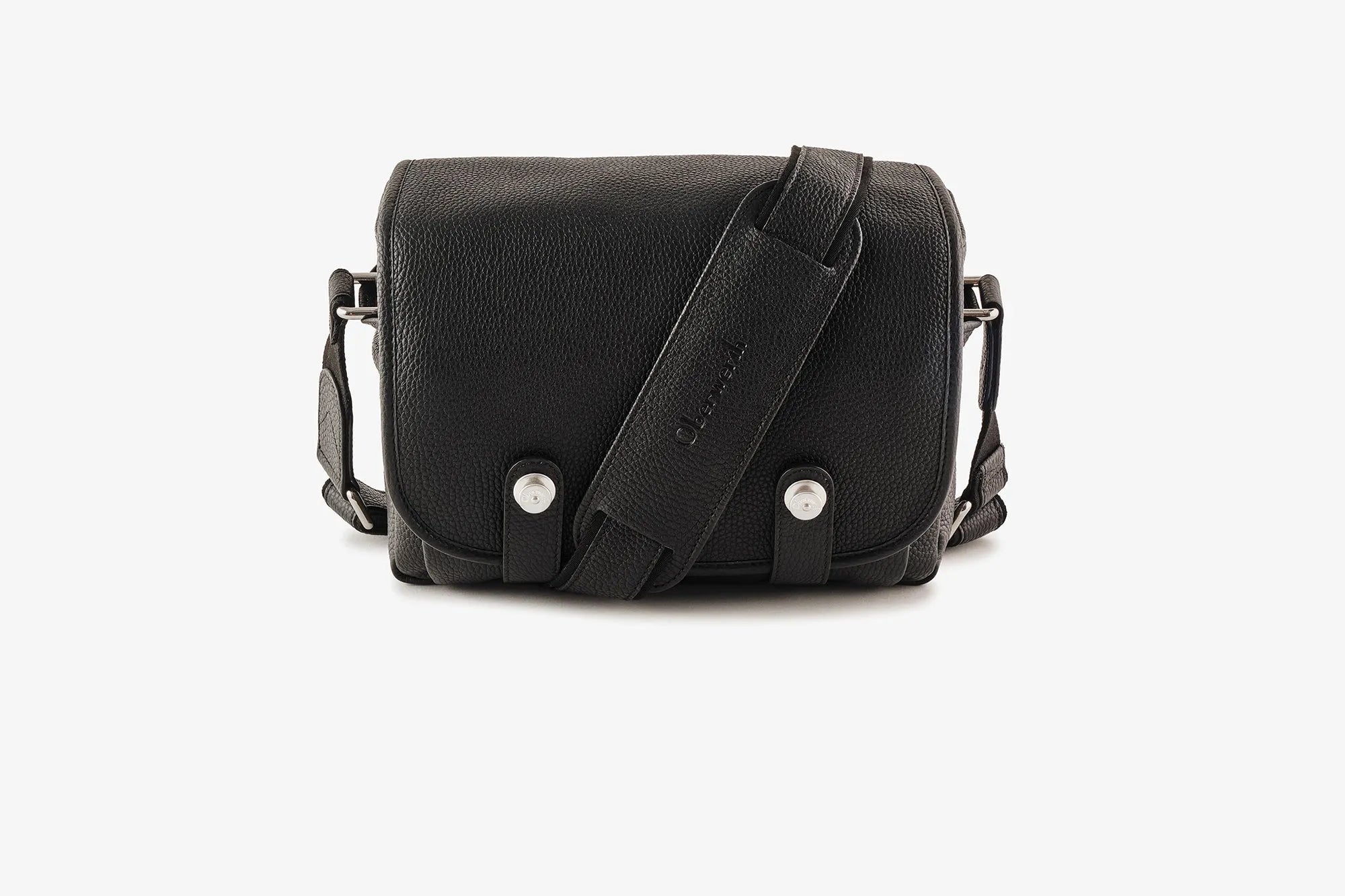
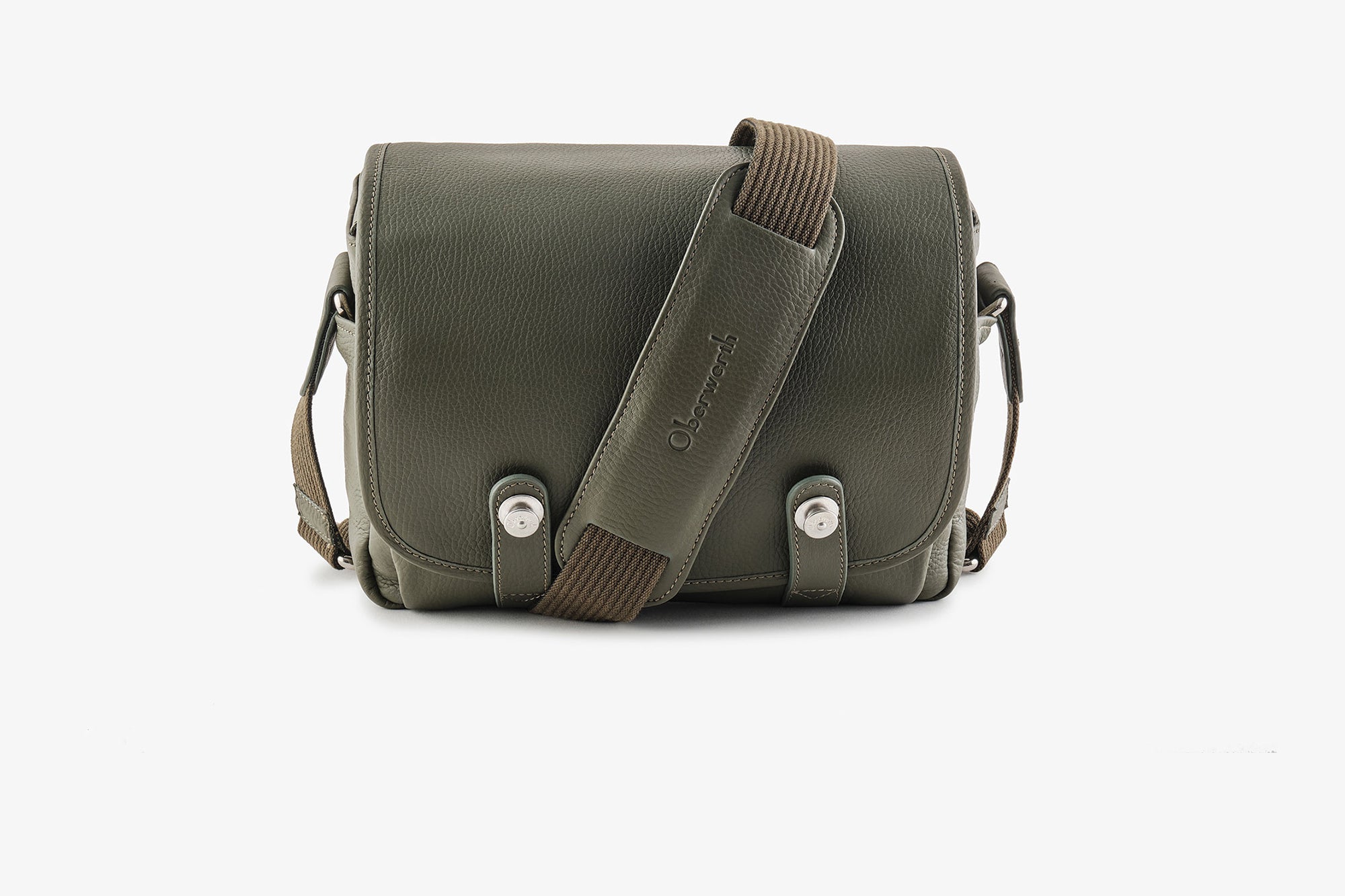
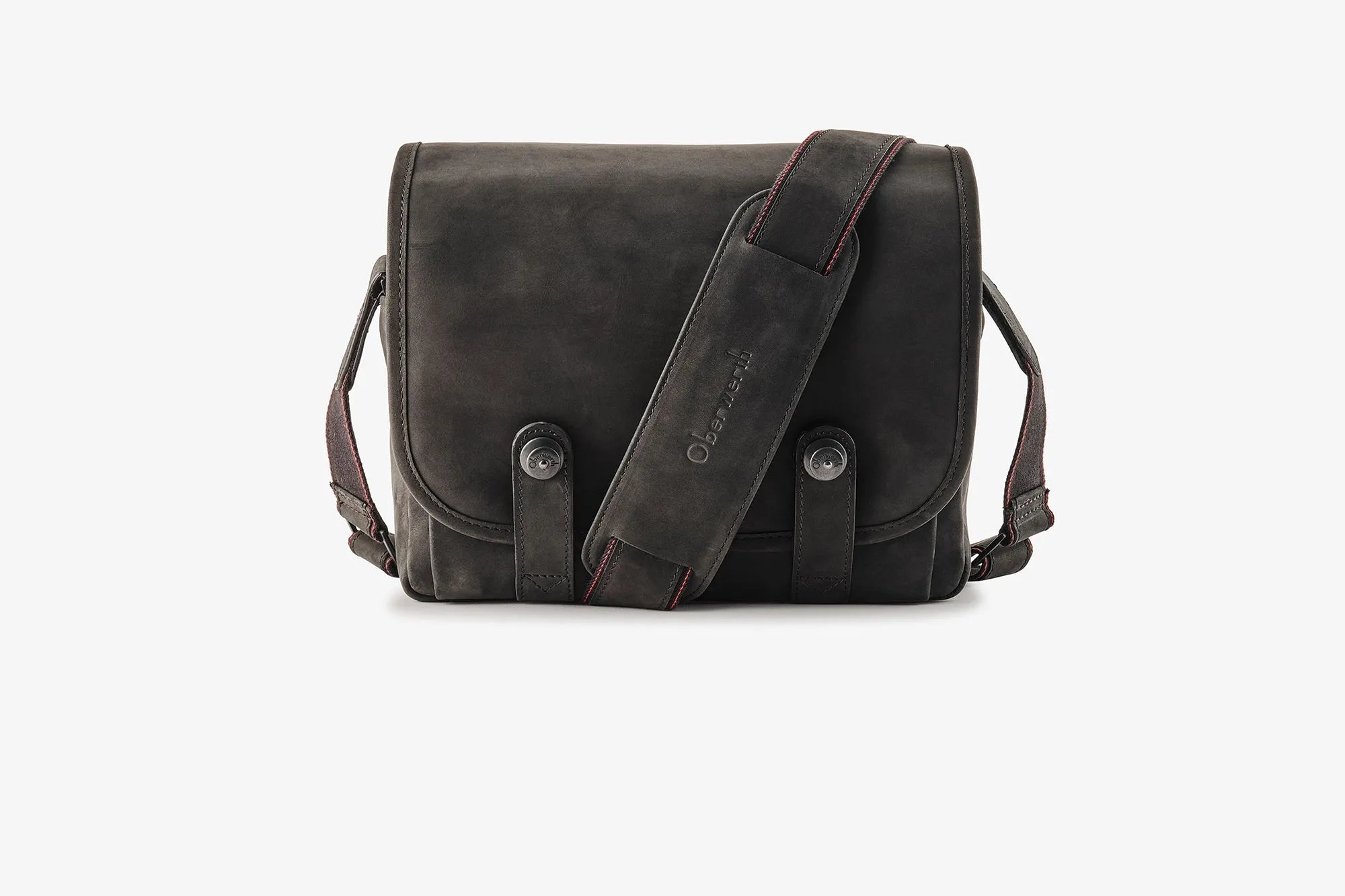
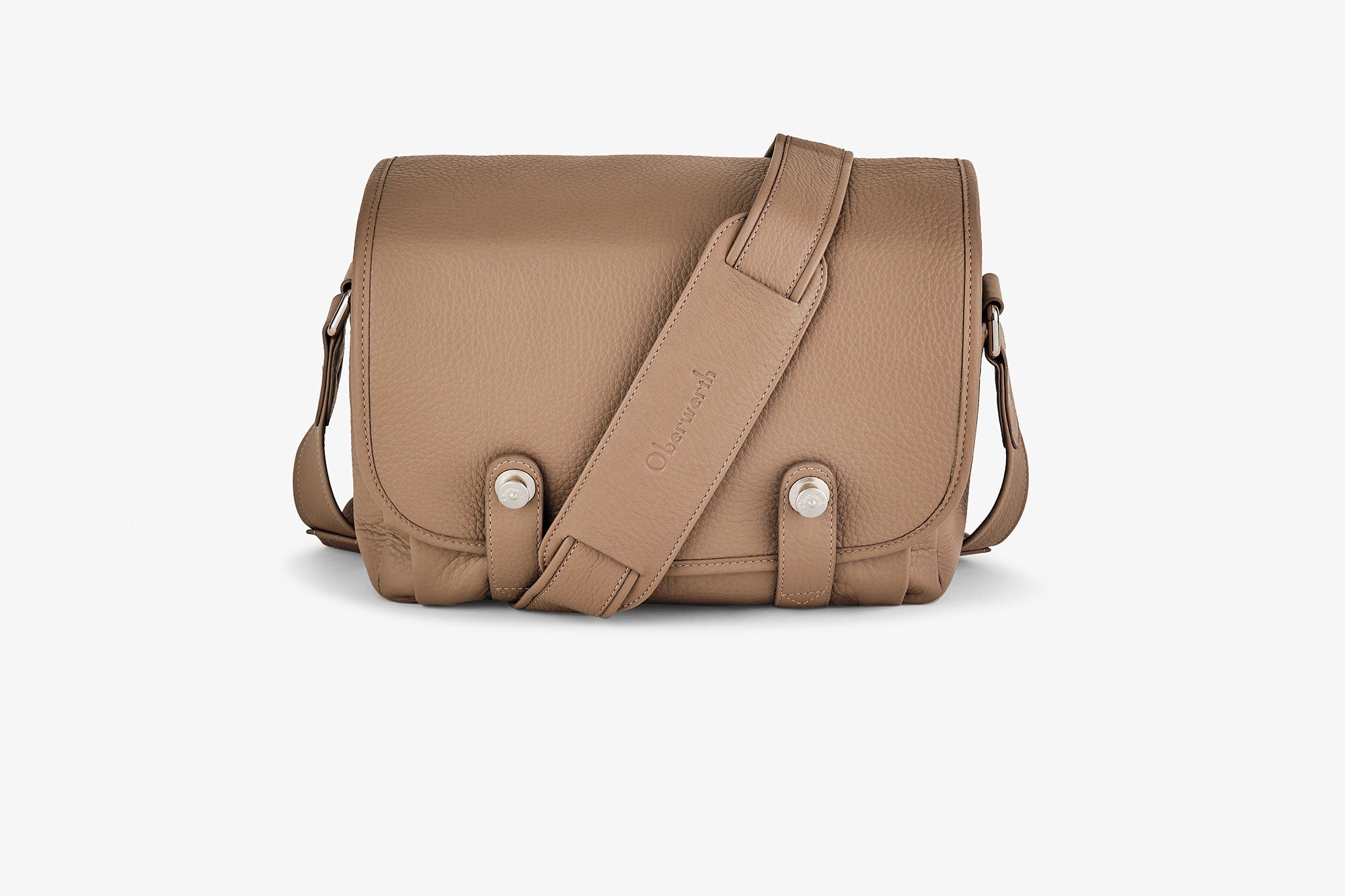
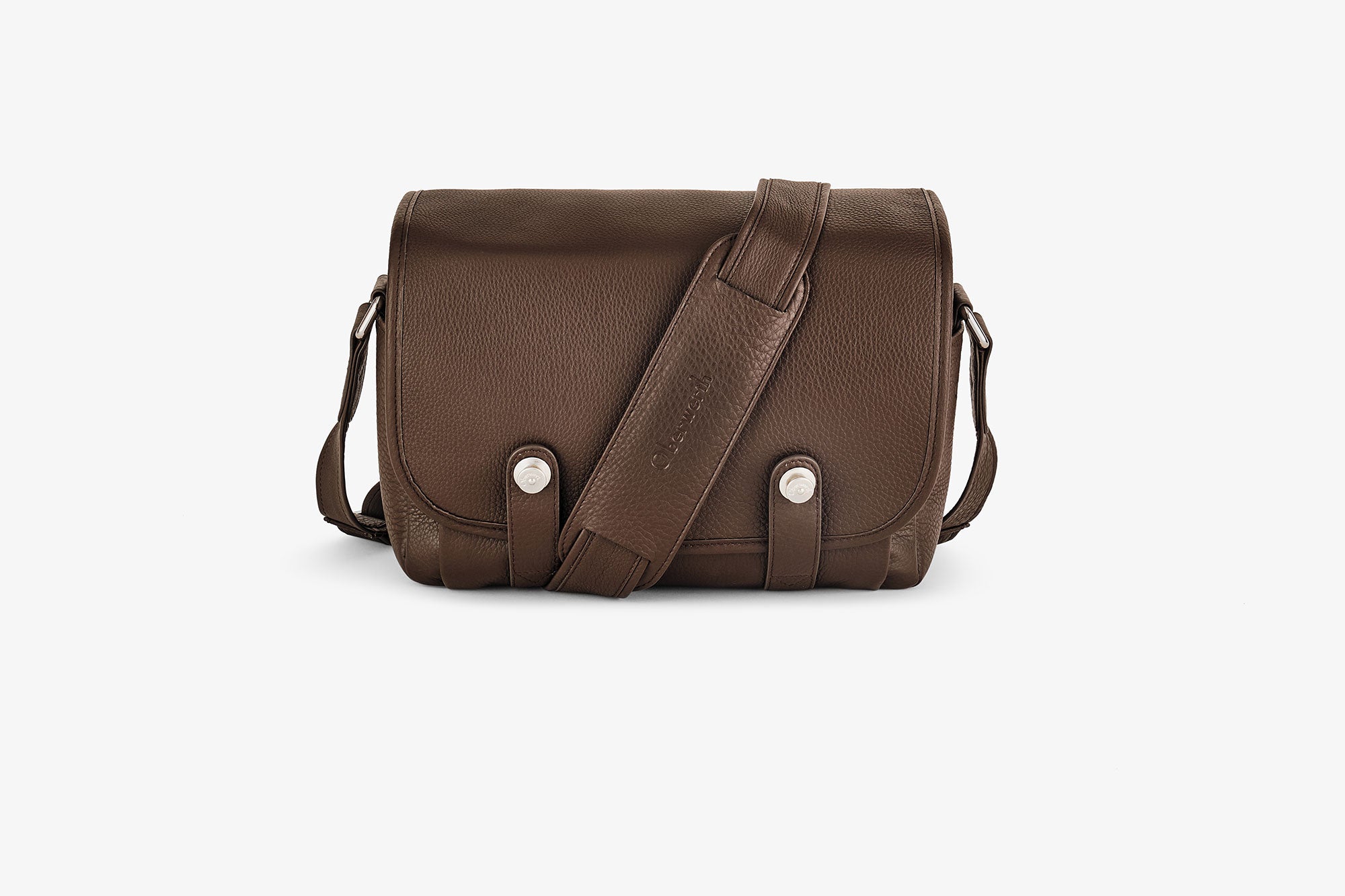
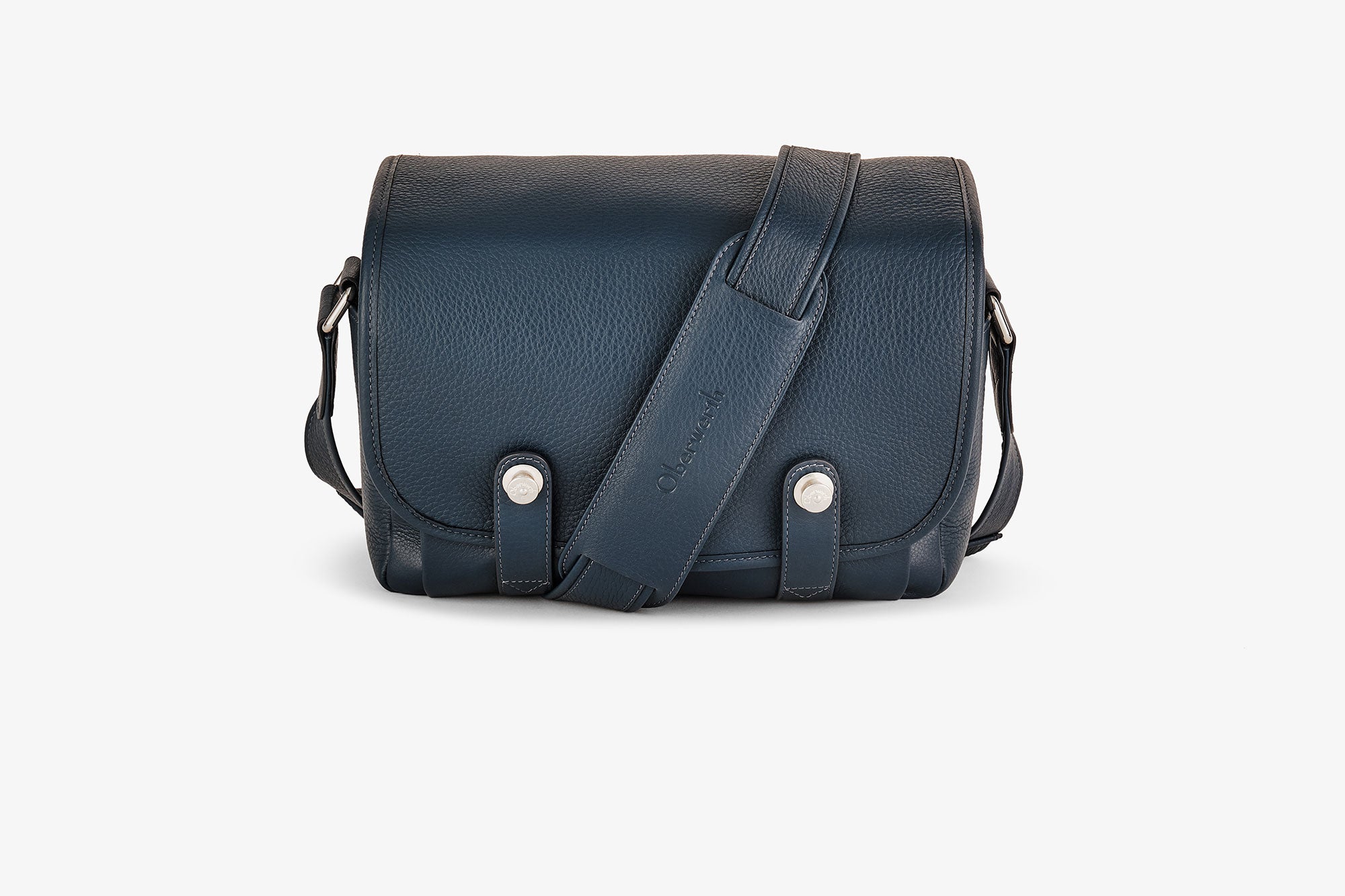
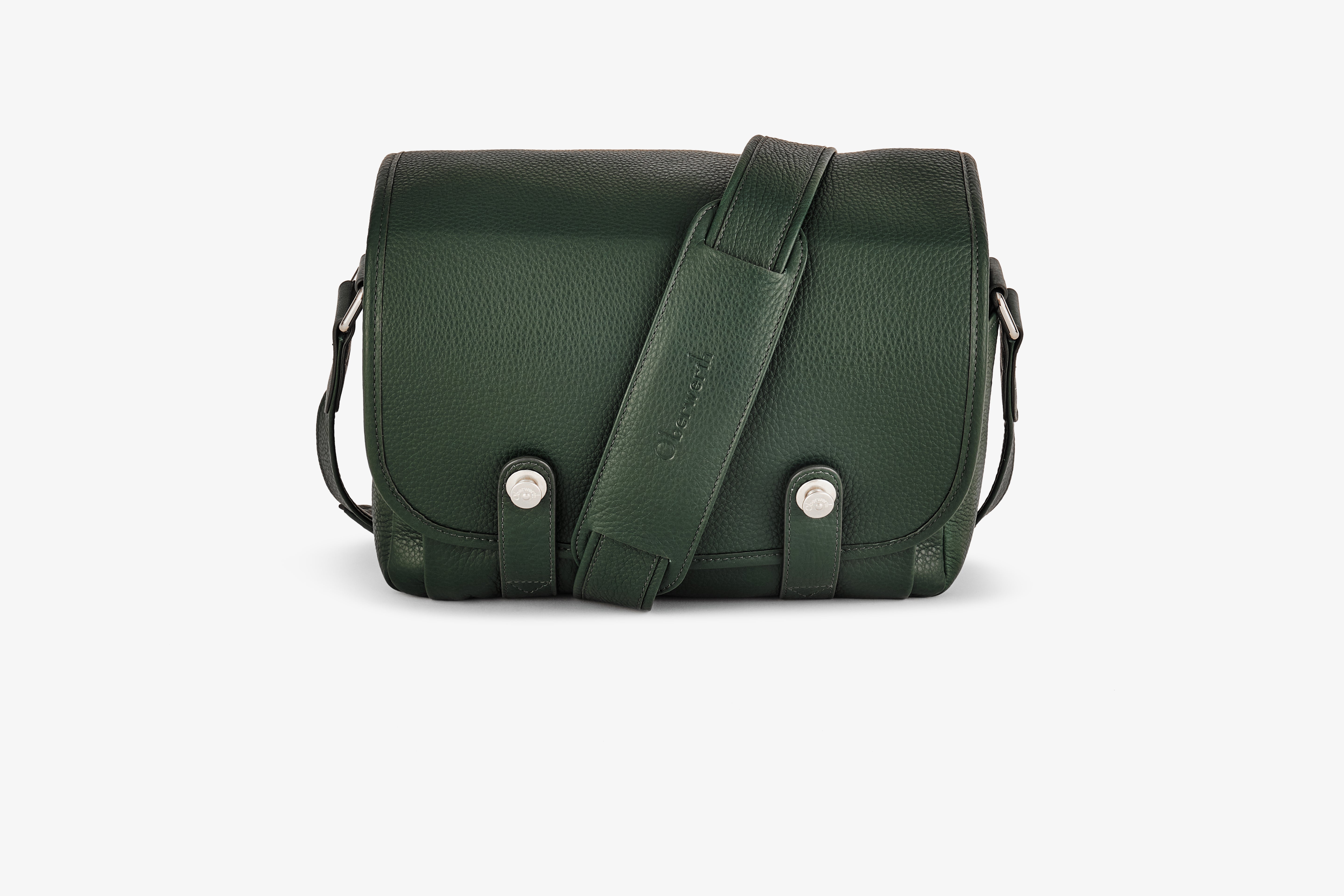
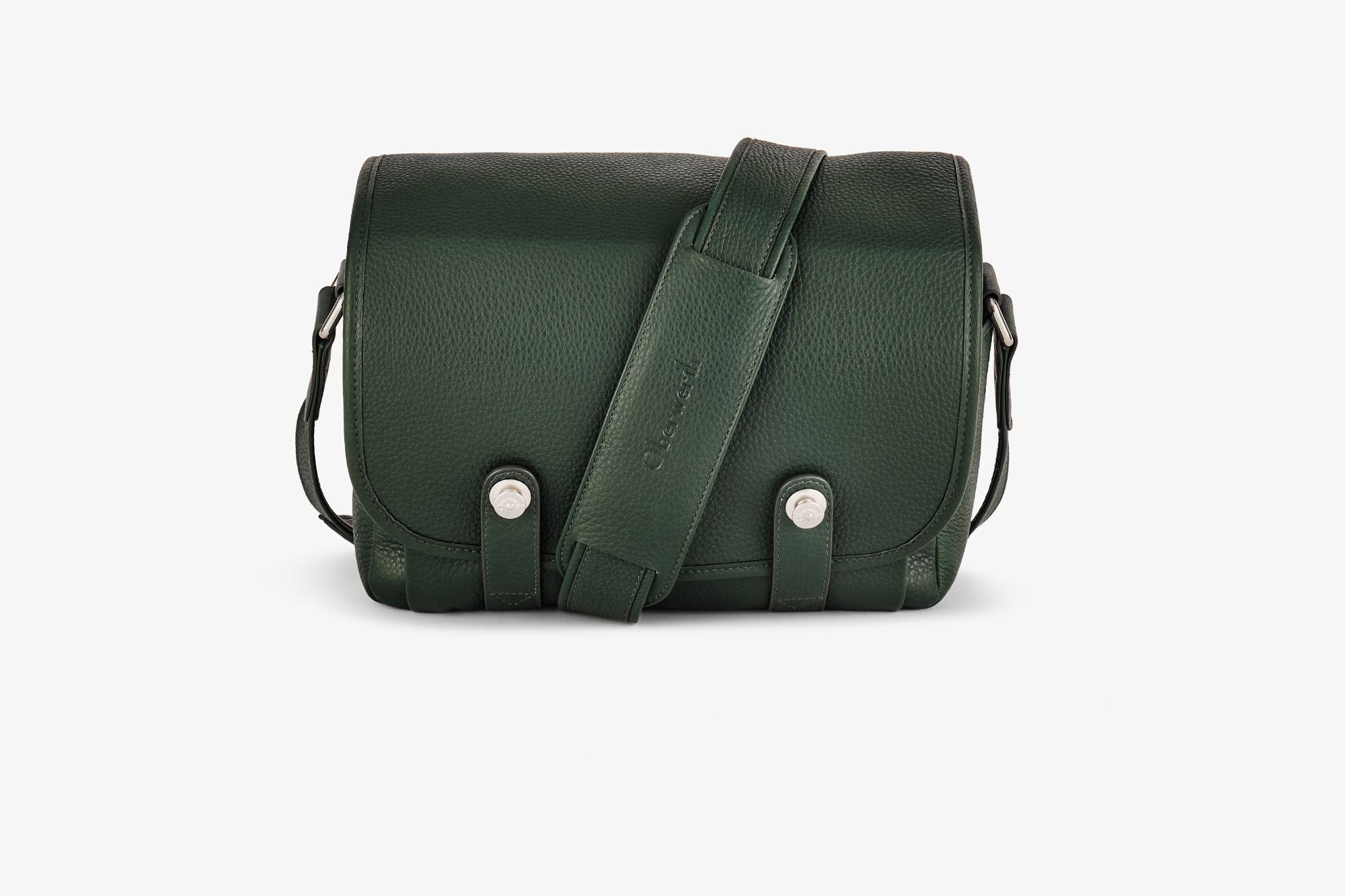
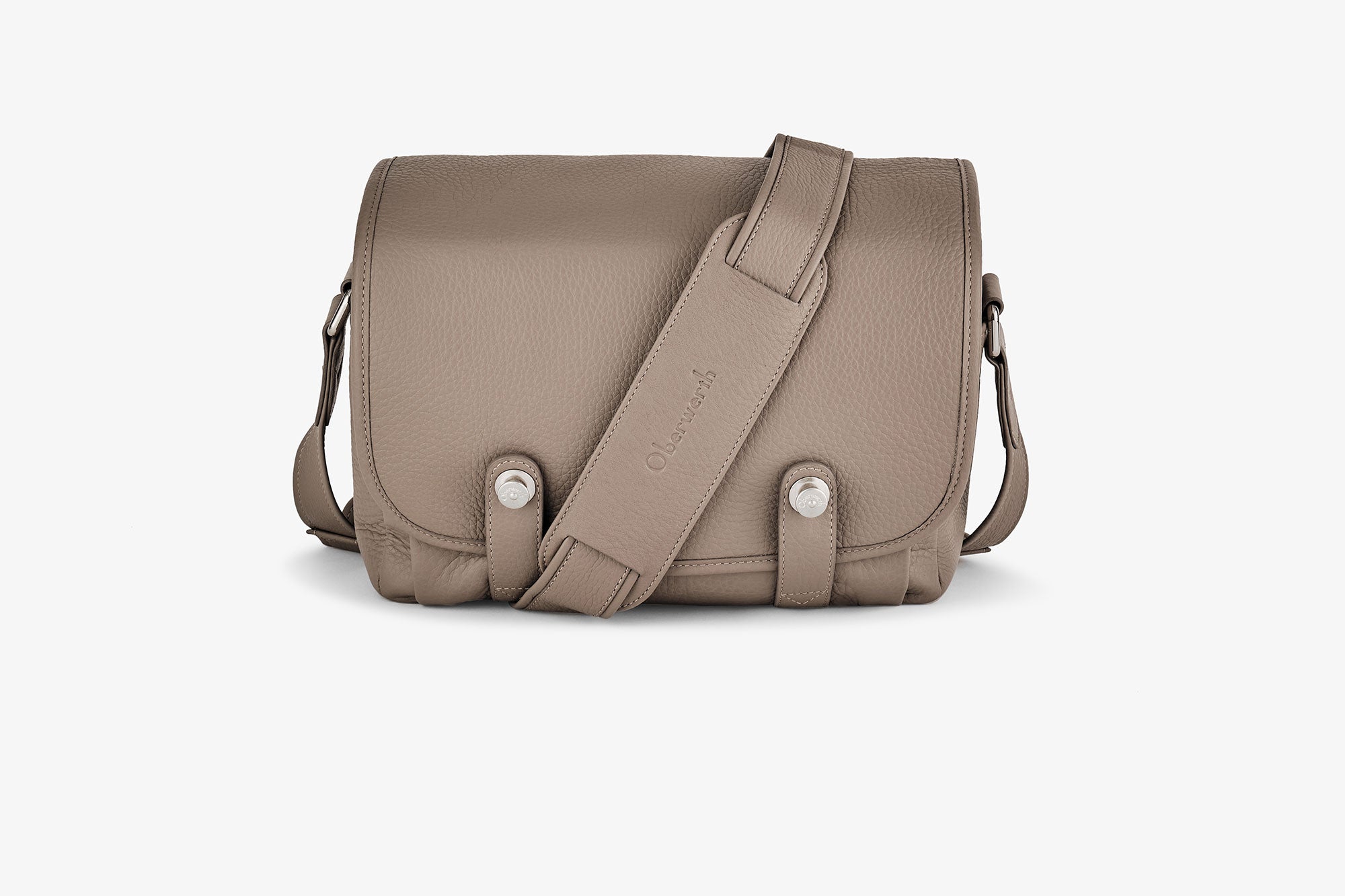
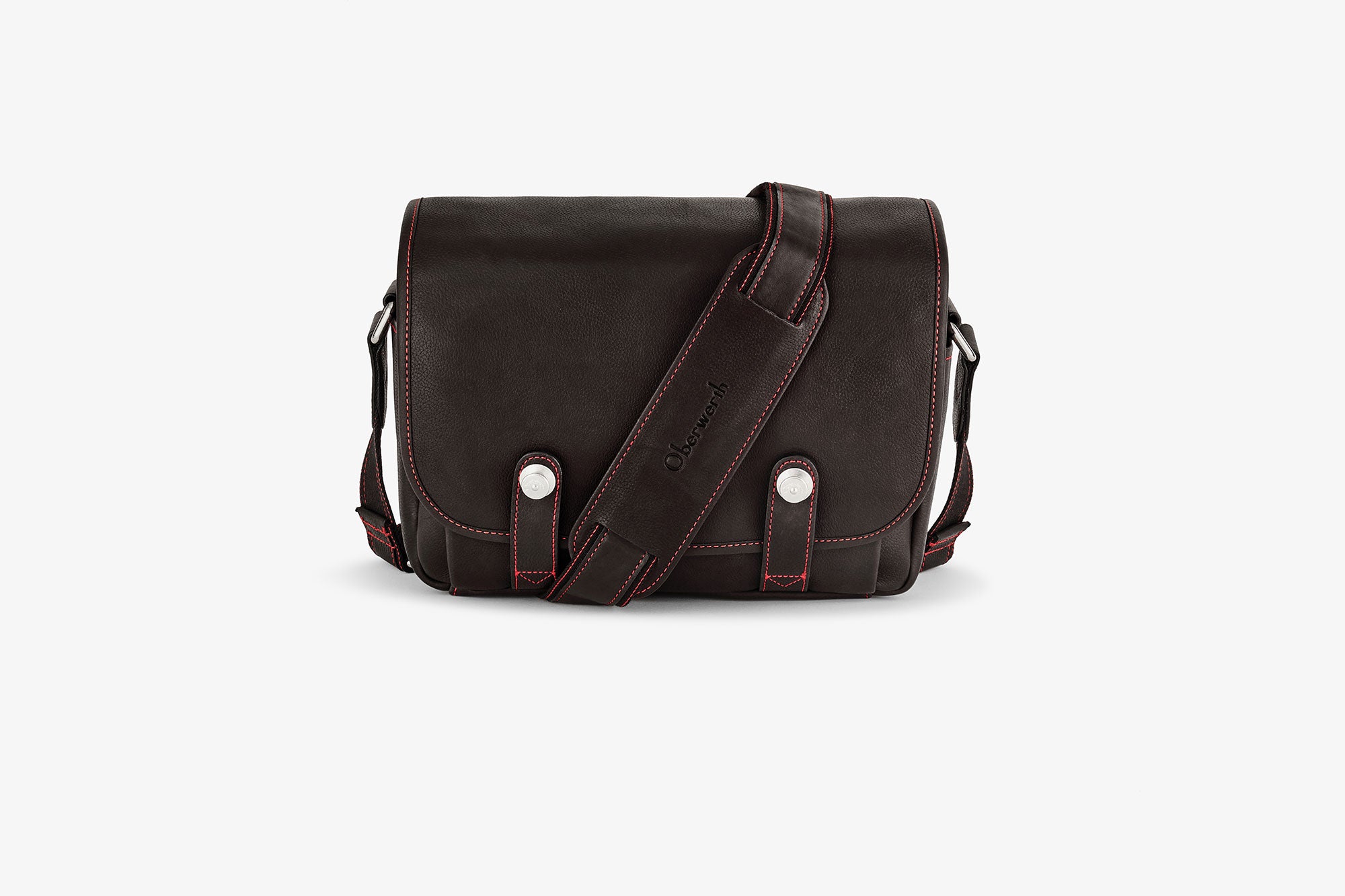
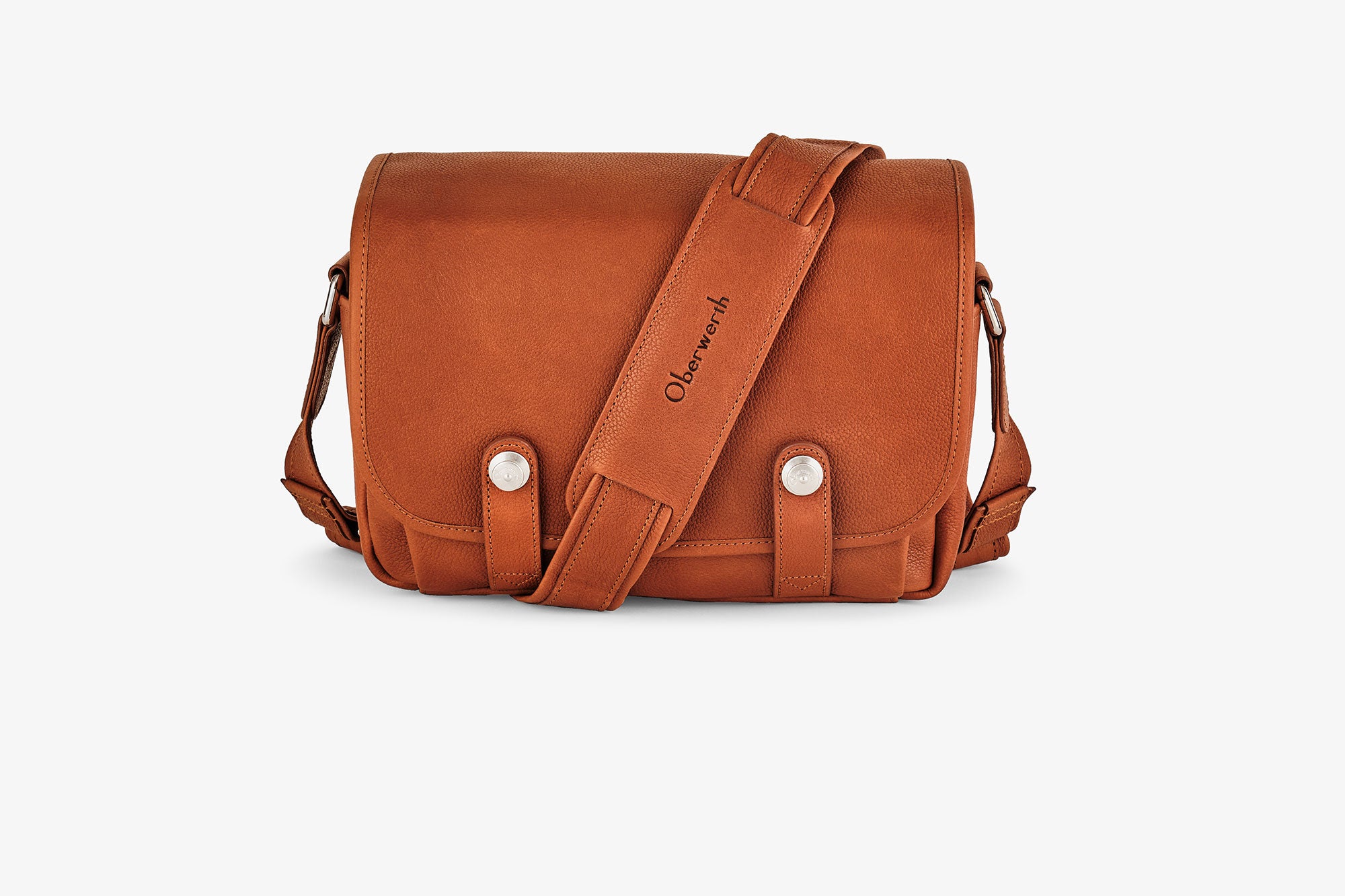
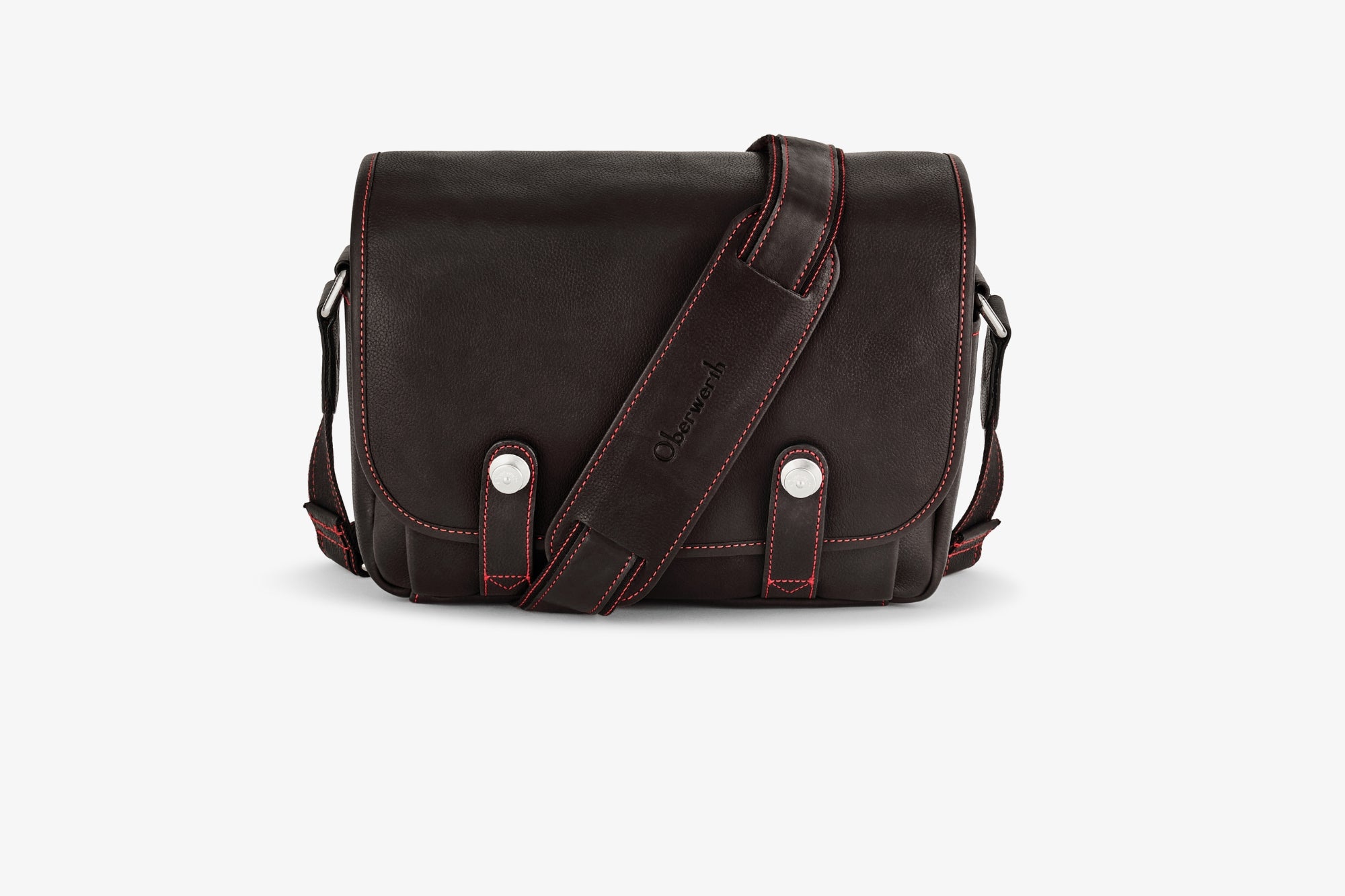
Full grain / Black - red stitchingThe Edward camera bag combines a compact design with maximum storage space for two camera bodies and several lenses. Made from soft, tumbled leather from Germany and Italy, it offers robust protection and supple carrying comfort. The large, padded main compartment is equipped with two freely adjustable divider pads to flexibly adapt the interior to your own equipment. A velvety soft, red lining keeps everything organized, while slim internal pockets provide additional storage space for accessories. The full-length front pocket holds an 11" iPad Pro or other items and has a hidden AirTag® compartment. An additional zippered pocket on the back secures important documents. The leather-trimmed strap with wide, padded shoulder pad optimally distributes the weight for high carrying comfort, even on long journeys. A stylish and functional solution for photographers who don't want to compromise.
Dimensionen
B
28H
21T
13Material
Passend für
- 11" iPad Pro
Choose options


Frequently asked questions
Waterproof means that the bag can be briefly submerged without water penetrating - achieved by welded seams and roll-top closures made of technical materials. Water repellent means that moisture rolls off the surface and runs off without being absorbed, but the bag is not suitable for immersion. For most photographers, water-repellent construction combined with protected zippers provides sufficient weather protection for everyday use.
A conventional leather camera bag is splash-proof, not waterproof - it can withstand brief exposure to rain, but should not be left permanently in the wet. The Oberwerth Hydro Line uses hydrophobic leather, which actually repels water thanks to the lotus effect and therefore falls into a different category to standard leather.
Waterproofing is typically a coating or wax that sits on the surface and wears off over time. Waterproofed leather acquires its water-repellent properties during the tanning process at the fiber level. The result is durable, does not change the look and feel of the leather and does not require re-treatment.
A technical dry bag (PVC, tarpaulin) looks out of place in most everyday situations - offices, restaurants, weddings. A water-repellent leather bag switches seamlessly between these contexts and rainy travel days.
After moisture, wipe with a dry cloth, treat once or twice a year with a product developed for hydrophobic leather (Oberwerth's Hydro Plus Organic Spray is the dedicated care product for the Hydro Line), air dry slowly when completely soaked, and avoid prolonged exposure to sun or heat. Do not use generic waterproofing sprays - the hydrophobic property is already integrated.
As the hydrophobic treatment is part of the tanning process and not a surface coating, it does not wear off during normal use like a spray-on impregnation. However, regular care with Hydro Plus helps to maintain optimum performance for decades.
For air travel and trips with changing weather, weatherproof leather bags offer the best balance: enough protection for drizzle between locations, a profile that works in hotels and restaurants, and a construction that will last for years. Oberwerth's Freiburg Hydro and SL Bag Hydro are both great for travel workflows.
Generally not, for rain of the intensity experienced by most photographers. In prolonged downpours (an hour or more of heavy rain), any bag will benefit from protection under a jacket, umbrella or canopy.
No. No leather bag, not even Oberwerth Hydro, is approved for maritime conditions or diving. For water sports photography, use a dedicated technical dry bag.
Oberwerth gives a lifetime guarantee on the workmanship of every bag, including the Hydro Line. The warranty covers manufacturing defects; normal signs of use and patina development over time are considered part of the character of the bag, not a defect.
Summary
If you need to keep a camera dry while kayaking, buy a dry bag. For every other situation a photographer faces - travel, weddings, street photography, unpredictable weather, changing indoor and outdoor locations - the right category is weatherproof or water-resistant construction, and hydrophobic leather is at the premium end of that category. The Oberwerth Hydro Line was built precisely for this use case: Leather that behaves like leather in appearance and development, but repels water like a technical material.